

A guitar is a stringed instrument, that is played by strumming, plucking, or slapping the strings. The strings vibrate to produce a sound, then the sound gets louder through the guitar body or an amplifier.
The name “guitar” is derived from the Spanish word “guitarra”. The guitar originated in the 16th century in Spain according to the book “The Guitar and Its Music” by James Tyler and Paul Sparks. The modern standard guitar has 6 strings and fretted fingerboard. However, these characteristics can vary between different guitar types.
There are 4 main classifications of guitars, differentiated by their amplification method: acoustic, electric, acoustic-electric, and semi-acoustic. Acoustic guitars do not require external amplification to project sound. The term “acoustic guitar” often refers to steel string acoustic guitar type. Electric guitars need external amplification to produce sound. The term “electric guitar” often refers to solid body electric guitar type. Acoustic-electric guitars are acoustic guitars with electronic pickups, making it possible to increase the volume of the acoustic guitar via external amplification. The term “acoustic electric guitar” often refers to the steel string acoustic electric guitar type. Semi-acoustic guitars are electric guitars with hollow or semi-hollow bodies, making it possible to play them acoustically and without external amplification.
There are 6 main types of guitar that every player should know: steel string acoustic guitar, solid body electric guitar, steel string acoustic electric guitar, nylon string acoustic guitar (classical guitar), bass guitar, and the archtop guitar. Other kinds of guitar are also important to know but they are not as famous as their above-mentioned counterparts. Different types of guitars offer diversity in sound, style, and personal preference. They produce unique tones, come in varied body shapes, have their own history, and specific features such as pickups or soundboards. These unique characteristics make them more suitable for certain genres, playing styles, or skill levels of guitar players.
Therefore it is very important to know the differences between the guitar types. As a result questions regarding these differences come up. What guitar to choose as a beginner, what are the body shapes of different guitars, what are the types of necessary equipment or parts such as amps or strings, what are the different brands, what styles and genres are there, and what to learn on a guitar to be able to play the different genres.

5 Step Checklist To Avoid Buying The Wrong Guitar
What to check before you buy
What features actually matter for beginners
What makes a guitar easy to play
In this article, we will evaluate 18 guitar types. The picture below shows the 18 guitar types as well as the amplification possibilities of each guitar type (If a guitar in the picture shows multiple ways to amplify sound, it means that some models of that guitar type use different methods for amplification. For instance, bass guitars can come in both acoustic and electric versions, each using a different amplification method.)

1. Acoustic Guitar (Steel-String Acoustic)

Acoustic guitar is a type of guitar that doesn’t need external amplification. Acoustic guitar has a hollow body and a sound hole which allow the strings to produce a clear and resonant sound. Any guitar that produces sound this way can be referred to as “acoustic”. Although the name “acoustic guitar” refers to the amplification method that the guitar uses to produce sound, the term “acoustic guitar” often refers to the steel string acoustic guitar type. This usage evolved because steel-string guitars became widely popular in modern music, making them the default “acoustic guitar” in common conversation.
The steel-string acoustic guitar uses steel strings to produce a bright loud sound. The steel-string acoustic guitar has 6 strings and comes in various body shapes and types like the Dreadnought, Jumbo, and Concert. Each body type provides a slightly different sound and tone. The most popular body type is the Dreadnought, known for its large body and rich, full sound. On the other hand, the Concert (0) body shape has a smaller body and produces a more delicate, balanced tone.
Key to the steel-string acoustic guitar’s sound are its essential parts such as the soundboard (top), sound hole, and the steel strings. The soundboard made from tonewoods like spruce, mahogany, or cedar, vibrates when the steel strings are plucked. This vibration resonates within the guitar body, gets amplified by the sound hole, and results in the signature sound of the acoustic guitar.
The tonewood used in the construction of the acoustic guitar also significantly influences its sound, tone, and projection. Spruce, for example, is known for its bright, clear tone, while mahogany produces a warmer, darker sound.
The sound of an acoustic guitar is characteristic of genres like country, blues, folk, and various other music genres, including Rock, Pop, Bluegrass, Jazz or R&B. Bob Dylan, a legendary acoustic guitar player, played a Martin D-28 during his “MTV Unplugged” concert in 1995. Dylan’s iconic song “Blowin’ in the Wind” is a perfect example of the acoustic guitar’s distinctive sound.
In 1838 Christian F. Martin developed guitar designs that formed the basis for the modern steel stringed acoustic guitar according to the book “Engineering the Guitar: Theory and Practice,” by Richard Mark French. When Christian F. Martin established his guitar-making business, C.F. Martin in 1838, his designs were heavily influenced by Johann Georg Stauffer. These designs formed the basis for the modern steel-stringed acoustic guitar. Today, C.F. Martin is well-known for their flat top acoustic guitars like the D-28, used by many famous musicians. Aside from C.F. Martin, other popular acoustic guitar brands include Taylor, Gibson, and Yamaha.
2. Electric Guitar (Solid-Body Electric)

Electric guitar is a type of guitar that relies on external amplification and pickups to produce sound. The sound of an electric guitar is captured by the guitar’s pickups and amplified, allowing the guitar to produce a loud, dynamic sound. The term electric guitar is often used interchangeably with the solid-body electric guitar type because the solid-body electric guitars are the most common and popular category of electric guitars.
The solid-body electric guitar is defined by its solid wood body, which doesn’t resonate the same way as the hollow bodies of acoustic guitars. The most popular body style is the Stratocaster, known for its bright, dynamic sound. Other popular styles include the Les Paul, SG, and RG, each offering a unique sound profile. For example, while a Stratocaster is known for its bright, crisp sound, a Les Paul delivers a warmer, fuller tone. The solid-body electric guitars typically have 6 strings but its extended range variations can have 7, 8, or more strings.
Key components of the electric guitar are the pickups, which act like the guitar’s microphone, picking up the string vibrations and converting them into an electrical signal. This signal is then led to an external amplifier which is also sometimes referred to as an “amp.” The electric guitar is also equipped with tone controls. Tone controls adjust the brightness or darkness of the tone, allowing for more sound variations. The tone control options are expanded further with an amplifier, as most amps come with gain and tone controls. You can explore even more possibilities by using effect pedals to change the tone in a specific way, such as adding distortion or delay effects. This makes electric guitar highly versatile with a wide range of various sound options.
Given this versatility, it’s no surprise that the electric guitar is suitable for a multitude of music genres. From the raw energy of Rock and Metal to the soulful strains of Blues and Jazz, the electric guitar is a staple in Pop, Country, and Punk music as well. Jimi Hendrix’s song “Little Wing” played on a Fender Stratocaster is a great example of the electric guitar’s unique sound and possibilities.
The electric guitar was popularized through the competitiveness of Fender and Gibson who were both on a mission to create a better, louder guitar. According to Ian S. Port’s book, “The Birth of Loud,” Leo Fender marketed the first solid-body electric guitar, the Esquire. Musicians immediately saw its appeal, sparking a rivalry between Fender and Les Paul that led to the popularization of mass-produced electric guitars. Today, Fender and Gibson are celebrated for their iconic solid-body electric guitars, like the Stratocaster and Les Paul shapes. Besides Fender and Gibson, other popular electric guitar brands include Ibanez, PRS, and ESP.
3. Acoustic Electric Guitar (Steel-String Electric Acoustic)

The acoustic electric guitar is a combination of acoustic and electric guitar technology. The electric acoustic guitar produces sound acoustically, like a traditional guitar, but the acoustic electric guitar can also be amplified electronically through its built-in pickups. The most common Electric acoustic guitars are steel-string acoustics fitted with pickups. Therefore, the acoustic electric guitars often refer to steel string acoustic electric guitars. Although less common, other guitar types like the classical guitars can be also designed to be electro acoustic.
The steel string acoustic electric guitar comes in different forms of steel string acoustic guitar body types, including the dreadnought, jumbo, parlor, and auditorium. What distinguishes steel string electric acoustic guitars from steel-string acoustics is the presence of pickups and the increased versatility in tone adjustment. You can play acoustic electric guitars just like a regular acoustic guitar with no amplifier required. But when you want to increase the volume, you simply plug the acoustic electric into an amplifier for a louder sound.
Given its versatile nature, the electric acoustic guitar is suitable for a wide range of music genres, including Rock, Pop, Blues, Jazz, and Country. This versatility is particularly beneficial during live performances, where the ability to switch between acoustic and electric sounds can add depth and diversity to your music. Tommy Emmanuel’s signature model, the Maton EBG808TE, exemplifies what an electric acoustic guitar can do. Songs like “Angelina” highlight the unique sound acoustic electric guitars can produce.
The electric acoustic guitar was created to allow acoustic guitarists to compete with louder instruments in a band setting. Electro acoustics were designed to maintain the warm, rich tones of an acoustic guitar while providing the ability to amplify the sound when needed. Popular electric acoustic guitar brands include Taylor, Gibson, Breedlove, and Martin, each offering their unique takes on this adaptable instrument.
4. Bass Guitar

A bass guitar is a type of guitar that plays the notes of regular guitar 1 octave lower. Bass guitar has longer neck than regular guitar and fewer strings – usually 4. The main role of a bass guitar is setting the rhythmic and harmonic foundation of a song, playing the root notes of chords. In contrast, a regular six-string guitar is usually used for melodic playing and solos.
The most popular type of bass guitar is the four-string solid body electric bass. This type of bass guitar is known for its rich, full sound. However, the bass guitar comes in many forms, each with its unique characteristics. For instance, an acoustic bass guitar produces a warm, resonant tone, while a fretless bass guitar facilitates smooth sliding between notes – a feature that jazz enthusiasts will cherish.
The solid body electric bass guitar’s distinctive sound is primarily caused by its pickups. They are specifically designed to capture the lower frequency vibrations of the thicker bass strings. The thickness of these strings contributes to the bass guitar’s lower pitch and fuller sound.
The bass guitar is suitable for a variety of music genres because it can create different sounds and styles by using different techniques, such as plucking, slapping, popping, tapping, or muting. The bass guitar is especially important for genres that rely on groove, rhythm, and harmony, such as funk, R&B, jazz, and reggae.
Leo Fender (Fender Guitars) developed the Precision Bass in 1951 to provide bassists with a more portable and louder alternative to the double bass according to the “The Bass Book” written by Tony Bacon and Barry Moorhouse. The double bass, also known as the upright bass, is a large string instrument used in orchestras and jazz ensembles. Double bass is much larger than a bass guitar and it is played in an upright position. Fender’s Precision Bass was revolutionary because it allowed bassists to keep up with the volume of other amplified instruments, solidifying the bass guitar’s role in popular music. Today, Fender is known for its solid body electric bass guitars like the Precision Bass, which has been used by many renowned musicians.
Sting, a member of the band “The Police”, played a Precision Bass and is well known for his bass guitar skills. A song like “Roxanne” is a perfect demonstration of the usage of bass guitar’s unique sound in a band setting. Aside from Fender, other popular bass guitar brands include Gibson, Rickenbacker, and Washburn.
5. Classical Guitar (Nylon-String Acoustic)

Classical guitars are acoustic guitars with nylon strings, a broad neck, and no need for external amplification to produce sound. The nylon string acoustic guitars are called “classical guitars” due to their close association with the classical music genre. The nylon strings are one of the key features that differentiate classical guitars from other types of guitars. When you pluck the nylon strings of a classical guitar the vibrations are amplified by the hollow body of the guitar, creating a rich, mellow, and resonant tone.
The most popular body type of classical guitar is the standard classical guitar, which does not have a cutaway. A cutaway is a notch in the upper bout of the guitar body that allows easier access to the upper frets, which makes it easier to play lead lines or chords in the upper register. This is why some players prefer classical guitars with a cutaway. On the other side, there are players who believe that guitars with a cutaway might lose a small amount of acoustic volume and sustain. However, the impact on the overall sound and resonance of the guitar is minimal.
The soundboard, the sound hole, and the nylon strings are the vital parts of the classical guitar that contribute to its tone the most. For instance, the choice between a laminate and a solid wood top can significantly affect the sound. Laminate tops, typically found on low-end, inexpensive guitars, do not vibrate as freely as solid woods and tend to produce a uniformly flat sound. On the other hand, solid wood tops vibrate more freely, resulting in a louder and more resonant sound.
As the name suggests, the classical guitar is ideal for classical music, but classical guitar also shines in flamenco and jazz. One of the most famous classical guitar players, Andrés Segovia, played a Hauser II guitar for many performances and recordings. His rendition of “Asturias (Leyenda)” showcases the characteristic sound of the classical guitar.
The modern classical guitar that we know today was developed in the late 19th century by Antonio de Torres Jurado, a Spanish musician and luthier. His designs, which increased the size of the guitar body and altered the proportions of the instrument, are considered the foundation of the modern classical guitar. Popular modern classical guitar brands include Hauser, Ramirez, and Córdoba.
6. 12 String Guitar

A 12-string guitar is a guitar equipped with 12 strings instead of the typical 6. This unique design gives the 12 string guitar a richer, more resonant tone, creating a chorus-like effect. Whether acoustic or electric, the 12-string guitar is distinguished by its double set of strings and wider neck.
The 12 string guitars occur both in acoustic and electric forms. A 12 string steel string acoustic guitar is a variation on a 6 string steel string acoustic guitar but with 12 strings. A 12 string steel string acoustic has the same body types as acoustic steel string guitars, such as dreadnought, jumbo, or auditorium. Alternatively, a 12 string electric guitar is a variation of a standard 6 string electric guitar but with 12 strings. A 12 string electric guitar can come in different body types like the solid, semi-hollow, or hollow body types. Popular 12-string electric models are semi-hollow and hollow-body guitars, such as the Rickenbacker 360/12 or the Gretsch G5422G-12.
One of the key differences between a 6-string and a 12-string guitar is that a 12 string guitar requires a stronger headstock due to the additional tension from the extra strings. The 12-string guitar pairs each of the standard 6 strings with an additional string. These pairs are tuned either in unison (for the higher-pitched strings) or at an octave (for the lower-pitched strings). When strummed, these strings vibrate together to produce a resonant, chorus-like sound that a 12-string guitar is known for.
The distinct sound of the 12-string guitar makes it a popular choice for rock, folk, country, pop, bluegrass, and blues. David Bowie used a 12-string guitar to create the iconic hit song, “Space Oddity”, which was released in 1969 and became his first major hit.
The origin of the 12 string guitar is not entirely clear. The 12 string guitar is believed to have been developed in the late 19th century in the United States and was initially used in blues music. Over time, brands like Takamine, Taylor, Rickenbacker, Martin, and Fender have contributed to its development and popularity.
7. Hollow Body Guitar (Archtop Guitar)
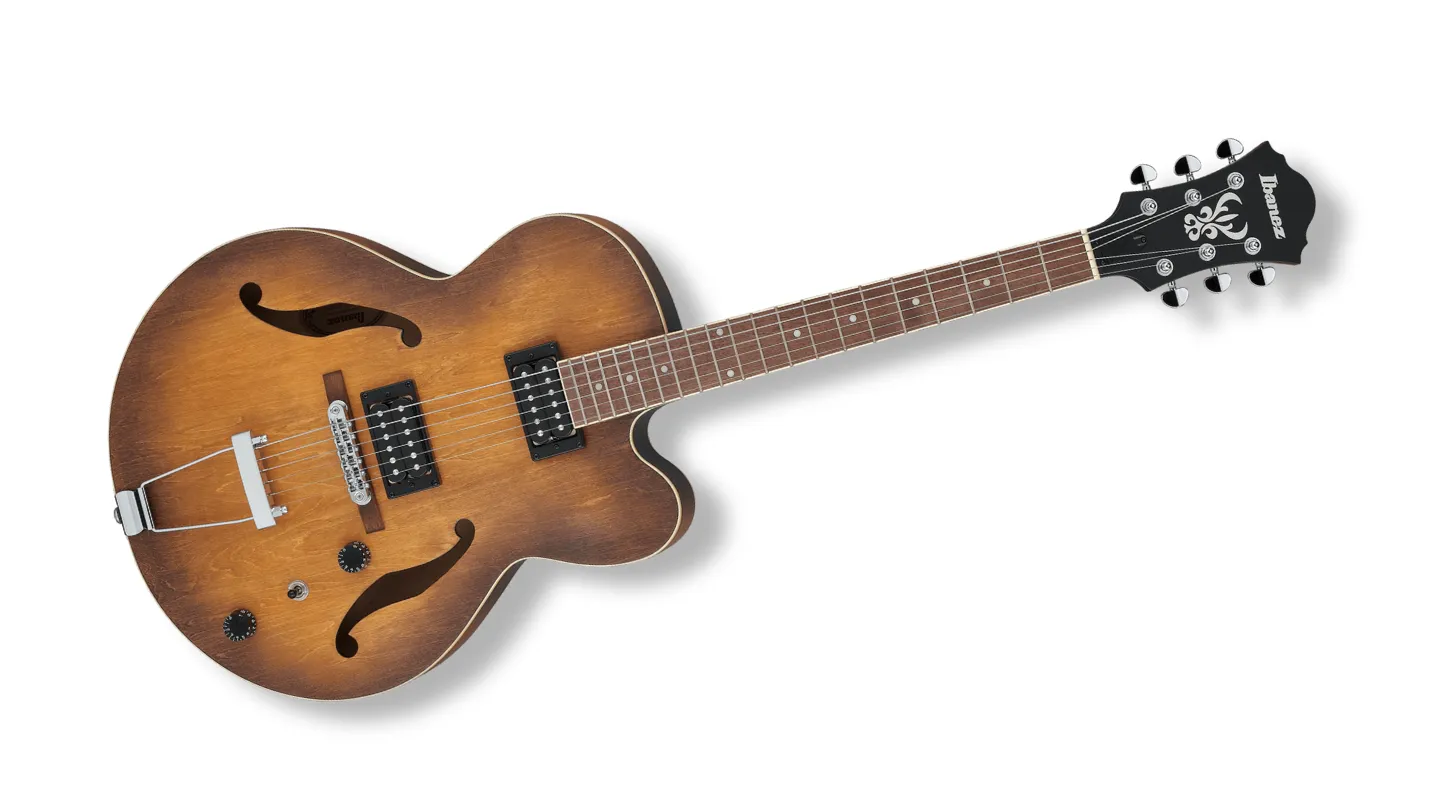
Hollow body electric guitar is a type of semi-acoustic electric guitar that combines the acoustic properties of a hollow body with the electric properties of pickups and a jack. Hollow body guitars are unique in their ability to produce sound both with and without external amplification, which makes the hollow body guitars semi-acoustic. Unlike acoustic electric guitars, which are acoustic guitars with fitted pickups, semi-acoustic guitars are electric guitars with acoustic properties.
Hollow body guitars are also sometimes referred to as the archtop guitars, because the archtop guitars are the most popular hollow body guitars. Archtop guitars have an arched top and back, which contributes to their warm, full sound. This makes the archtop guitar a perfect fit for Jazz, Blues, and Rockabilly. But any genre that appreciates a full, warm sound can benefit from the unique characteristics of the archtop guitar.
The design elements that contribute to the unique sound of an archtop guitar guitar are the f-holes, arched top, pickups, and the hollow body. The presence of f-holes and an arched top allows sound vibrations to resonate inside the body, amplifying the sound and giving the guitar a warm, full tone. Built-in pickups amplify the guitar through an amplifier, making the hollow body guitars incredibly versatile. The hollow body itself allows sound vibrations to resonate within the guitar, producing a less aggressive tone that’s great for jazz and blues. However, due to their hollow bodies archtop guitars can have feedback issues at high volumes. This can result in an unpleasant high-pitched, uncontrollable noise when the volume is too high.
The hollow body guitars were developed in the 1930s because guitarists in big bands needed a guitar that could be heard over the band. This led to the development of the hollow body guitar, which had a louder and more resonant sound. Today, brands like Gibson and Gretsch are leading the pack in the hollow body guitar market with models such as Gibson ES-355 or Gretsch G6136T.
The legendary B.B. King was known for playing a Gibson ES-355 at numerous concerts and recordings. His iconic song “The Thrill Is Gone” is a classic showcase of the hollow body guitar sound. Other popular brands include PRS, Epiphone, and Ibanez.
8. Semi-Hollow Body Guitar

A semi-hollow body guitar is a semi-acoustic electric guitar that has a solid center block inside the body, with hollow wings on either side. This unique design significantly reduces feedback and increases sustain. In other words, the semi-hollow body helps to reduce that annoying buzz you get from the amplifier when you’re cranking up the volume.
Semi-Hollow body guitar was invented to tackle the issue of feedback at high volumes that hollow body guitars tend to have. The more hollow the guitar, the more acoustic the sound is, but on the flip side, the more hollow the guitar the more feedback you’ll get when you increase volume. The development of semi-hollow body guitars was an ingenious attempt to combine the best features of both hollow-body and solid-body guitars. You get the warm, resonant tones of a hollow body guitar with the feedback resistance and sustain of a solid body guitar. It’s the best of both worlds!
The ability to handle increased gain makes semi-hollow guitar an excellent choice for rock ‘n’ roll, as well as blues and jazz. Keith Richards from the Rolling Stones used his semi hollow Epiphone Casino during their 1964 American tour, and the distinctive sound of his guitar can be heard in the rock n roll tunes of the song “It’s All Over Now”.
While The Epiphone Casino is manufactured by Epiphone, several other brands like Gibson, Fender, and Gretsch are also well-known for their semi-hollow guitars.
9. Ukulele

The ukulele is a small 4-stringed instrument that is often associated with Hawaiian music. The ukulele’s sound is generally softer, warmer, and has less bass than a regular-sized acoustic guitar. This is because Compared to other types of guitars, the ukuleles are smaller, have fewer strings, and only use 4 nylon strings.
The most popular body type of ukulele is the Soprano ukulele. The Soprano Ukulele is known for its bright, jangly sound. On the other side of the spectrum are the Baritone ukuleles. The Baritone ukulele produces a deeper, richer tone than a Soprano ukulele.
The soundboard, sound hole, and strings are some of the characteristic parts of the ukulele that help the instrument acoustically amplify its sound. The choice of tonewood also has a significant impact on the ukulele’s tone. For instance, Koa wood, native to Hawaii, gives the ukulele a clear, crisp sound. Mahogany provides a warmer tone, while Spruce offers a broader range of tones.
Speaking of sound, the ukulele is not just for Hawaiian music. Ukulele has found its way into a variety of music genres, including Pop, Folk, and even Jazz. This versatility makes ukulele a great instrument for those looking to explore different musical styles. However, the story of the ukulele did start with Hawaiian music.
The ukulele was introduced to Hawaii by Portuguese immigrants in the 19th century and quickly became popular in Hawaiian music. Therefore, contrary to popular belief, ukulele was invented in Portugal and not in Hawaii. But over time, ukuleles gained worldwide popularity. One of the most famous ukulele players was Israel Kamakawiwo’ole, known for his rendition of “Somewhere Over the Rainbow.” Israel Kamakawiwo’ole mostly played tenor ukuleles made by Kamaka and Martin but other brands including Kala, Lanikai, or Cordoba are also known for producing high-quality ukuleles.
10. Resonator Guitar
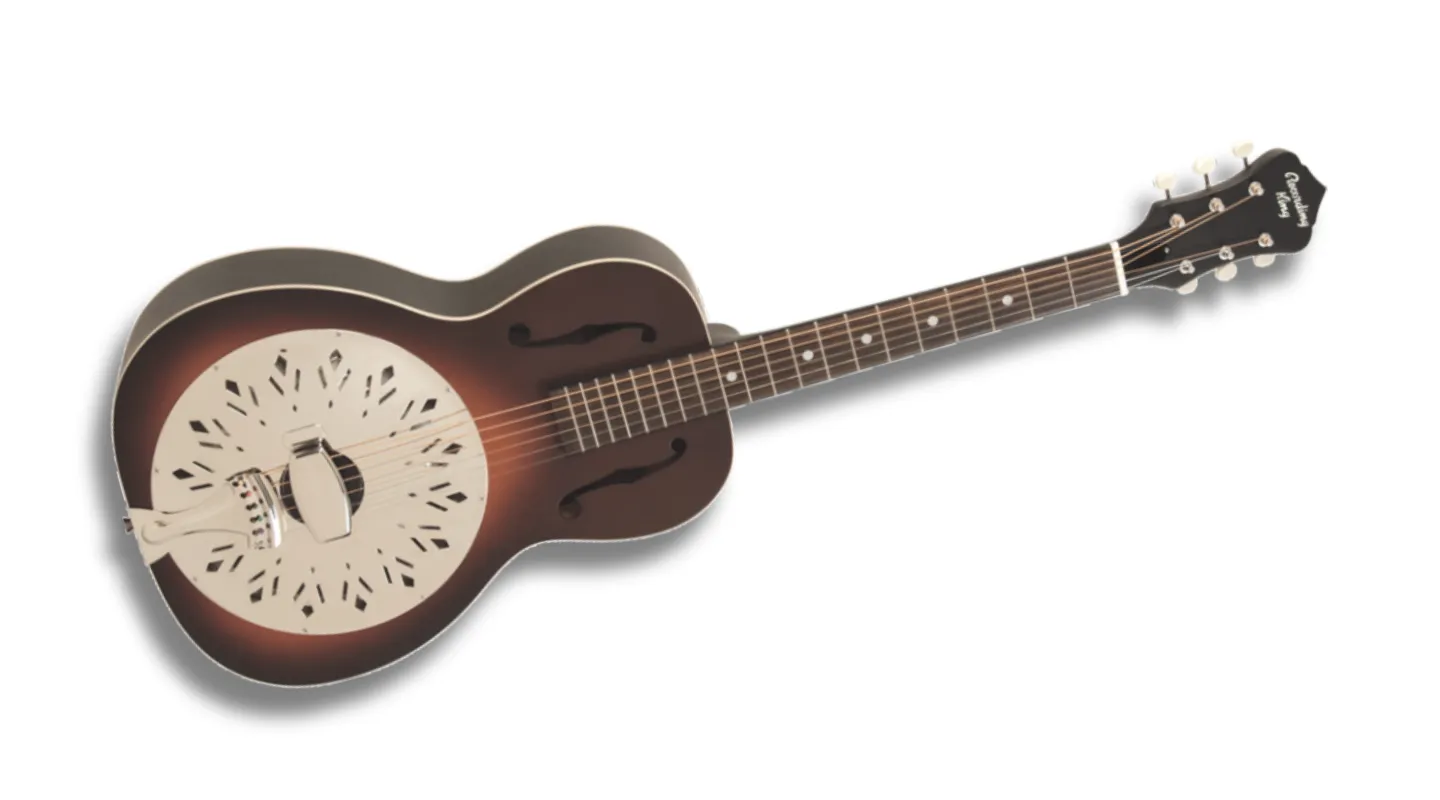
A resonator guitar is a unique type of acoustic guitar that creates sound through one or more spun metal cones (resonators) instead of a traditional guitar top (soundboard). The resonators are located within the body of the guitar and they are the reason for its specific sound. The resonator guitars are often referred to as “Dobro” guitars. The term “Dobro,” is a brand name for a single-cone resonator guitars, but the Dobro name has become so popular that it’s often used to refer to any resonator guitar.
The most popular types of resonator guitar are the single-cone and tri-cone dobro resonators with a metal body. The Tri-Cone design offers a complex, smooth tone, while the Single-Cone design is known for its loud, sharp, and bright tone. Moreover, the material used to make the resonator has a significant effect on the sound as well. For instance, brass, being softer, tends to produce a warmer, rounder sound, while steel, a harder material, offers a louder, more metallic tone.
The resonator guitars are also differentiated by a round or squared neck. The main difference between the two is that the square neck type is only played on a lap while the round neck type is played like a regular acoustic guitar.
The unique sound of resonator guitar is particularly popular in Blues and Bluegrass music. Imagine a mellow night in a smoky blues bar or a sunny afternoon at a Bluegrass festival – that’s where you’ll find resonator guitars shining. “Death Letter” by Son House is an iconic blues song played on a resonator guitar that brings out the mood and sound of the resonator guitar.
The first designs of resonator guitars were made by John Dopyera. According to the book “The History of the American Guitar” written by Richard R. Smith, John Dopyera, a Slovakian immigrant, established a guitar-making business in 1927. John Dopyera intended to create louder acoustic guitars and his designs, influenced by European luthiers, formed the basis for the modern resonator guitar. Dopyera and his brothers later founded a company called Dobro. Besides Dobro, other popular resonator guitar brands include National and Regal.
11. Pedal Steel Guitar and Lap Steel Guitar

Pedal steel guitar and lap steel guitar are steel guitar types that produce sound by plucking steel strings with a pick while a metal bar or slide changes the pitch. Pedal steel and lap steel guitars are played horizontally, with strings facing upwards, and create a rich, resonant, original tone.
The pedal steel guitar has multiple necks, a multitude of strings, and a complex system of pedals and knee levers. The most important part of a pedal steel guitar is its pedal system. The strings vibrate to produce sound, while the pedals and knee levers alter the pitch by changing the tension of the strings.
On the other hand, the lap steel guitar is simpler in design. It lacks the pedals and knee levers and relies solely on the player’s bar technique to alter the pitch. Lap steel guitar’s most important parts are its strings and its pickup, which function similarly to those on a pedal steel guitar.
The lap steel guitar’s popularity can be traced back to Joseph Kekuku, who popularized Hawaiian guitar playing. Joseph Kekuku’s playing style led to the development of lap steel guitars. Pedal steel guitars came later, with the addition of foot pedals to change the tuning of the guitar, allowing a wider variety of chords and keys.
The pedal steel guitar is a staple in country music, while the lap steel guitar is commonly used in Hawaiian music. A song characteristic of the pedal steel guitar is “Highway 40 Blues” by Ricky Skaggs. On the other hand, the lap steel guitar’s distinctive sound shines in the “Sleep Walk” by Santo & Johnny Farina.
12. Extended-Range Guitars
An extended range guitar is a type of guitar that has more than the standard six strings, or a six-string guitar that has a longer scale length and an extended pitch range when compared to a standard guitar. The most popular extended-range guitars are the 7 and 8-string guitars.
7-String Guitar

A 7-string guitar adds an extra string to the standard six-string guitar, which results in a deeper, heavier sound. This makes 7-string guitars a favorite among jazz, rock, and metal musicians. The 7-string guitar was popularized by a famous rock musician Steve Vai, whose song “For the Love of God” is a good example of the 7-string guitar’s possibilities.
The 8-String Guitar

The 8-string guitar is a guitar with 8 strings and adds yet another string when compared to the 7-string guitar. This creates an even deeper and richer sound than the 7-string. The 8-string guitar is often used in genres like progressive metal. Tosin Abasi of the band “Animals As Leaders” plays an 8-string guitar in the song “Wave of Babies.”
13. Guitalele (Mini Guitar)

Guitalele is a hybrid guitar instrument that’s part guitar, part ukulele. Guitalele has the body size of a ukulele and six nylon strings like a classical guitar. Guitalele is also known as a “mini guitar”, and it is a favorite travel guitar for many musicians. Due to its small size and compact form Guitalele is a great choice for musicians on the go.
One of the key characteristics distinguishing the guitalele from other guitar types is its tuning. Guitalele follows the same intervals as a standard guitar, but it’s tuned up a fourth. This means that even if you’re already familiar with guitar chord shapes, you’ll be playing in a different key on the guitalele. Guitalele also employs nylon strings, delivering a warm and mellow tone.
14. Baritone Guitar

A baritone guitar is a guitar type that is tuned to a lower pitch and has a longer scale length than a standard guitar. The scale length of a baritone guitar, typically ranges from 27 to 30.5 inches (690 to 770 mm), compared to a standard full-sized guitar’s scale length ranging from around 24.9 to 25.6 inches (632.46 to 650.24 mm). The extra scale length allows the baritone guitar to accommodate heavier strings and lower tunings, giving the baritone guitar a deeper, richer tone compared to a standard guitar.
The baritone guitar is especially popular in country and surf rock, where its lower register provides a twangy, rumbling undertone. It’s also a staple in metal and jazz, offering unmatched depth and complexity of the tone. The baritone guitar can be heard in Glen Campbell’s song “Wichita Lineman”. The twangy, deep-toned sound of his baritone guitar can be heard just before the main guitar solo.
15. Tenor Guitar
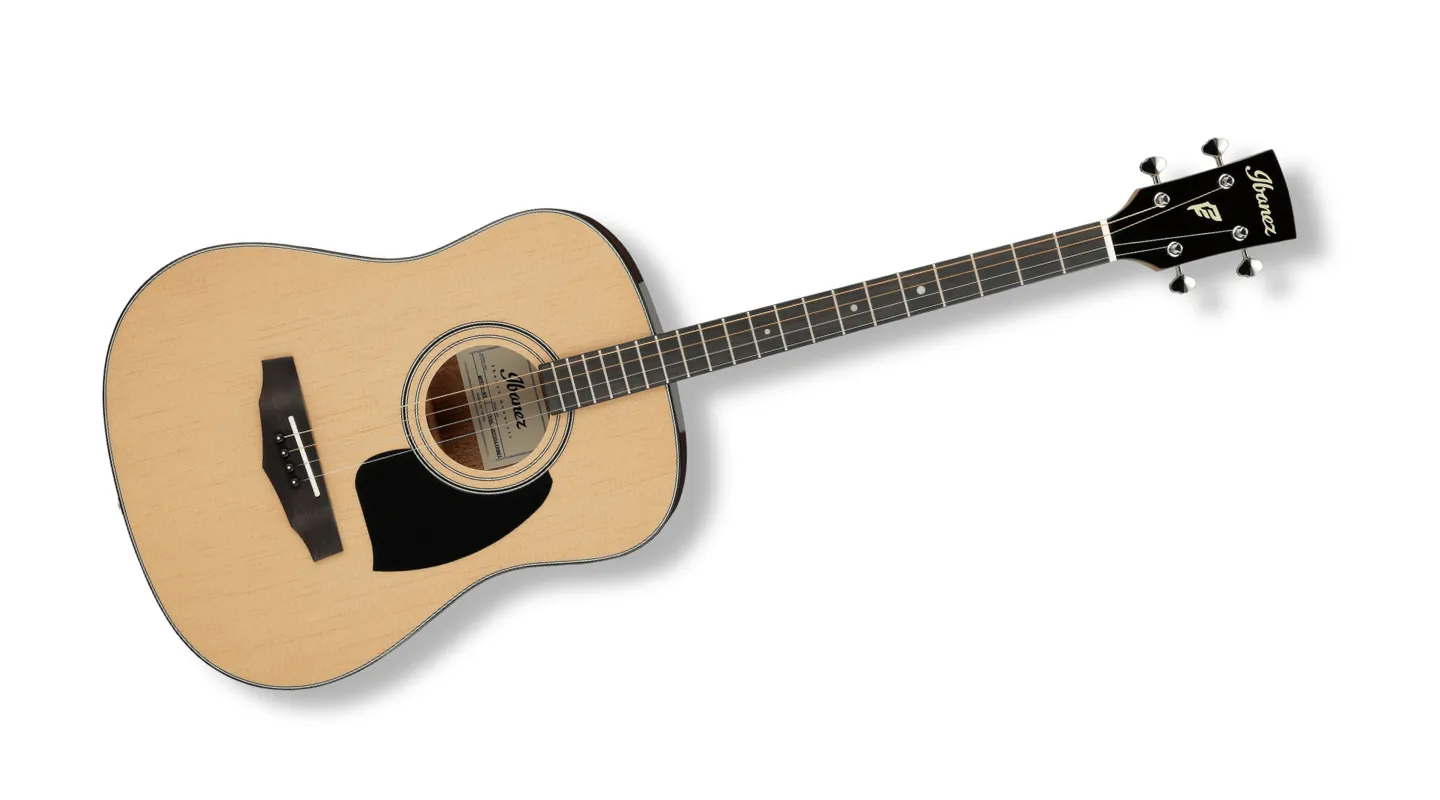
A tenor guitar is a guitar with four strings and a shorter scale length than a standard guitar. The scale length of a tenor guitar is, usually between 21 and 23 inches (530 to 580 mm), compared to a standard guitar’s scale length of 24.9 to 25.6 inches (632.46 to 650.24 mm). Due to the shorter scale, the tuning on a tenor guitar is significantly higher (1 fourth higher) than on a regular guitar. This results in the tenor guitar’s bright and punchy tone.
The tenor guitar has found its place in folk, jazz, and even punk music. However, the tenor guitar is a particularly good fit for folk music. The tenor guitar can be heard in the song “Tom Dooley” performed by Nick Reynolds of the Kingston Trio. In the song, Nick Reynold showcases the bright punchy tone of the tenor guitar by playing a Martin 0-18T tenor guitar.
16. Flamenco Guitar
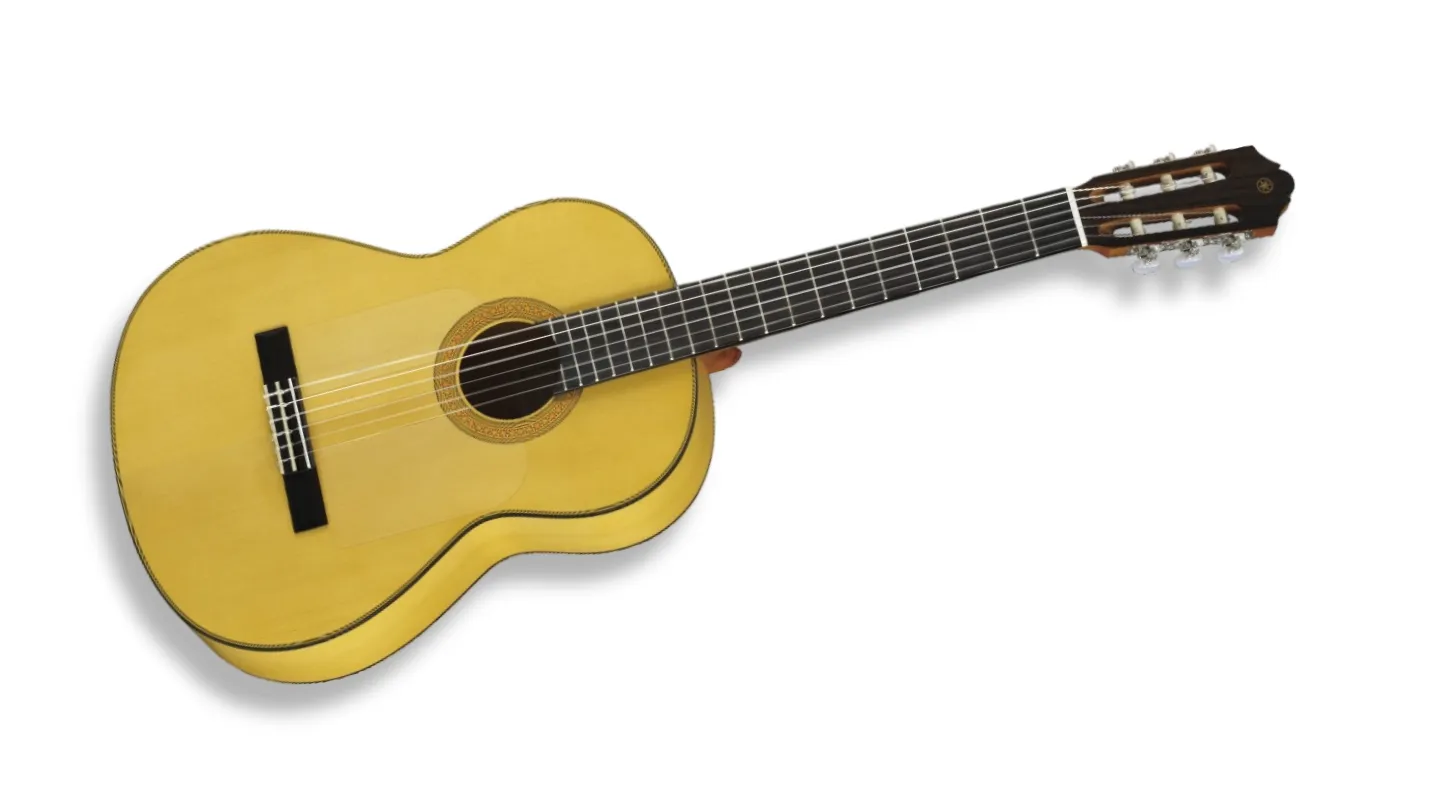
Flamenco guitar is a type of guitar specifically designed for flamenco music. Flamenco guitar is similar to a classical guitar but a flamenco guitar is lighter in weight, has a thinner body, less internal bracing and lighter gauge strings for easier fast-paced strumming, when compared to classical guitar. The flamenco guitar is traditionally crafted from cypress and spruce wood. This design allows for a loud, bright, percussive sound, perfect for the rhythmic intensity of flamenco music.
The flamenco guitar is known for its snappy, crisp tones with less sustain than classical guitar. This is largely due to the lower action (the distance between the strings and the fretboard) and the use of golpeadores (tap plates similar to pickguards) that protect the guitar from the aggressive taps and strums typical of flamenco playing.
The flamenco guitar is not confined to flamenco music alone, and can be used in a variety of genres. However, it truly shines when used in flamenco music, traditional Spanish music, Latin styles, and certain types of jazz. One notable player who has mastered the flamenco guitar sound is Paco de Lucia, and his song “Entre dos Aguas” is a very pleasant example of flamenco guitar music.
17. Gypsy Jazz Guitars
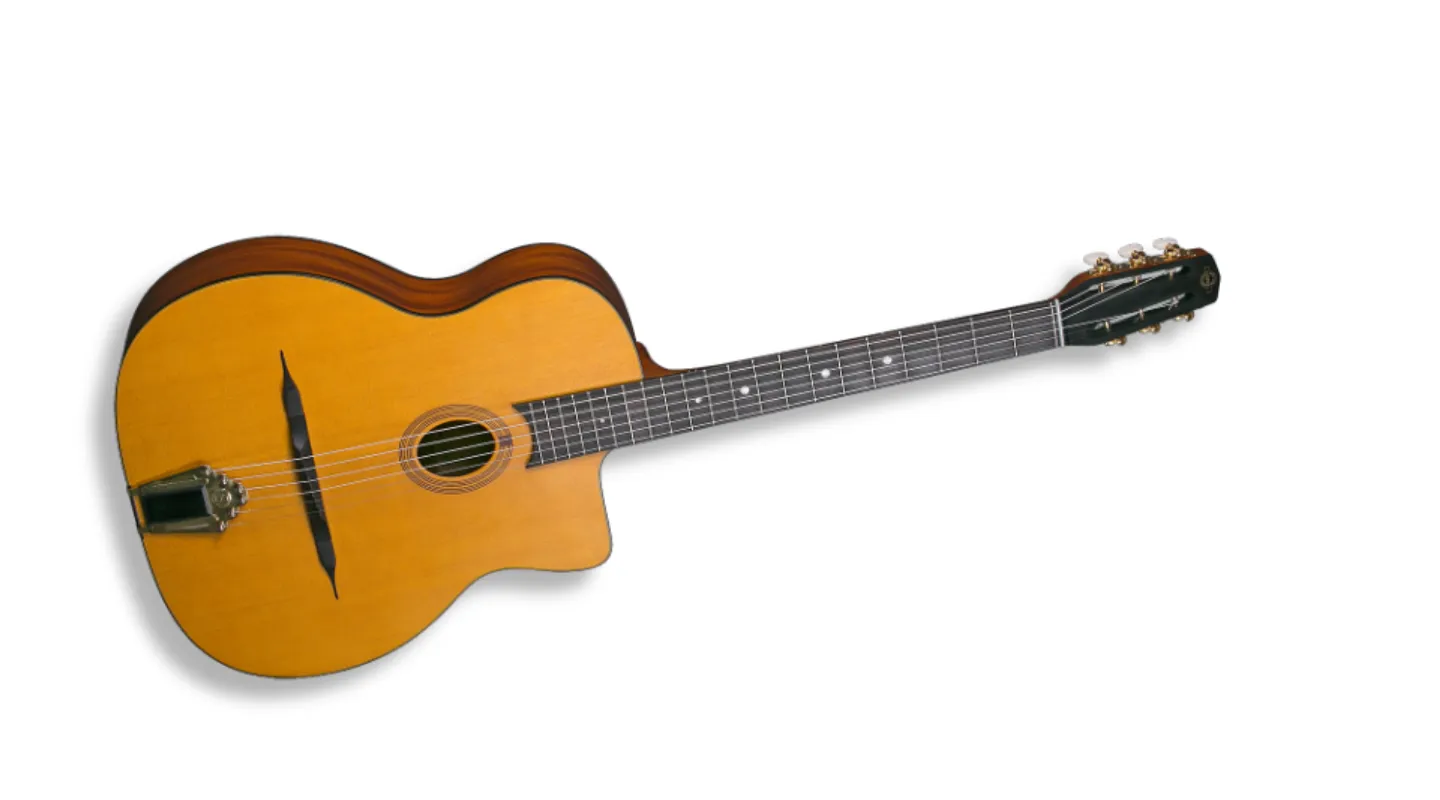
Gypsy Jazz guitars, also known as Selmer-style or Maccaferri-style guitars, are characterized by their D-shaped or oval soundholes, longer scale length, and 14-fret necks. The gypsy jazz guitar’s features contribute to a guitar that offers a punchy, bright tone with a quick response, which is ideal for the fast, rhythmic playing style of gypsy jazz.
When it comes to sound, the gypsy jazz guitar provides a tone that’s clear and cutting, capable of slicing through other instruments in a band setting. This characteristic makes it the go-to choice for gypsy jazz, a genre popularized by Django Reinhardt. Django Reinhardt’s song “Minor Swing” is a classic example of the gypsy jazz guitar sound.
18. Double Neck Guitars

A double neck guitar is a unique type of guitar that features two different necks, allowing the player to switch between 2 different guitar necks during a performance. The purpose of the double neck guitar is to switch between different sounds and techniques without needing to swap guitars. A double neck guitar is essentially two guitars in one, with two separate fretboards and often two different types of guitars combined.
A double-neck guitar is typically a combination of a 6-string and a 12-string guitar. The six-string neck provides the standard guitar sound, while the twelve-string neck offers a richer, fuller sound due to the extra strings. But the sound of a double neck guitar can be very varied, it all depends on the 2 types of guitars the double neck guitar combines. A combination of a 6-string guitar and 4-string bass is also popular. These combinations allow players to achieve a wide range of tones, making the double neck guitar a versatile choice for many genres.
The double neck guitar shines in rock and progressive music. Double neck guitar is a favorite among rock legends like Jimmy Page of Led Zeppelin, who used a double neck guitar to play the iconic song “Stairway to Heaven” at Led Zeppelin concert in 1973 and in many other Led Zeppelin live shows and recordings.
What to know about different types of guitars?
The key information to know about different guitar types is their differences. The main factors to take into account when comparing different guitar types are listed below:
- Playability and Comfort
- Sound Signature
- Suitable styles and genres
- Sound Production
- Shape, size and model
- Parts
- Materials
- Brands
- Cost
Playability and Comfort: Playability and comfort are crucial because they determine how quickly you can learn to play the guitar type and how challenging the learning experience will be. For instance, acoustic guitars with nylon strings, are easier to play than acoustic guitars with steel strings because the nylon strings are easier to fret than steel strings. Other aspects of playability and comfort include guitar features like body size, nut width, weight, scale length, action, neck profile, and neck finish.
Sound Signature: The sound signature of a guitar is the unique sound the guitar makes. The sound signature makes a Fender Stratocaster sound different from a Gibson Les Paul, even when they’re playing the same note. Each type of guitar has a unique sound signature, characterized by its balance of low, midrange, and high frequencies. You can listen to the sound signatures of different guitar types in the video below.
Suitable styles and genres: The sound signature of a guitar also determines the styles and genres the guitar type is best suited for. For example, electric guitars are commonly used in rock and pop music, while classical guitars are more common in classical music.
Sound Production: When it comes to sound production, some guitars need an amplifier and pickups to produce sound, while others do not. This difference also means that some guitar types require more equipment than others, which can affect the cost.
Shape, size and model: The shape, size, and even specific model of a guitar can all have an impact on the sound and playability. For example, larger acoustic guitars tend to produce more volume and have a richer tone, while smaller acoustic guitars have a more focused, less resonant sound.
Parts: The parts of a guitar are crucial because they directly influence the instrument’s sound, feel, and playing style. From the type of bridge to the kind of strings used, each component contributes to the overall sound and feel of the instrument. Not to mention, certain guitar types are built to accommodate specific techniques. Classical guitars, for instance, have nylon strings that facilitate finger-style techniques like apoyando or rasgueado better than a steel-stringed acoustics.
Materials: The materials used to craft the guitar parts play a crucial role in the quality of the guitar parts and the overall quality of the guitar, impacting both its sound and durability. For example, tonewoods are specific types of woods that influence how an acoustic guitar vibrates and projects sound. Mahogany tonewood is often used for acoustic guitar’s back and sides and adds warmth and resonance to the guitar’s tone. On the other hand, spruce is a popular choice for acoustic guitar tops and adds brightness and clarity to the guitar’s sound. Carefully selected materials ensure that each part of the guitar optimally contributes to the overall performance of the instrument.
Brands: Guitar brands are significant because they often specialize in specific guitar types and cater to different price points and levels of craftsmanship. Some brands are known for their high-end electric guitars, while others excel in producing more affordable acoustics.
Cost: A guitar’s cost often reflects the quality of its construction and materials. Entry-level guitars made with more affordable materials and manufacturing processes are priced lower than high-end instruments crafted with premium tonewoods and meticulous attention to detail. Additionally, guitars from well-established brands with a reputation for quality often come with a higher price tag than those from lesser-known manufacturers.
What Type of a Guitar to Choose as a Beginner?
The most suitable guitar type to choose as a beginner is a classical guitar. Classical guitars are easier to play due to their nylon strings, and they are typically less expensive. This makes classical guitars a great choice for beginners who are just starting their guitar journey.
However, keep in mind that classical guitars are primarily designed for classical music. While classical guitars can technically play other genres, beginners focused on specific musical styles like rock, pop or metal, might be more inspired to play a guitar type that is better tailored to those genres. For example, song “Smoke on the water” by Deep Purple sounds different on an electric guitar than on a classical guitar. Alternatively, playing “Wonderwall” by Oasis on a classical guitar results in a different sound than playing it on a steel string acoustic.
Acoustic guitars are more challenging to learn due to their steel strings, but acoustic guitars are also more versatile and can accommodate a wider range of musical styles. Electric guitars are even more versatile and perfect for genres like rock and blues. However, electric guitars require an amplifier to produce sound which adds to the overall cost.
As a rule of thumb, acoustic, electric, classical, and electric acoustic guitars are the ones most recommended to beginners. This is mainly because acoustic, electric acoustic, and electric guitars are very versatile and will allow you to easily try different styles as you get better. On the other hand classical guitar is great for learning, and building good technique and it will allow you to easily transition into an acoustic or electric guitar in the future, if you choose to do so.
What is the difference between an acoustic vs electric guitar?
The main difference between acoustic and electric guitar lies in how they amplify the sound. An acoustic guitar uses its hollow body as a resonance chamber to amplify the sound produced by the vibrating strings. On the other hand, an electric guitar relies on electronic amplification. Electric guitar uses pickups to convert the vibration of the strings into electrical signals, which are then amplified and converted back into sound by a guitar amplifier.
In terms of playability, electric guitars are generally easier to play due to their lighter string gauge and smaller body size. The steel strings of an acoustic guitar will make practice lessons less pleasant before your fingers develop calluses.
However, acoustic guitars are great for campfire sing-alongs because they do not require electricity and additional equipment to be heard. On the other hand, electric guitars not only need electricity to produce their sound but buying the additional equipment like the cable and an amplifier also increases the overall cost of the instrument.
What is a thin-body acoustic guitar?
A thin-body acoustic guitar is a guitar with a thinner body than a standard acoustic guitar. Thin-body acoustics offer a smaller, less bulky size and a unique sound. Thin body guitars are ideal for musicians who perform for extended periods and need a comfortable, lightweight instrument.
What is a bodyless electric guitar?
A bodyless electric guitar, also known as a silent guitar, has no resonating body. This makes the bodyless electric guitar incredibly quiet when played unplugged, making it an excellent choice for practice sessions when you don’t want to disturb others. When plugged into an amp, however, the bodyless electric guitar can produce a full and rich sound, making it a versatile choice for any guitarist.
What are the different types of guitar amps?
A guitar amplifier, or simply amp, is a device that amplifies the sound of an electric guitar. The different types of guitar amps are tube amps, solid-state amps, hybrid amps, and modeling amps. Guitar amps work with guitar pickups to produce sound. The pickup translates the vibration of the strings into a signal that is then sent to the amplifier to produce sound. Different types of electric guitar pickups include single coil pickups, humbuckers, P-90 pickups, and active pickups. The choice of pickups and the choice of amplifier should be aligned to achieve the most optimal sound. For example, some amps accentuate the bright clarity of single coils, while others are better suited for enhancing the warm, thick tones of humbuckers.
What are the different types of guitar strings?
The different types of guitar strings include nylon strings, stainless steel strings, nickel-plated steel strings, pure nickel strings, brass-plated steel strings (80/20 bronze), bronze-plated steel strings, phosphor bronze strings, and coated and treated strings (polymer-coated strings).
Guitar strings are the vibrating elements that produce different pitches when plucked or strummed. The different types of strings affect the sound and playability of the guitar. For example, nylon strings, used on classical guitars, produce a warm, mellow tone and are soft on the fingers, making them ideal for beginners. Steel strings, on the other hand, produce a bright, crisp sound and are used on acoustic and electric guitars.
Which guitar styles and genres to know as a guitarist?
The guitar styles and genres to know as a guitarist include blues, rock, jazz, classical, flamenco, country, metal, and folk.
Each guitar style and genre has its own unique techniques, sound, and musical traditions. Understanding the characteristics of different styles and genres helps guitarists broaden their musical horizons, develop their versatility, and deepen their overall understanding of the instrument. For example, classical guitar music often involves complex fingerpicking patterns and a focus on dynamic control, while blues guitar styles rely heavily on string bending, vibrato, and improvisation.
What to start learning as a guitar beginner?
As a beginner guitarist, start learning the basics like tuning your guitar and playing simple chords.
To tune a guitar, start by adjusting the tuning pegs until the strings have the right pitch. The most common tuning is E-A-D-G-B-E, starting with the thickest string (the low E), then the A string, followed by the D string, the G string, the B string, and finally the thinnest string (the high E).
The simple chords to start learning as a beginner include the E major, A major, D major, G major, C major, A minor, D minor, E minor. A chord is a group of three or more notes that are played simultaneously and they are the building blocks of most songs.
What instruments are similar to the guitar?
Instruments that are similar to the guitar are the string instruments that produce sound by the vibration of stretched strings, when the strings are plucked, hit, or rubbed with a bow. There are more than 300 different string instruments. The string instruments that are the most similar to the guitar are listed below.
- Banjo
- Mandolin
- Guitarrón
- Sitar
- Cittern
- Balalaika
- Lute
- Zither
- Koto