


Choosing between a Dreadnought and a Concert acoustic guitar directly determines how the instrument will sound, project, and feel to play. Body shape and size are among the most important factors affecting tone, volume, and comfort.
The Dreadnought and Concert represent two of the most popular acoustic guitar shapes. The Dreadnought has a large, square-shouldered body built for powerful bass and strong projection. The Concert is smaller and more tapered, offering balanced tone, clear articulation, and improved ergonomics.
This article defines the Dreadnought and Concert acoustic guitar shapes, compares their exact body dimensions, analyzes tonal differences based on frequency response and sound pressure levels, evaluates playing comfort by weight and ergonomics, and weighs out the pros-and-cons of each body type to clarify which shape is better aligned with different musical applications and performance needs.
What Is a Dreadnought Acoustic Guitar Shape?
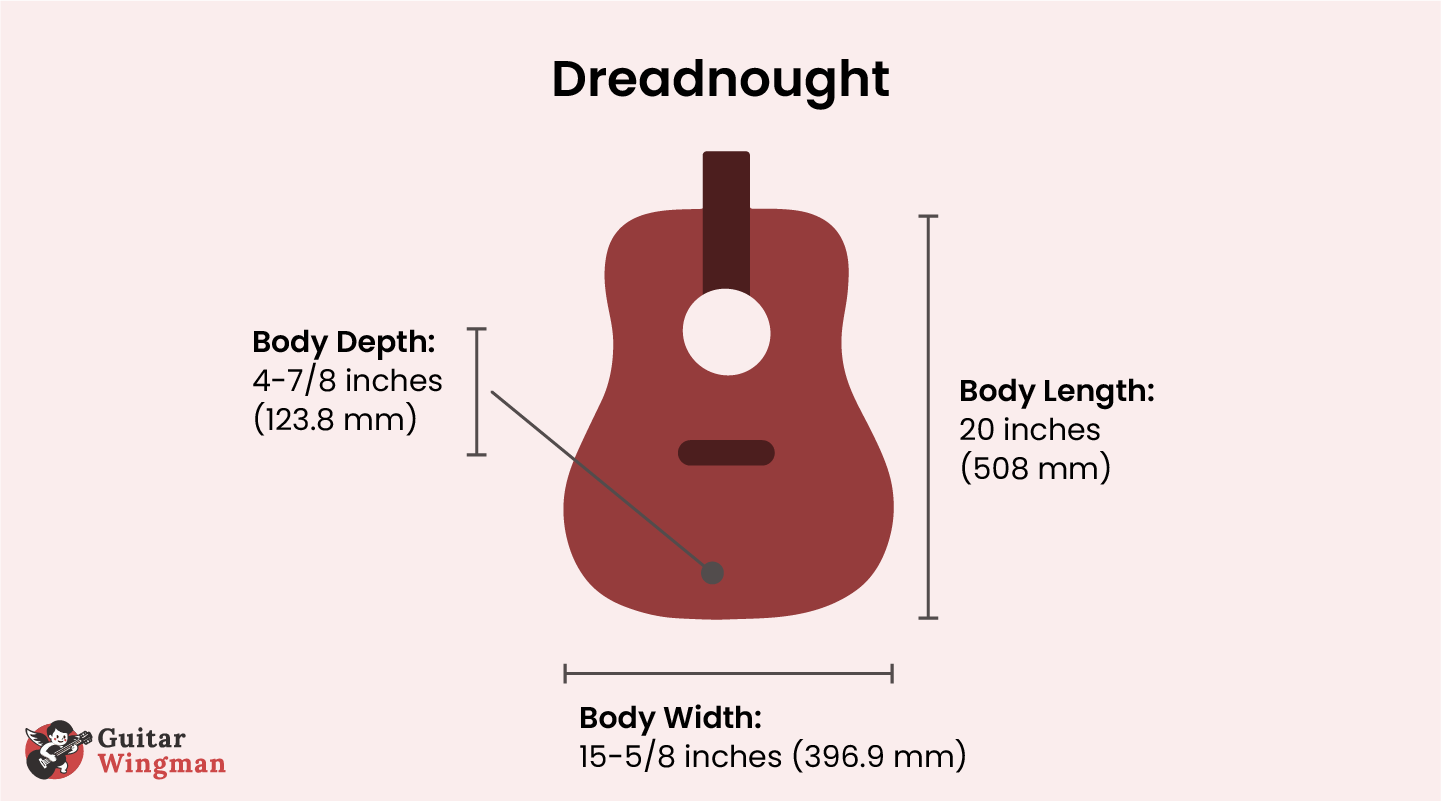
The Dreadnought is one of the largest and most powerful acoustic guitar body shapes. Dreadnought body type features a broad, square-shouldered outline with a deep body profile. According to Taylor Guitars (a leading American acoustic guitar manufacturer), larger guitar body volumes increase acoustic power output, particularly in the lower frequencies. This means that the dreadnought shape is designed to produce high volume and a strong, resonant bass response. This construction, which prioritizes projection, makes the Dreadnought ideal for lead and rhythm playing in unamplified settings.
The name “Dreadnought” was introduced by C.F. Martin & Company around 1916. The Dreadnought name directly references the HMS Dreadnought, a British battleship known for its unprecedented size and power. Martin’s release of the Dreadnought D-series in the 1930s marked a key turning point in acoustic guitar design. D-Series models introduced a new standard for volume and tonal depth, addressing the need for acoustic instruments to project over banjos, fiddles, and horns in live ensemble settings. This made the Dreadnought especially valuable in bluegrass and folk, where strong projection and low-end presence were essential for cutting through other instruments in unamplified settings.
The shape’s success influenced the evolution of acoustic music. Dreadnought’s design enabled louder, fuller playing styles, while the growing demand for such features reinforced the Dreadnought’s popularity in the market. Artists such as Tony Rice and Doc Watson in bluegrass, Neil Young in folk-rock, and Elvis Presley in early rockabilly popularized the dreadnought’s powerful projection in their recordings and live performances. Today, the Dreadnought remains the most popular steel string acoustic guitar body shape worldwide.
What Is the Difference Between a Standard Dreadnought and a Dreadnought With a Cutaway?
A cutaway Dreadnought provides easier access to higher frets, while a standard Dreadnought preserves the full body shape.
A cutaway is a curved indentation in the upper bout of the guitar body near the neck, designed to provide easier access to frets above the 14th. This modification enhances playability for lead work or soloing in higher positions.
Removing part of the sound chamber can slightly reduce volume and bass response. However, in most practical scenarios, the tonal difference is minimal. The choice between a standard Dreadnought and a cutaway model depends on whether the player needs consistent access to upper frets for their style of music.
What Is a Concert Acoustic Guitar Shape?

The Concert acoustic guitar shape is a mid-sized body type designed for tonal balance, clear articulation, and playing comfort. Concert shape originated as C.F. Martin & Company’s smallest standardized body size, labeled the “0” shape. Both “Concert” and “0” describe guitars with similar dimensions, with Martin’s early models built with 12-fret necks rather than 14, which altered bridge placement and subtly shaped tonal response.
The Concert body type has a noticeably narrower waist and shallower body depth than the Dreadnought. These structural differences directly affect sound.The concert shape has a focused tone with less bass boom, greater clarity in the midrange, and more articulate treble. The midrange emphasis allows notes to remain distinct, reducing overlap or muddiness in chordal playing.
Compared to the slightly larger Grand Concert (00), the Concert (0) produces fewer overtones and less high-end shimmer, which gives strummed chords a tighter, more controlled sound. While some describe this tonal profile as “boxy,” it contributes to a precise, intelligible projection ideal for small venue performance.
The Concert’s smaller body also improves physical comfort by reducing reach and shoulder strain. The Concert shape sits closer to the torso and requires less arm extension than larger shapes, making the Concert easier to hold and play for long periods. Studies on musicians’ health link extended or awkward playing postures to increased muscle fatigue and joint pain, especially in the shoulders and upper limbs. Because the Concert shape places less physical demand on the body, it is often preferred for extended sessions and by players seeking a more ergonomic fit.
What Are the Key Differences Between Dreadnought and Concert Acoustic Guitar Shapes?
The key differences between Dreadnought and Concert acoustic guitar shapes are evident in four primary areas: physical size and shape, sound and tone, playing comfort, and suitability for different playing styles. Each difference is a direct result of body design, which determines acoustic properties, ergonomics, and optimal musical applications.
Size and Shape Differences
A Dreadnought guitar is physically larger than a Concert guitar. A Dreadnought has a large, deep-bodied, broad-shouldered profile with substantial body depth. A Concert has a compact, thinner-bodied profile with a significantly more tapered waist and reduced body depth. These physical differences directly influence ergonomics, portability, and playing comfort. The table below outlines the manufacturer dimensions for Martin’s 14-fret Dreadnought (D) and 14-fret Concert (0) models.
| Measurement | Martin Dreadnought (D) | Martin Concert (0) |
| Body Length | 20 inches (508 mm) | 18-3/8 inches (466.7 mm) |
| Upper Bout Width | 11-1/2 inches (292.1 mm) | 10 inches (254 mm) |
| Lower Bout Width | 15-5/8 inches (396.9 mm) | 13-1/2 inches (342.9 mm) |
| Depth at Neck | 3-7/8 inches (100 mm) | 3-13/32 inches (86.5 mm) |
| Depth at Tail | 4-7/8 inches (123.8 mm) | 4-1/4 inches (108 mm) |
Sound and Tone Differences
The Dreadnought provides maximum volume and low-end support for rhythm-driven styles, while the Concert prioritizes clarity, control, and detailed expression.
Acoustic guitar’s body size directly influences it’s tonal output. The Dreadnought’s large internal air volume and deep body produce a loud, bass-heavy tone with strong projection. This powerful response creates a full, resonant sound that makes the Dreadnought well-suited for ensemble performance and live settings where volume and presence are critical.
The Concert’s smaller body and tighter waist create a more balanced tonal profile. Reduced low-end emphasis and improved midrange focus result in greater note separation and clarity. Individual frequencies are less likely to overlap, making the Concert ideal for studio environments where articulation and precision are essential.
Which Shape Is More Comfortable to Play?
The Concert acoustic guitar shape is more comfortable to play than the Dreadnought for most body types and playing positions. The Concert’s smaller body and tapered waist allow it to sit lower and closer to the torso, reducing reach and improving ergonomics.
In contrast, the Dreadnought’s wide and deep body increases shoulder elevation and arm extension, particularly in seated positions or for smaller-framed players. This often leads to posture adjustments and increased physical strain during extended use.
Dreadnought is also heavier than the Concert shape. A Dreadnought typically weighs 4.5–6 lbs (2–2.7 kg)m while a Concert generally weighs 3.5–4.5 lbs (1.6–2 kg). A Dreadnought’s extra weight puts more strain on the shoulder and back when played on a strap, leading to faster fatigue during long sets and making it harder to shift position. A Concert’s lighter build eases the load, helps reduce fatigue, and makes position changes quicker and more comfortable when standing or moving.
The Dreadnought offers more power and projection, while the Concert provides greater comfort and control, making each shape better suited to different playing needs and styles.
Which Shape Is Better for Strumming vs. Fingerstyle?
The Dreadnought is better suited for strumming, while the Concert is more effective for fingerstyle playing.
The Dreadnought’s powerful low-end and higher sound pressure level give it the dynamic range and projection needed for strumming and flatpicking, making it ideal for driving rhythm parts and vocal backing in full band contexts. In contrast, the Concert’s balanced midrange and clear note separation make it more effective for fingerstyle playing, where articulation and voicing clarity are critical.
What Are the Overall Pros and Cons When Comparing Dreadnought and Concert Acoustic Guitar Shapes?
Dreadnought and Concert guitar shapes serve different musical roles based on body size, tone, and ergonomics. The Dreadnought offers high volume and strong bass, making it ideal for strumming, vocal support, and live performance. The Concert emphasizes comfort and clarity, making it better for fingerstyle playing and recording. Each shape’s design determines its best use case.
What Are the Advantages of a Dreadnought Body Type Compared to a Concert Body Type?
The advantages of a Dreadnought body type compared to a Concert body type are listed and described below.
- High Volume and Projection: The Dreadnought delivers greater acoustic output, which makes it effective for cutting through a mix in group settings and projecting in unamplified solo performances.
- Powerful Bass Response: The Dreadnought emphasizes bass frequencies, creating a full, resonant tone.
- Great for Strumming and Flatpicking: The Dreadnought’s headroom and low-frequency power make it ideal for aggressive strumming and flatpicking, especially in live or dynamic musical contexts.
What Are the Advantages of a Concert Body Type Compared to a Dreadnought Body Type?
The advantages of a Concert body type compared to a Dreadnought body type are listed and described below.
- Greater Playing Comfort: The Concert’s smaller body, tapered waist and lower overall weight provide more comfortable playing experience than Dreadnought for most players with normal build.
- Balanced and Articulate Tone: The Concert produces a more focused tonal output, with reduced bass emphasis and greater midrange clarity.
- Optimized for Fingerstyle Techniques: Clear note separation and balanced projection allow individual notes and voicings to resonate without being overpowered by low-end frequencies. This makes the Concert ideal for intricate fingerpicking.
How Does the Dreadnought Shape Compare to Other Acoustic Guitar Body Types?
The Dreadnought sits in the mid-to-large range of acoustic guitar body types, offering strong volume and bass response. The closest alternative to the Dreadnought shape is the Grand Auditorium. Grand Auditorium blends the Dreadnought’s volume with improved comfort and tonal clarity.
Compared to smaller shapes like the Parlor, the Dreadnought delivers significantly more projection and low-end power. Parlor guitars have a compact body and produce a quieter, midrange-heavy tone with reduced bass, often described as “boxy” or vintage.
Compared to larger shapes like the Jumbo, the Dreadnought offers more tonal focus and clarity in the low end. Jumbo guitars have an even larger and rounder body, producing greater overall volume and deeper bass response, but often with less definition in the low frequencies. Each shape reflects a different trade-off between size, tonal character, and playing comfort.