


The best acoustic guitar is a high quality guitar that best suits the player’s individual needs, playing style, and budget. A guitar that feels perfect in the hands of a bluegrass musician may not be the best sounding guitar for a folk singer, highlighting how the “best” choice strongly depends on the player and situation.
Factors like sound and tone, playability and comfort, versatility, and construction and design all contribute to the guitar’s quality and how well the acoustic suits a particular player. For example, a guitarist who primarily plays fingerstyle could choose an acoustic with a wider nut width and a balanced tone, like the Seagull S6. A musician who performs on stage might choose a dreadnought with powerful projection, such as the Martin D28.
A guitar’s sound and tone are determined by features like the wood type, body shape, and bracing pattern. Some guitars sound bright with clear high notes, while others have a warmer sound with a full bass. Different players prefer different sound signatures, based on their playing style and musical genre.
Playability and comfort depend on features like the neck profile, scale length, and body shape, directly affecting how easy it is to practice, learn, and play the guitar.
A guitar’s versatility refers to its suitability for different musical genres and playing techniques. Versatility is determined by a combination of factors, including the guitar’s sound signature, playability, and responsiveness to various playing styles and techniques. A versatile guitar delivers a balanced sound that adapts well to various musical contexts and playing techniques.
Construction and design directly impact the guitar’s durability, sound quality, and how good the guitar looks. Factors like the quality of tonewoods, bracing patterns, finish, and overall craftsmanship contribute to a guitar’s longevity and its ability to resonate well. A well-constructed guitar not only sounds better but also withstands years of playing.
This article reviews 10 acoustic guitars including the iconic Martin D28, wallet friendly Yamaha FG830, and value packed Eastman E1D. The most important aspects of these 3 guitars are highlighted in the boxes below.
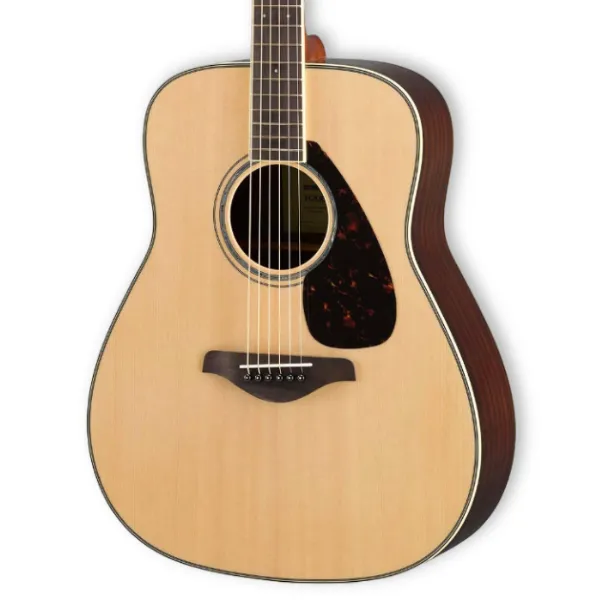
Solid Sitka Spruce Top
Excellent volume and Projection
Balanced Tone
Great Versatility
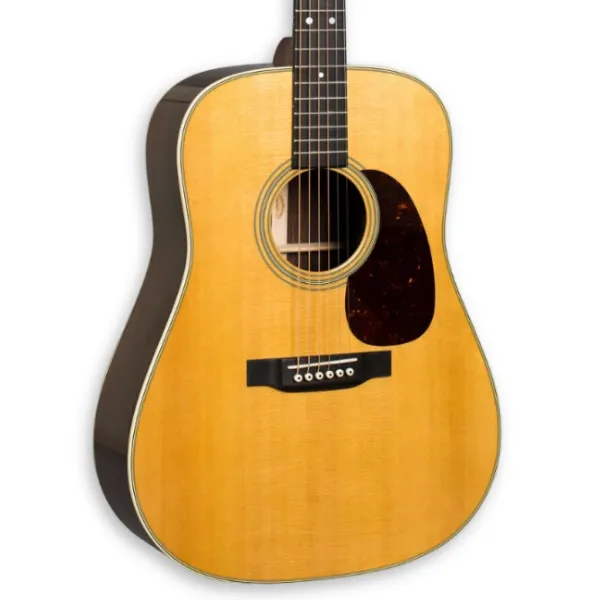
Powerful Projection
All-Solid Wood Body
East Indian Rosewood
Non-Scalloped Bracing
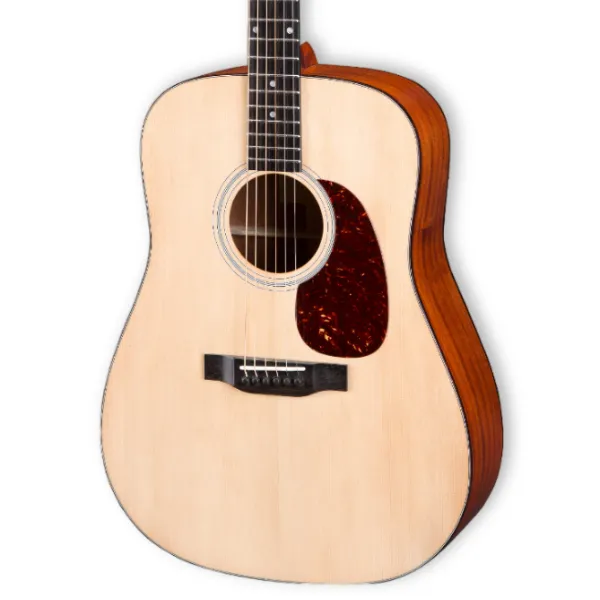
All-Solid Wood Body
Punchy Midrange
Scalloped Bracing
Bone Nut and Saddle
Below is a list of the top 10 best acoustic guitars, each chosen for its performance in specific categories and playing situations.
- Martin D28 – Best overall acoustic guitar
- Yamaha FG830 – Best cheap acoustic guitar
- Eastman E1D – Best value for intermediate players
- Fender CD-60S – Best for beginners on a budget
- Taylor Academy 10 – Best for beginners to learn on
- Martin LX1 Little Martin – Best for traveling musicians
- Yamaha FG 5 – Best value for professionals on a budget
- Taylor GS Mini Mahogany – Best small-bodied acoustic guitar
- Seagull S6 Original – Best acoustic guitar with a cedar top for fingerstyle
- Guild F-1512 – Best value 12-string acoustic guitar
1. Martin D28
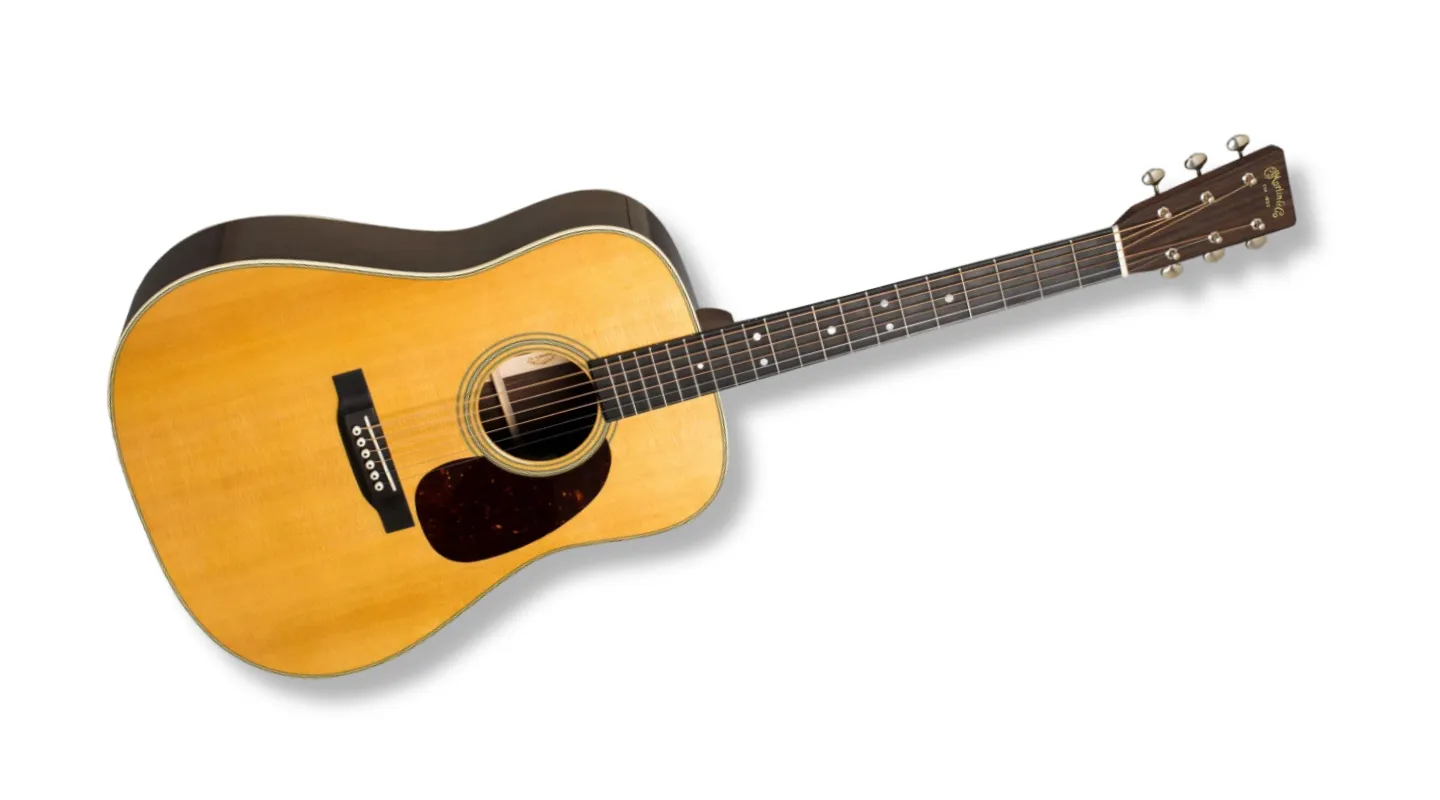
The Martin D28 is a famous dreadnought acoustic guitar with an all solid wood body featuring a solid spruce top and East Indian rosewood back and sides. Martin D28 is a part of Martin’s Standard Series. In the Standard Series, the D28 represents the evolution of the iconic dreadnought design that Martin first developed in 1917.
The modern D28 continues to use the 5/16″ (7.95 mm) straight bracing found on mid-20th century Martins, which distinguishes D28 from other Martin dreadnoughts that have transitioned to scalloped bracing. The D28 has remained largely unchanged since the late 1960s, with the most significant update being the shift from Brazilian to Indian rosewood in 1970 due to sustainability concerns.
The D28 is an iconic high end acoustic guitar used by famous professional musicians like Hank Williams, The Beatles, Johnny Cash, Neil Young, and Bob Dylan. At a price point of around $3,300 (prices may vary) the Martin D28 is an amazing acoustic guitar for the money with its high-quality construction and reputation. The Martin D28 is made in the USA in Nazareth, Pennsylvania.
Sound and Tone (5/5): The Martin D28 has a warm, resonant and balanced tone.
The highs are clear and defined, allowing individual notes to ring clearly even in busy mixes.
The D28’s midrange is full and well-balanced. The mids don’t get lost in the overall mix and contribute to the D28’s powerful projection.
The D28’s lows are warm, deep, and resonant, thanks to the East Indian rosewood body. However, the straight bracing makes the low end less pronounced than Martin’s Dreadnought (D) models with scalloped bracing.
The Martin D28 earns a 5/5 rating for its sound and tone.
Playability and Comfort (4/5): To assess the playability and comfort of the Martin D28 we evaluate the body size, weight, neck profile, neck finish, scale length, and nut width of the guitar.
The Martin D28’s dreadnought body shape is large and can feel bulky and uncomfortable for some players, especially during extended seated playing sessions.
The weight of the Martin D28 guitar ranges from 4 lbs (1.81 kg) to 4.5 lbs (2.04 kg), depending on the specific model. This falls within the average weight range for a dreadnought. However, based on the specific wood used to craft the guitar the weight can vary beyond the provided range.
The modified low oval neck profile, with its gentle taper, provides a comfortable grip for a variety of hand sizes, allowing for smooth transitions between chords and comfortable playing for extended periods.
The satin neck finish offers a smooth playing surface, allowing the hand to glide effortlessly along the neck, contributing to faster and more comfortable playing.
The D-28 features a 25.4″ (645.16 mm) scale length, which is common for full sized steel-string acoustic guitars. This scale length provides comfortable string tension, making fretting and bending strings easy.
D28’s nut width is 1.75″ (44.45 mm). This nut width is slightly on the wider end, which provides ample space between strings, benefiting players with larger fingers or those who prefer a more spacious feel.
The Martin D28 earns a 4/5 rating for its playability and comfort.
Versatility (4/5): We explore the Martin D-28’s versatility by examining its performance across various musical genres and playing techniques.
The D-28 excels in genres like country, bluegrass, rock, and folk.
In Bluegrass and Folk, the D28’s bright and articulate sound cuts through the mix of banjos and fiddles often present in these styles, while its strong bass response provides a solid rhythmic foundation.
The Martin D28 is also a good acoustic guitar for country music because its clear and focused notes are well-suited to the fast-paced, intricate picking patterns.
D28’s balanced tone profile also translates well to rock music. In rock music, the D-28’s clarity ensures that the individual notes within chords ring out clearly, even with heavier strumming or when amplified. The D-28’s ability to deliver both articulate leads and powerful chord voicings makes it surprisingly versatile for rock guitarists who need an instrument that can handle both delicate passages and driving rhythms.
Martin D28 is a good guitar for strumming but the D28 is also well-suited for flatpicking, fingerstyle playing, and other acoustic guitar techniques. However, because of its size, the D-28 lacks the openness and chime of smaller bodied guitars when playing more nuanced fingerstyle styles.
The Martin D28 earns a 4/5 rating for its versatility.
Construction and Design (5/5): To assess the construction and design of the Martin D-28, we evaluate the wood properties, bracing pattern, body finish, and aesthetics of the guitar.
Sitka Spruce, chosen for the D-28’s top, is prized for its stiffness and resilience, enabling it to withstand years of string tension without warping, ensuring the longevity of the instrument. East Indian Rosewood, used for the back and sides, is prized for its very high density and fine, even grain.
The D-28 features a forward-shifted X-bracing pattern. The braces are non-scalloped, meaning they are of uniform thickness. The braces are glued directly to the underside of the top, contributing to the guitar’s structural integrity.
The D28 features a gloss nitrocellulose finish on the body. The gloss nitrocellulose finish type of finish is known for enhancing the resonance of the wood and allowing it to age and mature tonally over time.
The D28’s aesthetic is natural and understated. The combination of a natural finish, highlighting the wood grain, with simple appointments like the white binding and black pickguard, contributes to its classic vintage appeal.
The Martin D28 earns a 5/5 rating for its construction and design.
Martin D28 Pros: Balanced tone, clear and defined highs, full and resonant midrange, warm and deep lows, comfortable modified low oval neck, smooth satin neck finish, good reputation, high-quality construction using premium tonewoods, excellent projection, responsive and resonant.
Martin D28 Cons: Dreadnought body shape can be bulky for some players, straight bracing may result in a less pronounced low-end compared to scalloped bracing, high price point for non-professional players (even for professionals but what can they do).

Recommendation for Martin D28
The Martin D-28 is a legendary acoustic guitar that delivers on its promise of powerful projection, a balanced tonal spectrum, and impeccable craftsmanship.
Choose the Martin D28 if you’re seeking a timeless and iconic acoustic guitar with a rich, resonant tone and are willing to invest in a high quality instrument.
Avoid the Martin D28 if you prefer a guitar with a more nuanced and quieter feel for fingerstyle playing or seek a guitar with scalloped braces.
| Martin D-28 Specifications | |
| Body Type | Dreadnought (D-14 Fret) |
| Top Material | Sitka Spruce |
| Back and Sides Material | East Indian Rosewood |
| Bracing | Forward-Shifted X-Brace (Non-Scalloped) |
| Neck Material | Select Hardwood |
| Scale Length | 25.4″ (645.16 mm) |
| Fingerboard Material | Ebony |
| Saddle/Nut Material | Bone |
| Frets | 20 |
| Finish | Gloss |
| Typical price in the USA | Around $2,799 (prices may vary) |
| Where to Buy | Martin Guitar authorized dealers, Sweetwater, Guitar Center |
2. Yamaha FG830
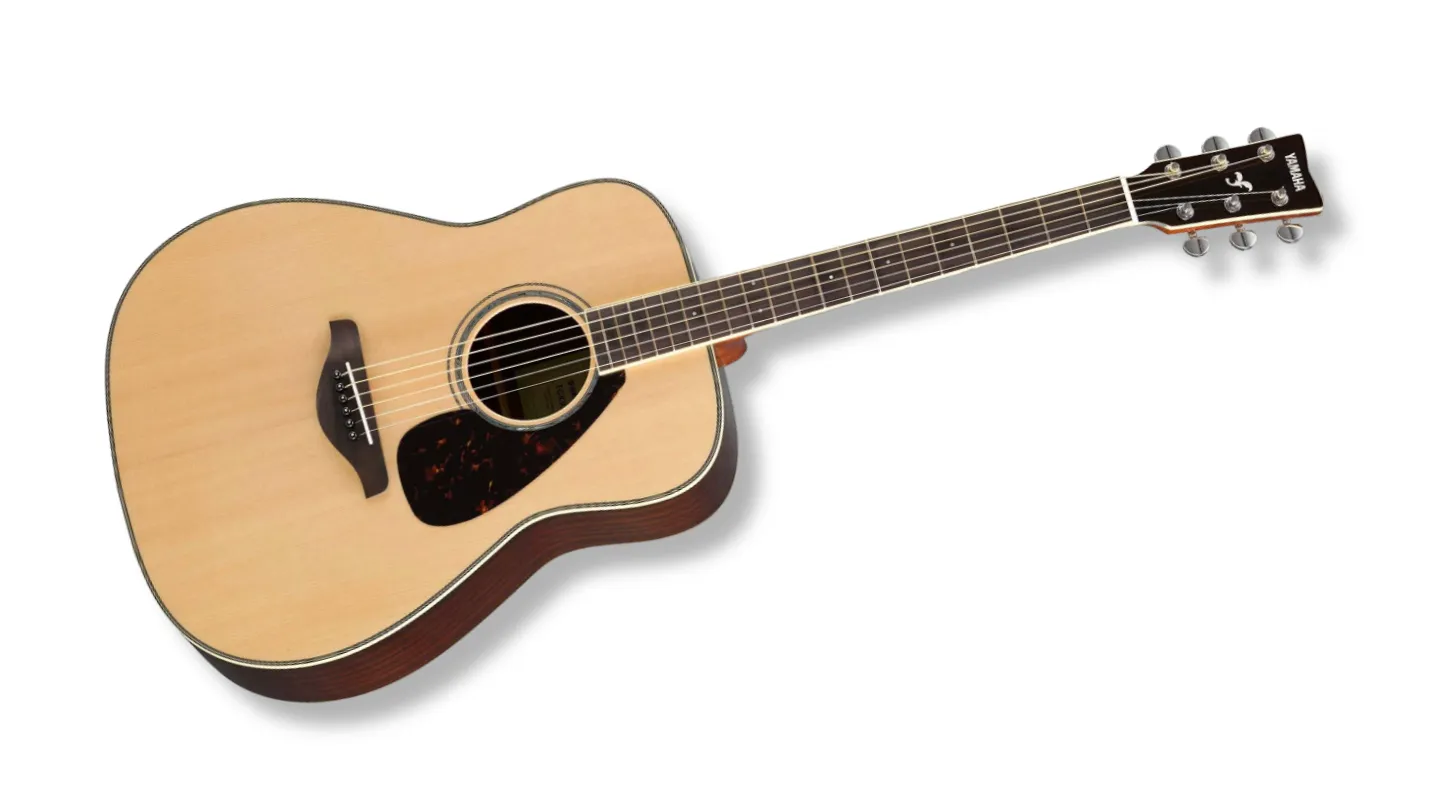
The Yamaha FG830 is a dreadnought-style acoustic guitar with a solid Sitka spruce top and rosewood laminate back and sides.
The FG830 is a part of Yamaha’s FG series. The Yamaha FG series is a best-selling acoustic guitar series worldwide. The FG830 is an upgrade to the FG700. The FG830 features scalloped bracing and a slimmer, tapered neck with rounded fingerboard edges, which were not present in the FG700.
The Yamaha FG830 is a great cheap acoustic guitar to learn on for beginners on a budget. The FG830 retails for around $300 (prices may vary), making the FG830 the best guitar under $500.
Sound and Tone (5/5): The Yamaha FG830 has a balanced tone with warm overtones.
The highs are bright and clear, giving each note definition. The solid Sitka spruce top contributes to the clarity in the highs because its inherent stiffness enables it to vibrate quickly and efficiently, producing clear and well-defined high frequencies.
The mids are full and well-balanced, providing the guitar with a strong fundamental character.
The lows are warm, but the bass could be more pronounced. The lows don’t offer as much depth and resonance as comparable dreadnoughts with a solid wood top and laminate back and sides.
The Yamaha FG830 earns a 5/5 rating for its sound and tone.
Playability and Comfort (4/5): To assess the playability and comfort of the Yamaha FG830 we evaluate the body size, weight, neck profile, neck finish, scale length, and nut width of the guitar.
The dreadnought body size of the Yamaha FG830 can feel bulky and may become uncomfortable for some players during extended playing sessions, particularly those with smaller frames. Players with long arms might find the dreadnought shape more comfortable due to the increased space it provides.
The Yamaha FG830 weighs 4.43 lbs (2 kg), however, the weight can vary slightly from guitar to guitar based on the wood strain used. While this weight is on the lighter side for dreadnought guitars, it is heavier than smaller-bodied guitars, which can impact comfort during long playing sessions.
The neck has a slim, tapered profile. The slim taper makes the neck comfortable for both beginner and experienced players, allowing for ease of movement and reduced hand fatigue, particularly during extended playing sessions.
The neck has a satin finish. This satin finish contributes to smooth playability because, unlike a gloss finish, it doesn’t feel sticky or slow down hand movement, especially during slides or quick chord changes.
The scale length of the guitar is 25 9/16” (650 mm). A 25 9/16” scale length is common for full-sized acoustic guitars and provides a familiar feel and tension for most players.
The Yamaha FG830 has a nut width of 1 11/16” (42.86 mm), which is slightly on the narrower side for an acoustic guitar. This nut width can feel more comfortable for players with smaller hands or those used to electric guitar spacing.
The Yamaha FG830 earns a 4/5 rating for its playability and comfort.
Versatility (4/5): To assess the versatility of the Yamaha FG830 we evaluate the suitability of the guitar for different genres and playing techniques.
The Yamaha FG830 is well-suited for a variety of genres, including folk, rock, bluegrass, and country. The FG830’s clear highs and balanced mids are ideal for projecting the intricate fingerpicking patterns and vocal accompaniment common in folk music. The FG830’s balanced tone and comfortable playability make it well-suited for country music’s blend of strumming and lead playing. The guitar’s clarity allows individual notes in country licks to ring out, while the balanced tone provides a solid foundation for chordal accompaniment.
The Yamaha FG830 is great for strumming, as its dreadnought body shape produces a full sound with good projection. The FG830 is also not a bad choice for fingerstyle playing for players with slim fingers and smaller hands. However, the string spacing of 11 mm with a nut width measuring 1 11/16” (42.86 mm) can feel too narrow for players with bigger hands and larger fingers. FG830’s standard scale length of 25 9/16” (650 mm) is also not ideal for techniques requiring extreme string bends like those often used in blues.
The Yamaha FG830 earns a 4/5 rating for its versatility.
Construction and Design (4/5): To assess the construction and design of the Yamaha FG830 we evaluate the body dimensions, wood properties, bracing pattern, body finish, and aesthetics of the guitar.
The Yamaha FG830 has a dreadnought body, which Yamaha also specifies as a “Traditional Western” body shape. The “Traditional Western” measures 19 7/8″ (505 mm) in body length, 16 1/4″ (412 mm) in body width, 3 15/16” (100 mm) deep at the neck, and 4 5/8” (118 mm) deep at the tail. These dimensions are comparable to the dimensions of a regular dreadnought shape.
The Yamaha FG830 has a solid Sitka spruce top. Sitka spruce is strong and lightweight, making it a top choice for acoustic guitar soundboards. Rosewood laminate is used for the back and sides of the guitar. Rosewood laminate offers durability because laminate woods are more resistant to changes in humidity and temperature than solid woods. THe laminate back and sides also help to keep the cost of the guitar down, while still offering a visually appealing look.
The Yamaha FG830 features scalloped braces. The carved braces, which reduce weight while providing stability, are all cleanly cut and finished. Scalloped bracing, where the braces are shaved to be thinner in the middle, allows the guitar’s top to vibrate more freely.
The finish of the guitar is a thin gloss finish. This type of finish protects the wood while the thin layering allows the top to resonate more freely, enhancing the guitar’s overall sustain and tonal complexity.
The Yamaha FG830 features a classic dreadnought shape, known for its large body and full sound. The rosette around the soundhole features a simple abalone design, adding a touch of elegance to the guitar’s overall look.
The Yamaha FG830 features abalone inlays on the rosette and headstock.
The Yamaha FG830 earns a 4/5 rating for its construction and design.
Yamaha FG830 Pros: Solid top, warm tone, balanced sound, comfortable neck, good value for money.
Yamaha FG830 Cons: Lack of bass response, dreadnought body may be bulky for some players, laminate back and sides.
Recommendation for Yamaha F830
The Yamaha FG830 is a well-rounded acoustic guitar that offers a good blend of sound, playability, and great value under $400.
Choose the Yamaha FG830 if you are a beginner looking for a high-quality and affordable dreadnought guitar.
Avoid the Yamaha FG830 if you require a guitar with an exceptional bass response or prefer a smaller body size for increased comfort during extended playing sessions.
| Yamaha FG830 Specifications | |
| Body Type | Dreadnought |
| Top Material | Solid Spruce |
| Back and Sides Material | Laminate Rosewood |
| Bracing | Scalloped |
| Neck Material | Nato |
| Scale Length | 25 9/16″ (650 mm) |
| Fingerboard Material | Rosewood |
| Saddle/Nut Material | Urea |
| Frets | 20 |
| Finish | Gloss (body), Matte (neck) |
| Typical price in the USA | Around $349 (prices may vary) |
| Where to Buy | Yamaha Guitars authorized dealers, Sweetwater, Guitar Center |
3. Eastman E1D
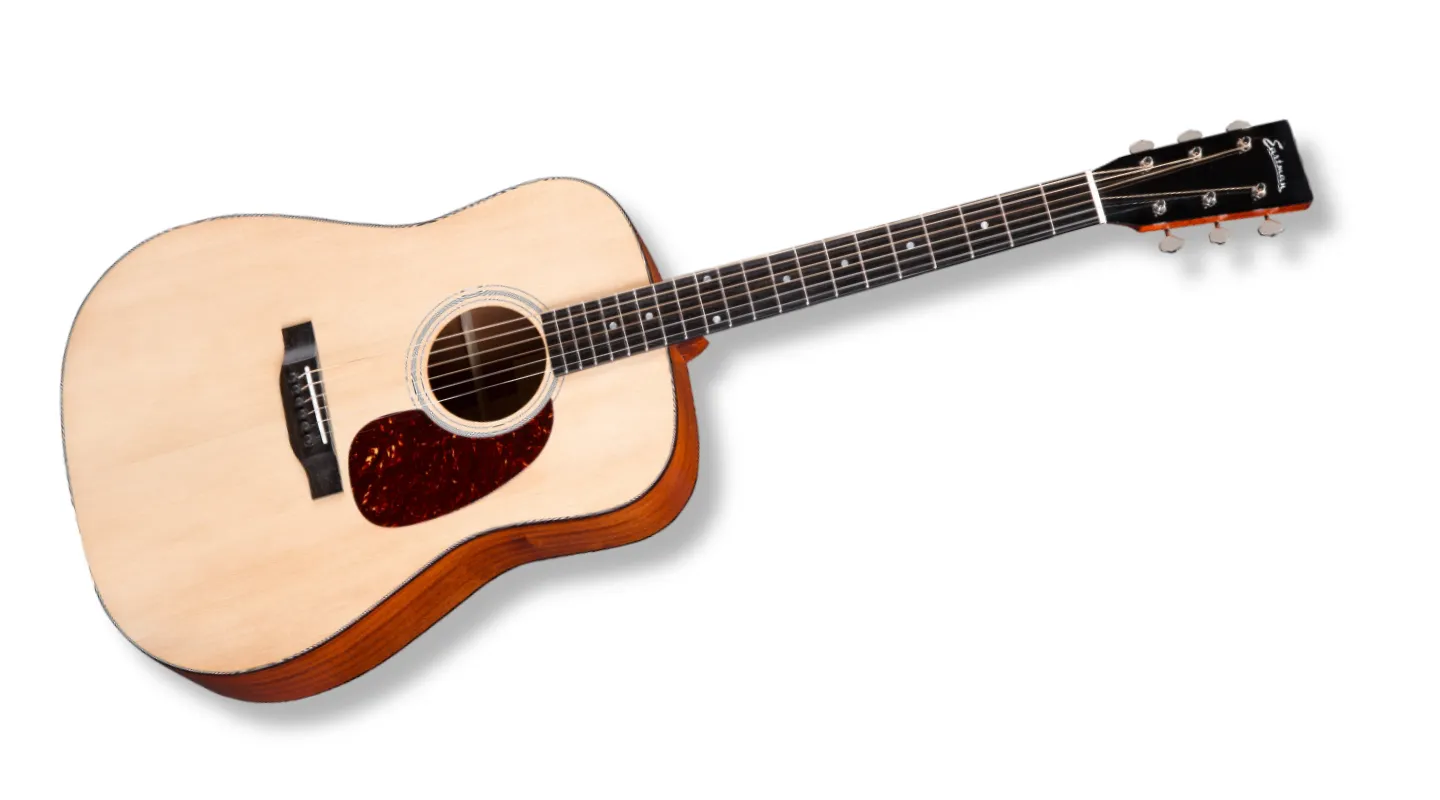
The Eastman E1D is a dreadnought acoustic guitar featuring a solid Sitka spruce top, solid Sapele back and sides, and a hand-scalloped X-bracing pattern.
It’s part of Eastman’s Traditional series, which aims to provide high-quality instruments inspired by classic guitar designs. Unlike the entry-level guitars in Eastman’s PCH1 series which have laminate Sapele back and sides, the E1D features all solid woods making it a step-up option.
The Eastman E1D is a great option for intermediate players who want to upgrade from an all-laminate guitar or solid top guitar to an acoustic guitar with an all-solid wood body.
Sound and Tone (5/5): The Eastman E1D powerful and resonant tone.
The highs are present and clear, making individual notes easy to distinguish. This clarity in the high frequencies ensures that individual notes and nuances are easily distinguishable without muddiness.
The midrange is punchy, contributing to the guitar’s strong projection and giving it a direct and present sound.
The midrange frequencies are balanced and articulate, making it well-suited for a variety of playing styles. This articulation in the midrange allows for individual notes in chords to ring clearly and be heard.
The bass frequencies offer depth and warmth, but the low end is not as “boomy” as some higher-end dreadnought guitars.
The Eastman E1D earns a 5/5 rating for its sound and tone.
Playability and Comfort (5/5): To assess the playability and comfort of the Eastman E1D we evaluate the setup out of the box, body size, neck profile, fretboard, scale length, and nut width of the guitar.
The E1D’s setup right out of the box has comfortably low action and zero to very minimal buzzing (some players reported slight buzzing). The good setup has also been reported by multiple E1D players across several guitar stores and multiple guitar forums that have written about their experience with the E1D. Therefore, the quality of the setup should be fairly consistent across specific Eastman E1D models. A good setup makes it easy to fret notes, play chords and improves the overall playing experience of the guitar.
The dreadnought body shape of the Eastman E1D is bulky and may become uncomfortable during extended playing sessions, especially for guitarists with smaller frames.
The Eastman E1D features a traditional even “C” shaped mahogany neck. E1D’s C-shaped neck has a smooth and responsive feel, allowing for swift hand movements along the fretboard. The even “C” shape is very common and comfortable for most hand sizes and playing styles.
The ebony fretboard contributes to precise fretting because the hardness of ebony minimizes wear from string contact, keeping the frets from grooving prematurely.
The 25.4″ (645.16 mm) scale length of the Eastman E1D, a common scale length for acoustic guitars, balances string tension and fret spacing for comfortable playability.
The nut width measures 1 3/4″ (44.45 mm), which is on the wider side of acoustic guitar nut widths. The wider nut width is beneficial for players with larger hands or those who prefer more space between the strings.
The Eastman E1D earns a 5/5 rating for its playability and comfort.
Versatility (4/5): The Eastman E1D is a versatile instrument suitable for a variety of genres and playing styles.
The Eastman E1D is well-suited for a variety of genres, including bluegrass, folk, and even some lighter styles of rock due to its powerful sound and articulate midrange. The E1D is also a particularly great fit for folk because of the E1D’s dynamic range and expressive playing possibilities.
The Eastman E1D performs well for both strumming and fingerstyle playing techniques. For fingerstyle playing, the E1D’s responsiveness to a light touch allows for the nuances of fingerstyle playing to shine through. For strumming, the guitar’s ability to project a full, balanced sound makes it suitable for a variety of strumming patterns and dynamics.
The Eastman E1D earns a 4/5 rating for its versatility.
Construction and Design (4/5): To assess the construction and design of the Eastman E1D we evaluate the body dimensions, wood properties, dimensions, bracing pattern, body finish, and aesthetics of the guitar.
The body of the E1D is 16″ (406.4 mm) wide and 4 11/16″ (119 mm) deep. The body dimensions are comparable to the traditional dreadnought specifications, contributing to the guitar’s familiar feel and its powerful acoustic projection.
The Eastman E1D features a solid Sitka spruce top, known for its stiffness and resilience. The back and sides are crafted from solid sapele, a mahogany-like wood with good rot resilience and hardness that contribute to the longevity and structural integrity of the guitar.
The Eastman E1D features hand-scalloped X-bracing. X bracing is a traditional bracing pattern, known for its strength and flexibility. The braces are hand-shaped and glued to the underside of the top, creating a framework that allows the top to vibrate freely while remaining stable.
The Eastman E1D has an open-pore finish that allows the wood to resonate more freely, enhancing the guitar’s natural acoustic properties. Open pore finish allows the wood to breathe and age naturally. However, an open pore finish is less durable and requires more care than a thick, glossy finish.
The Eastman E1D’s aesthetic focuses on the natural beauty of its tonewoods. The lack of intricate inlays or binding allows the eye to be drawn to the wood grain, highlighting the solid woods used in the E1D’s construction.
The Eastman E1D earns a 4/5 rating for its construction and design.
Eastman E1D Pros: Balanced and articulate sound, warm overtones, responsive feel, smooth neck, good setup out of the box, all solid wood body construction, good value for the money.
Eastman E1D Cons: Dreadnought body shape may be bulky for some, open-pore finish requires care.
Recommendation for Eastman E1D
The Eastman E1D is a well-crafted acoustic guitar that offers a balance of good sound quality and comfortable playability at an accessible price point.
Choose the Eastman E1D if you prioritize a guitar with a powerful, resonant tone and classic dreadnought design at an affordable price.
Avoid the Eastman E1D if you prioritize a dreadnought with a boomy low end or if you want a cutaway for extended soloing in the higher registers.
| Eastman E1D Specifications | |
| Body Type | Dreadnought |
| Top Material | Solid Sitka Spruce |
| Back and Sides Material | Solid Sapele |
| Bracing | Scalloped X Bracing |
| Neck Material | Mahogany |
| Scale Length | 25.4″ (645.16 mm) |
| Fingerboard Material | Ebony |
| Saddle/Nut Material | Bone |
| Frets | 20 |
| Finish | Truetone Satin |
| Typical Price in the USA | Approximately $599 (prices may vary) |
| Where to Buy | Authorized Eastman dealers, Sweetwater, Guitar Center |
4. Fender CD-60S
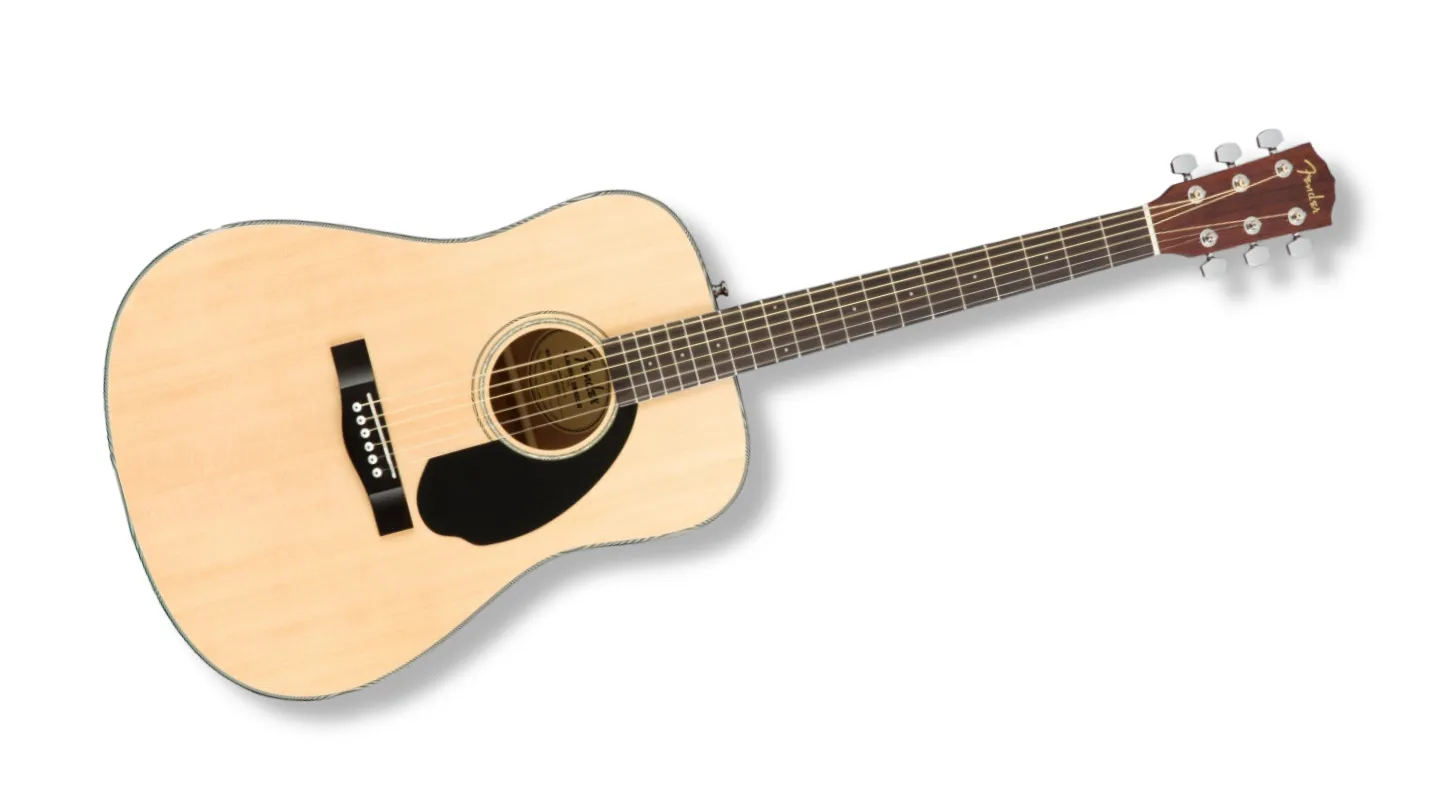
The Fender CD60S is a dreadnought acoustic guitar with a solid spruce top and laminated mahogany back and sides.
The CD60S is a part of Fender’s Classic Design series. The Classic Design series offers affordable, high-quality acoustic guitars for players of all levels. The CD60S is a direct upgrade from the CD-60. The CD60S uses a solid spruce top instead of a laminate top on the CD60 model, offering a better resonance and tone.
The Fender CD60S is a full-sized acoustic guitar that is a good fit for adult players on a budget and beginners who want an affordable acoustic with a solid top.
Sound and Tone (3.5/5): The Fender CD60S produces a brighter, articulate tone with a noticeable midrange warmth without sounding overly bright or thin.
The highs are crisp and clear, adding a lively sparkle to the overall tone.
The midrange is well-represented, contributing to a full and warm sound without making the CD60S sound overly boxy or midrange scooped.
The bass response is present but less pronounced compared to some other dreadnoughts like Yamaha FG830 or FG800J. This is especially noticeable when playing fingerstyle, where the guitar does not deliver the same depth and resonance as acoustics with a more pronounced low-end.
The Fender CD60S earns a 3.5/5 rating for its sound and tone.
Playability and Comfort (4/5): Evaluating the CD60S’s playability and comfort involves considering features like the body shape, shape of the neck, neck finish, width of the nut, length of the guitar’s scale, and string action.
The dreadnought body shape is bulky, especially for players with smaller frames or those unaccustomed to the size.
The CD60S has a neck profile that Fender calls the “Easy-to-Play” neck profile. The “Easy-to-Play” neck shape feels like a modern C-shape. This profile is designed to be comfortable for a wide range of hand sizes, with a slimmer feel that makes it easy to form chords and play leads.
The CD60S’s neck has a gloss finish, which can feel a bit sticky, especially in humid environments. This might slow down hand movements, especially for fast-paced playing styles.
The nut width of the CD60S is 1.69″ (42.9 mm). This nut width offfers enough space between the strings for comfortable fingerpicking and strumming.
The scale length of the Fender CD60S is 25.3″ (642.6 mm), making it slightly shorter than the common 25.5″ scale length on many acoustic guitars. This shorter scale length results in lower string tension, which is beneficial for beginners who have not yet developed finger strength and calluses on their fingertips.
The Fender CD60S typically comes with a low action, meaning the strings are set close to the fretboard. This setup requires less pressure to fret the notes, making it easier for beginners to play and reducing finger fatigue. However, because the CD60S is a cheaper model, keep in mind that the action can vary slightly between individual guitars due to manufacturing tolerances or environmental factors during transportation.
The Fender CD60S earns a 4/5 rating for its playability and comfort.
Versatility (3.5/5): To rate the versatility of the Fender CD60S we consider its suitability for music genres and guitar-playing techniques.
The Fender CD60S is a good fit for folk, pop, and lighter rock styles. The solid spruce top also provides enough dynamic range to explore blues and light fingerpicking. However, players who want a guitar for heavier genres (give 3 examples) might find the CD60S’s subdued bass response and shorter sustain limiting.
The guitar’s shorter scale length and comfortable neck carve make it an excellent choice for beginners still developing their techniques. Basic chord transitions, strumming patterns, and even simple fingerpicking patterns are easy to practice on the CD60S. However, CD60S’s tone does work well for nuanced fingerstyle techniques that require a wider dynamic range and tonal complexity.
The Fender CD60S earns a 3.5/5 rating for its versatility.
Construction and Design (4/5): To assess the construction and design of the Fender CD60S we evaluate the wood properties, bracing pattern, fretwork, body finish, and aesthetics of the guitar.
The CD60S utilizes solid spruce for the top. Spruce is favored for its strength, lightness, and ability to produce a resonant and balanced tone. Laminated mahogany is used for the back and sides of the CD60S. Laminate construction is more affordable and durable than solid wood because the laminate is less sensitive to changes in humidity and temperature, preventing cracks. However, laminate woods do not offer the same level of resonance and tone depth as solid woods.
The CD60S uses scalloped “X” bracing, which helps to enhance the guitar’s resonance and projection. Scalloped bracing, compared to traditional bracing, removes more material from the braces, allowing the guitar top to vibrate more freely.
The Fender CD60S’s frets are level and smooth to the touch. However, multiple players on guitar forums and product reviews experienced inconsistencies in fretwork, with some frets being taller than others, resulting in buzzing or intonation issues. This inconsistency seems to be more common in guitars straight from the factory and might require a professional setup to level and polish the frets for optimal playability.
The Fender CD60S features a gloss polyurethane finish, which gives the guitar a shiny, polished look. Polyurethane finishes are known for their durability and resistance to scratches and dings, however, they can sometimes dampen the natural vibration of the wood, slightly affecting the guitar’s resonance.
Aesthetics: The Fender CD60S has a classic dreadnought aesthetic with a natural finish that highlights the wood grain. The rosette around the soundhole is simple yet elegant, and the 3 mm pearloid dot inlays on the fretboard add a touch of sophistication.
The Fender CD60S earns a 4/5 rating for its construction and design.
Fender CD60S Pros: Solid spruce top, balanced tone, comfortable neck profile, shorter scale length ideal for beginners, good value for the price.
Fender CD60S Cons: Less pronounced bass response, gloss neck finish can feel sticky, dreadnought body size might feel bulky for some players, fretwork inconsistencies.
Recommendation for Fender CD60S
The Fender CD60S is a good acoustic guitar for beginners on a budget. The CD60S is comfortable and easy to learn on when compared to other guitars in its price range.
Choose the Fender CD60S if you prioritize value for money and seek a comfortable, easy-playing acoustic guitar with a decent sound for practice and casual playing.
Avoid the Fender CD60S if you require a guitar with a strong bass response.
| Fender CD-60S Specifications | |
| Body Type | Dreadnought |
| Top Material | Solid Spruce |
| Back and Sides Material | Laminate Mahogany |
| Bracing | Scalloped X-Bracing |
| Neck Material | Mahogany |
| Scale Length | 25.3″ (643 mm) |
| Fingerboard Material | Walnut |
| Saddle/Nut Material | Crème Plastic |
| Frets | 20, Vintage |
| Finish | Gloss |
| Typical Price in the USA | Around $239 (prices may vary) |
| Where to Buy | Fender website, Fender authorized dealers, Sweetwater |
5. Taylor Academy 10
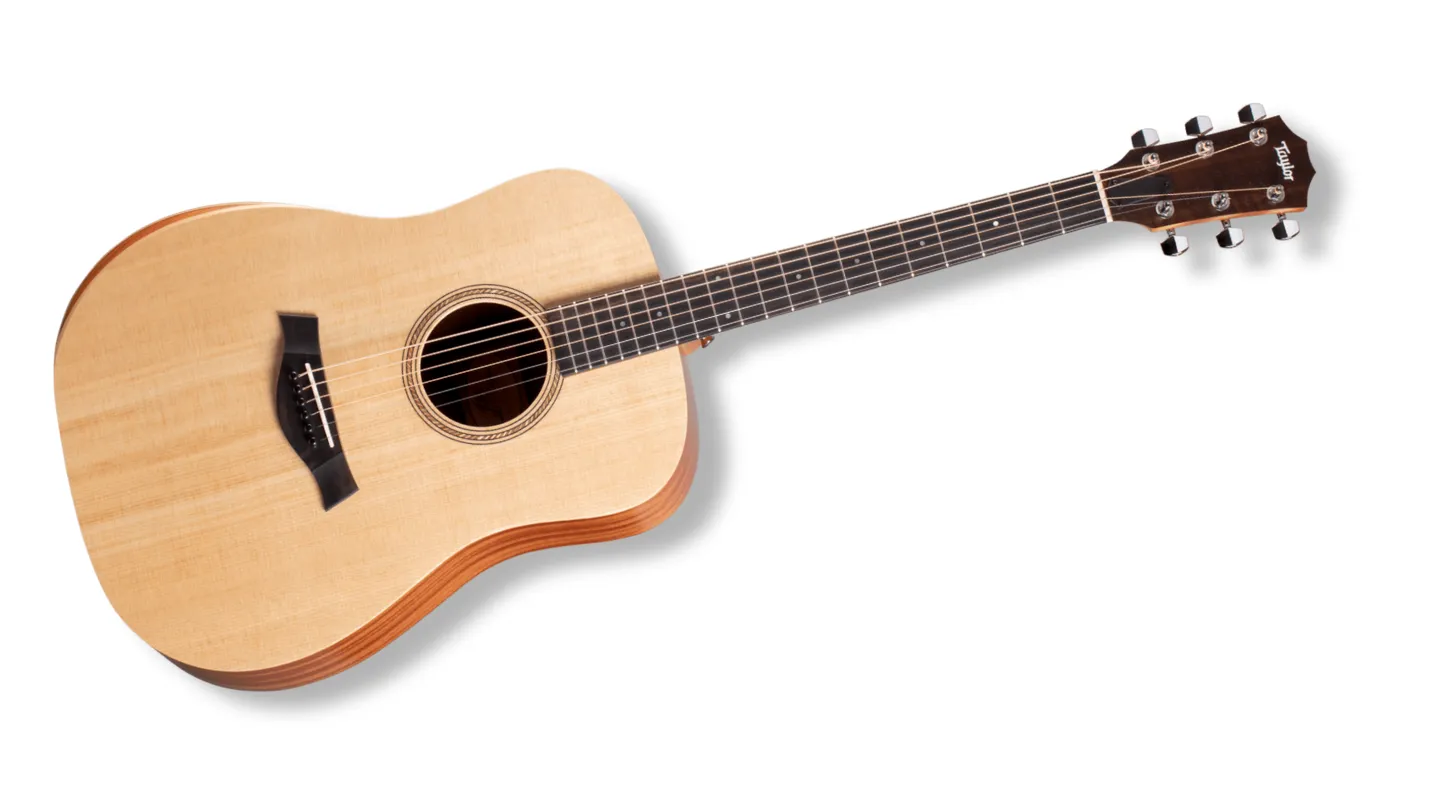
The Taylor Academy 10 is a dreadnought acoustic guitar with a solid Torrefied spruce top and layered walnut back and sides. The Academy 10 is a part of the Taylor Academy series, which aims to provide comfortable, high-quality instruments with beginners in mind.
The Taylor Academy 10 is the best acoustic guitar to learn on for beginners because of its focus on comfort and playability. The Academy 10 is easily one of the most playable guitars on the market. Taylor Academy 10 is made in Mexico.
Sound and Tone (4/5): The Taylor Academy 10 delivers a powerful, balanced, and rich tone.
The highs are bright and clear, with a noticeable sparkle that adds definition to individual notes. This brightness makes the Academy 10 sound lively and vibrant.
The midrange has a pleasing fullness and “body”, contributing to the guitar’s fundamental warmth and character. This richness in the midrange ensures that chords sound full and well-defined.
The lows are warm and punchy, adding depth to the guitar’s sound, which gives the guitar a solid foundation. However, the bass response could be more pronounced.
The Taylor Academy 10 earns a 4/5 rating for its sound and tone.
Playability and Comfort (5/5): To assess the playability and comfort of the Taylor Academy 10, we evaluate the body size, weight, neck profile, neck finish, scale length, armrest, and nut width of the guitar.
The Academy 10’s dreadnought body shape can feel bulky for players with smaller frames, especially during extended seated playing sessions.
The Taylor Academy 10 weighs approximately 4 lbs 2 oz (1.87 kg) (the weight can vary with the specific materials used on a specific model). The 4 lbs 2 oz (1.87 kg) weight is on the lower end for a dreadnought acoustic guitar. The lighter weight reduces strain during long playing sessions.
The neck shape is a Taylor “standard carve” neck profile. The “standard carve” neck profile has a rounded shape but the “standard carve” profile is shallower than traditional C-shaped necks. Taylor’s “standard carve” neck shape provides a good balance between grip security and ease of movement along the neck.
The neck has a matte finish, which provides a smooth and non-sticky feel that enhances playability by reducing friction and allows for faster hand movement along the neck.
The Academy 10 has a beveled armrest on the edge of its lower bout. The beveled armrest enhances comfort by preventing the edge of the guitar body from digging into the player’s forearm.
The Taylor Academy 10 has a scale length of 24-7/8″ (632 mm). This shorter scale length, compared to a standard 25.5″ (648 mm) scale, requires less fretting hand stretching and makes chord changes feel easier, especially for beginners.
The 1-11/16″ (42.86 mm) nut width provides comfortable spacing between strings, making it easy to play individual notes cleanly without accidentally muting adjacent strings. However, this nut width is slightly narrower and might feel slightly cramped for fingerstyle players accustomed to wider string spacing.
The Taylor Academy 10 earns a 5/5 rating for its playability and comfort.
Versatility (4/5): To assess the versatility of the Taylor Academy 10, we evaluate the suitability of the guitar for different genres and playing techniques.
The Taylor Academy 10 excels in genres like folk and singer-songwriter styles that value a balanced tone and strong projection. The articulate high-end and clear midrange allow vocals to sit well in a mix, while the dreadnought body delivers ample volume for solo performance. The Taylor Academy 10 is less suitable for genres that demand a strong low-end presence, such as blues or certain styles of rock.
The Taylor Academy 10, with its comfortable neck and balanced tone, is well-suited for fingerstyle playing. The shorter scale length and comfortable string spacing at the nut allow for fluid execution of complex passages, while the responsive top brings out subtle nuances in fingerpicking patterns. However, experienced fingerstyle players with larger hands might find the narrower nut width to be slightly cramped for intricate chord voicings.
The Taylor Academy 10 earns a 4/5 rating for its versatility.
Construction and Design (4/5): To assess the construction and design of the Taylor Academy 10, we evaluate the body dimensions, tonewood properties, bracing pattern, body finish, fretboard material, and aesthetics of the guitar.
The Taylor Academy 10 has a body width of 16″ (406.4 mm), a body depth of 4 5/8″ (117.475 mm), and a body length of 20″ (508 mm). These dimensions match the dimensions of a full-sized Taylor dreadnought acoustic guitar.
The Taylor Academy 10 features a torrefied solid Sitka spruce top. Torrefaction is a process where the spruce top is roasted in a high-temperature, oxygen-free environment before it’s crafted into the guitar. This process emulates the aging process of wood, resulting in a top that is stiffer, lighter, and more resonant. The back and sides are crafted from layered walnut, where three thin layers are glued together, creating a strong and stable material that resists warping from humidity and temperature changes. This layered construction makes the guitar more affordable compared to using a solid piece of walnut.
The Academy 10 utilizes Taylor’s X-bracing pattern. X-bracing reinforces the soundboard, providing structural integrity and influencing the guitar’s resonance and projection
The Taylor Academy 10 has a matte finish, which enhances the guitar’s natural resonance by allowing the wood to vibrate more freely compared to thicker gloss finishes.
The Academy 10 uses eucalyptus for its fretboard. The eucalyptus fretboard is a sustainable alternative to traditional fretboard woods like rosewood or ebony. Eucalyptus is known for its density and hardness, offering a smooth and durable playing surface. While not as traditionally popular as rosewood or ebony, eucalyptus provides a stable and resonant platform for fretting notes, contributing to the guitar’s overall sustain and clarity.
The Taylor Academy 10 has simple aesthetics, featuring a minimalist design that prioritizes functionality and affordability. The 4mm faux pearl dot inlays on the fretboard add a touch of sophistication without being overly ornate.
The Taylor Academy 10 earns a 4/5 rating for its construction and design.
Taylor Academy 10 Pros: Comfortable neck, balanced tone, solid Sitka Spruce top, clear articulation, lightweight, beveled armrest, shorter scale length, smooth matte neck finish
Taylor Academy 10 Cons: Bass response could be more pronounced, narrower nut width might not suit players with larger hands, dreadnought body shape may feel bulky to some players, layered wood back and sides
Recommendation for Taylor Academy 10
Taylor Academy 10 is a solid choice for beginners looking for a comfortable and great-sounding acoustic guitar from a reputable brand.
Choose the Taylor Academy 10 if you prioritize comfort and a smooth playing feel.
Avoid the Taylor Academy 10 if you require a guitar with a powerful bass response or need a wider nut width for complex fingerstyle playing.
| Taylor Academy 10 Specifications | |
| Body Type | Dreadnought |
| Top Material | Solid Sitka Spruce |
| Back and Sides Material | Layered Sapele |
| Bracing | X Bracing |
| Neck Material | Hard Rock Maple |
| Scale Length | 24-7/8″ (631.78 mm) |
| Fingerboard Material | Eucalyptus |
| Saddle/Nut Material | Micarta Saddle; NuBone Nut |
| Frets | 20 |
| Finish | Matte |
| Typical Price in the USA | Around $699 (prices may vary) |
| Where to Buy | Guitar Center, Sweetwater, Taylor authorized dealers |
6. Martin LX1 Little Martin
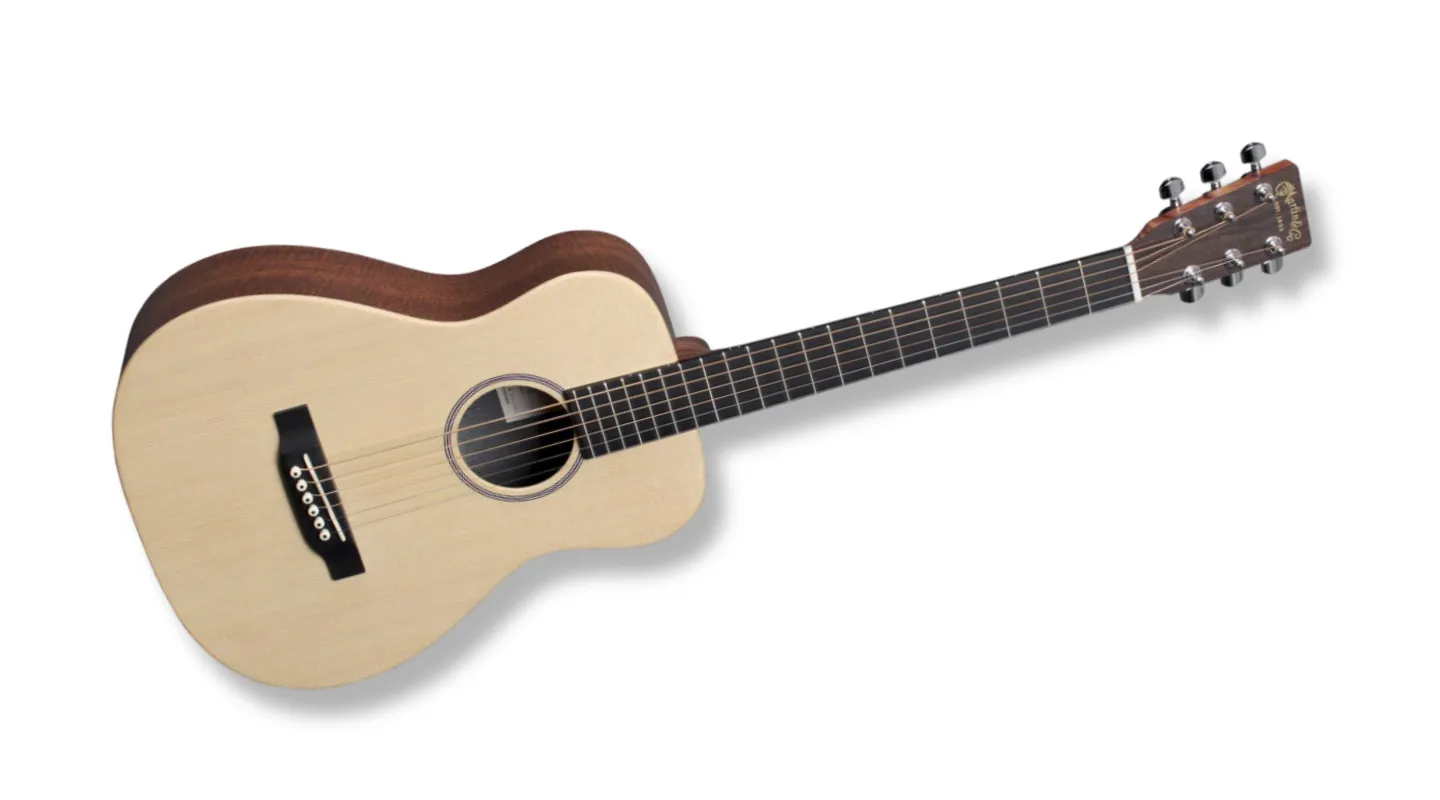
The Martin LX1 Little Martin is a compact, travel-size acoustic guitar with a solid Sitka spruce top for a balanced tone and high-pressure laminate (HPL) back and sides. The LX1 has a modified Concert (0) body shape with 14 frets.
The LX1 is part of the Little Martin series, which is a lineup of Martin’s travel-friendly acoustic guitars. The Martin LX1 Little Martin is made in Mexico.
Sound and Tone (3.5/5): The Martin LX1 delivers a surprisingly full sound for its smaller size. However, the sound still comes across as slightly “boxy” due to the size of the LX1’s body.
The highs are clear and articulate, with good clarity. The solid spruce top gives the highs a pleasant sparkle, noticeable when playing individual notes in the higher registers. This brightness adds clarity to melodies and makes the guitar sound lively, especially when fingerpicking.
The midrange is well-defined, with a warm and punchy tone. This midrange clarity adds a full-bodied, rich feel to the overall sound of the guitar, particularly during fingerstyle playing.
The bass response is decent for its size, but the LX1 lacks the depth and resonance of larger guitars. While the lows are not as prominent as on larger-bodied guitars, the LX1 still offers a surprising amount of warmth and depth when compared to Concert (0) sized guitars.
The Martin LX1 Little Martin earns a 3.5/5 rating for its sound and tone.
Playability and Comfort (4/5): To assess the playability and comfort of the Martin LX1 Little Martin, we evaluate the body size, weight, neck profile, neck finish, scale length, and nut width of the guitar.
The LX1’s modified Concert (0) 14-fret body shape makes LX1 very comfortable to play, especially for guitarists with smaller hands. The LX1 Little Martin is also often recommended for women with small hands and small frames, due to its comfortable body size. The smaller body size, however, may feel cramped for players accustomed to full-size instruments.
Weighing in at approximately 4 pounds, the LX1 is lightweight and easy to handle. However, the weight distribution is slightly neck-heavy, which can be cumbersome when playing the guitar without a strap or in a seated position.
The LX1 features a modified low oval neck profile. This neck profile provides a comfortable grip for players with average-sized hands, but those with larger hands might find it a bit thin.
The neck has a hand-rubbed satin finish. The satin finish offers a smooth feel, allowing for effortless movement along the neck.
With a 23″ (584.2 mm) scale length, the Martin LX1 offers a slinky feel, making fretting easier and requiring less effort to play. This shorter scale length also reduces the tension on the strings, making it more comfortable for beginners to press down the strings.
The nut width of the LX1 is 1-11/16″ (42.86 mm), which is on the narrower nut width side. But for a small guitar like the LX1 Little Martin, the 1-11/16″ (42.86 mm) nut width provides enough space between the strings for comfortable fingerstyle playing and chord transitions.
The Martin LX1 Little Martin earns a 4/5 rating for its playability and comfort.
Versatility (3/5): To assess the versatility of the Martin LX1 Little Martin we evaluate the suitability of the guitar for different genres and playing techniques.
The Martin LX1 Little Martin is a versatile instrument well-suited for a variety of genres and playing techniques, but the LX1 particularly excels in folk and singer-songwriter styles. The guitar’s balanced tonal response, with its clear highs and warm mids, complements the mellow storytelling aspect of these genres.
The Martin LX1 is particularly well-suited for fingerstyle playing due to its smaller size and comfortable playability. The shorter scale length reduces string tension, allowing for easier bending and vibrato. However, the slightly narrower nut width provides less string space than fingerstyle-focused nut widths, which typically start at around 1 3/4″ (44.45 mm). The LX1 can handle rhythm playing in genres like pop and rock but its smaller body size limits its projection and low-end punch. Therefore, The LX1 is not suitable for heavy strumming or more aggressive playing styles that demand a more robust sound.
The Martin LX1 Little Martin earns a 3/5 rating for its versatility.
Construction and Design (4/5): To assess the construction and design of the Martin LX1 Little Martin we evaluate the wood properties, bracing pattern, and aesthetics of the guitar.
The Martin LX1 combines solid Sitka spruce for its top and HPL for its back and sides. Sitka spruce is known for its strength-to-weight ratio and stiffness, contributing to its clear and articulate sound. The HPL used for the back and sides contributes to the guitar’s resilience and resistance to humidity changes, making it a good choice for players in varying climates.
The LX1 utilizes Martin’s X-bracing pattern with non-scalloped braces. Martin’s X bracing features two primary braces forming an “X” shape beneath the top to provide structural support. The LX1 uses non-scalloped braces. The braces are left thicker and heavier than scalloped braces. Non-scalloped braces contribute to a stronger, more durable top but provide less resonant and responsive sound compared to scalloped braces.
The LX1 Little Martin has a clean and classic aesthetic. The natural finish highlights the wood grain, while the lack of intricate inlays contributes to its natural design. The rosette, a simple design around the soundhole, adds a touch of traditional Martin charm.
The Martin LX1 Little Martin earns a 4/5 rating for its construction and design.
Martin LX1 Little Martin Pros: Solid spruce top, comfortable neck profile, lightweight and portable, durable HPL back and sides, good build quality, balanced tone, good value for the price.
Martin LX1 Little Martin Cons: Neck-heavy balance, smaller body size may not suit all players, lacks the full bass response of larger guitars.
Recommendation for Martin LX1 Little Martin
The Martin LX1 Little Martin is a high-quality travel guitar that delivers impressive sound and comfortable playability for its size.
Choose the Martin LX1 Little Martin if you prioritize portability and comfortable playability in a compact acoustic guitar.
Avoid the Martin LX1 Little Martin if you want a full-bodied sound and projection of a full-size acoustic guitar.
| Martin LX1 Little Martin Specifications | |
| Body Type | Modified 0 |
| Top Material | Solid spruce |
| Back and Sides Material | High-pressure laminate (HPL) |
| Bracing | X-Brace |
| Neck Material | Rust Birch Laminate |
| Scale Length | 23″ (584.2 mm) |
| Fingerboard Material | FSC Certified Richlite |
| Saddle/Nut Material | White Corian |
| Frets | 20 |
| Finish | Hand-rubbed satin finish |
| Typical Price in the USA | Around $449 (prices may vary) |
| Where to Buy | Martin Guitars authorized dealers, Sweetwater, Guitar Center |
7. Yamaha FG 5
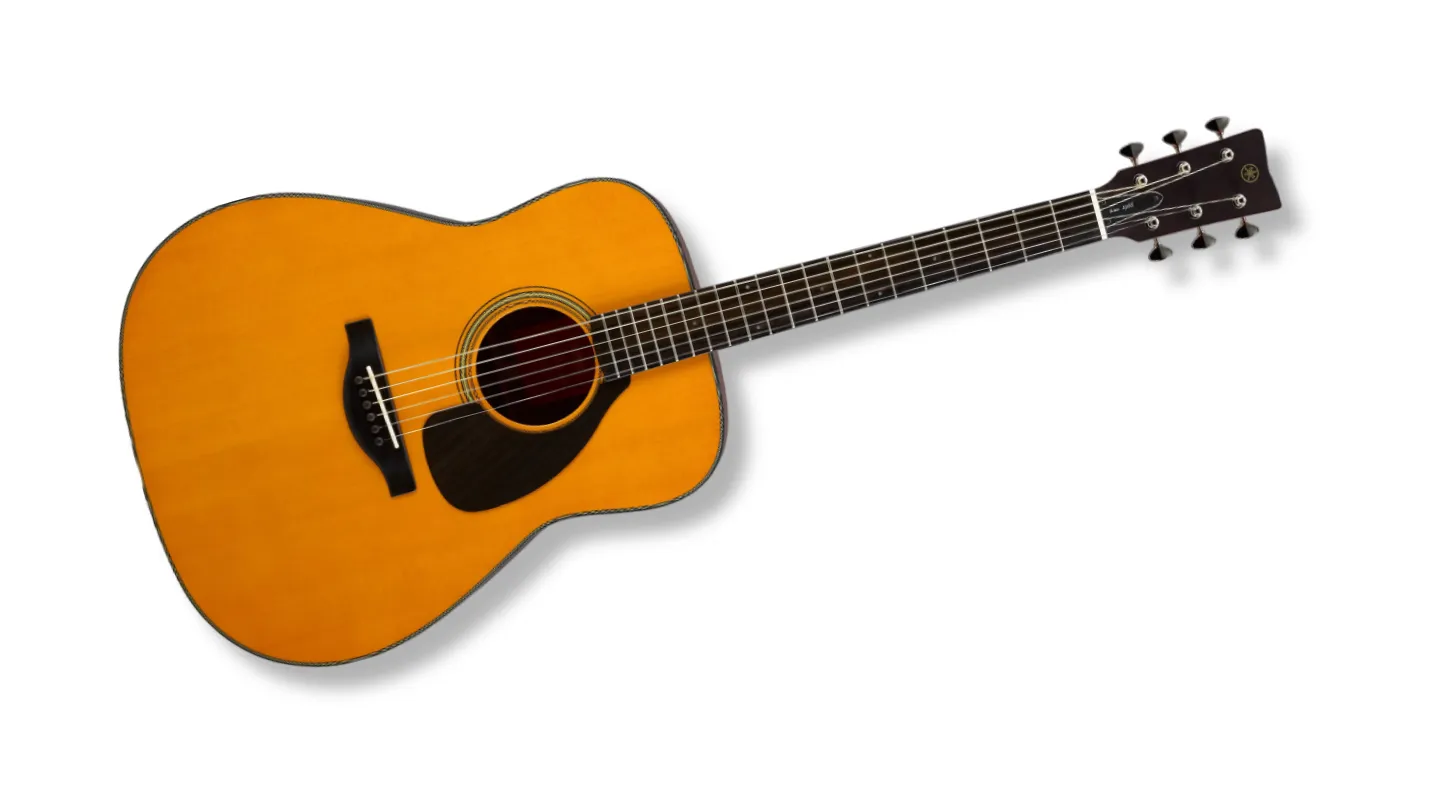
The Yamaha FG5 is an all solid wood dreadnought acoustic guitar with a solid Sitka spruce top, solid mahogany back and sides, and Yamaha’s A.R.E. (Acoustic Resonance Enhancement) wood torrefaction process.
The FG5 belongs to Yamaha’s “Red Label” Folk Guitar (FG) series. The FG series was first launched in 1966 as Yamaha’s first production of steel-string acoustics. The FG series combines the vintage aesthetic of the original ’60s models with over 50 years of Yamaha’s guitar-making advancements.
The FG5 is a part of the famous FG series, a line launched in 1966 as Yamaha’s first line of steel-string acoustic guitars. Yamaha FG5 is crafted in Japan and it is the best acoustic guitar to buy for around $1500.
Sound and Tone (4/5): The Yamaha FG5 delivers a rich and balanced tone.
The highs are clear and present, contributing sparkle and detail to the overall sound without being overly bright. This clarity ensures that individual notes, especially when fingerpicking, are easily recognized.
The midrange is full and well-defined, providing the guitar with a strong fundamental character and warmth.
The lows are warm and substantial, adding depth and power to the sound, particularly noticeable when digging into full chords or playing bass lines.
The FG 5 has good dynamic range but it lacks nuance of the subtle tones as guitars like the Martin D28 or D18 which are known for having extra bright highs and deep, resonant lows. Still, the sound of the FG5 Red Label is comparable to a Martin D-18 but compared to the D18 the FG5 has a slightly warmer and less nuanced sound.
The Yamaha FG5 earns a 4/5 rating for its sound and tone.
Playability and Comfort (4/5): To assess the playability and comfort of the Yamaha FG5, we evaluate the body size, weight, neck profile, scale length, and nut width of the guitar.
The traditional dreadnought body shape of the FG5 is bulky and can feel uncomfortable for smaller frames and shorter arms, especially during extended seated playing sessions.
The FG5 weighs around 4.3 to 5 lbs (1.95 kg to 2.27 kg) (the weight can vary further depending on the specific wood used). The FG5 is relatively lightweight for a dreadnought guitar since dreadnoughts typically weigh around 4.5 to 6 lbs (2 to 2.7 kg). The weight feels well balanced, contributing to comfortable playing whether standing or seated.
The FG5 features a slim neck profile. FG5’s slim neck comfortably accommodates players with smaller hands while still providing a secure grip for players with larger hands.
The FG5’s scale length is 25″ (634 mm). This scale length provides slightly more comfortable and less tense string tensions than more common scale lengths like 25.4″ (645.16 mm) or 25.5″ (647.7 mm) long scale lengths.
With a 1 3/4″ nut width, the FG5 offers a comfortable string spacing that accommodates fingerstyle playing while remaining manageable for those who prefer strumming.
The Yamaha FG5 earns a 4/5 rating for its playability and comfort.
Versatility (4/5): To assess the versatility of the Yamaha FG5 we evaluate the suitability of the guitar for different genres and playing techniques.
The Yamaha FG5 is well-suited for a range of genres, including folk, blues, and rock. FG5’s balanced tone, with clear highs, a full midrange, and defined lows, allows it to handle the nuanced fingerpicking patterns of folk music and the driving rhythms of blues and rock. However, the FG5 is not an ideal choice for genres that demand extremely bright and sparkly tones, such as some styles of contemporary pop or bluegrass music
The FG5 acoustic guitar responds well to different playing dynamics, making it suitable for both strumming, and flatpicking fingerstyle playing. A full, balanced sound for strumming chords is provided by the Yamaha FG5’s dreadnought body and powerful low-end response. The Yamaha FG5 articulate response and focused midrange is ideal for flatpicking styles in genres like blues and country. The Yamaha FG5 is also well-suited for fingerstyle playing due to its clear note separation and slightly wider nut width.
The Yamaha FG5 earns a 4/5 rating for its versatility.
Construction and Design (5/5): To assess the construction and design of the Yamaha FG5 we evaluate the body dimensions, wood properties, and aesthetics of the guitar.
The Yamaha FG5’s body measures 19 7/8″ (505 mm) in length and 16 1/4″ (412 mm) in width. FG5 features a body depth of 3 15/16″ (100 mm) at the neck and a slightly deeper 4 5/8″ (118 mm) at the tail. The dimensions are comparable to standard dreadnought dimensions.
The FG5 features a solid Sitka Spruce top. Sitka Spruce is a popular choice for acoustic guitar tops due to its stiffness and resilience. The Yamaha FG5 also incorporates Yamaha’s A.R.E. (Acoustic Resonance Enhancement) wood torrefaction technology on the FG5’s top. This process involves treating the guitar’s top with controlled heat and humidity to accelerate the aging process of the wood, resulting in a tone that sounds mature and “opened up,” similar to that of a vintage instrument. The back and sides are constructed from solid mahogany. Mahogany is a durable tonewood known for its resistance to warping and cracking, making mahogany a reliable choice for guitar construction.
The Yamaha FG5 has a classic dreadnought aesthetic. The combination of a natural finish, black and white body binding, and simple dot inlays on the ebony fingerboard creates a timeless look that has wide appeal.
Yamaha FG5 Pros: All-solid wood construction, balanced and articulate tone, comfortable neck profile, A.R.E. treated top, classic dreadnought aesthetics, excellent value for the price.
Yamaha FG5 Cons: Large body size may not suit smaller players, dynamic range is not as broad as some higher-end models, and higher price tag.
Recommendation for Yamaha FG5
The Yamaha FG5 is a great all-around acoustic guitar that offers impressive value for its price with an all solid wood build, comfortable playability, and warm, balanced tone.
Choose the Yamaha FG5 if you want a well-crafted, versatile acoustic guitar with a classic look and a powerful, resonant voice.
Avoid the Yamaha FG5 if you prefer a guitar with a brighter, more articulate tone or require a wider dynamic range for nuanced playing styles.
| Yamaha Red Label FG5 Specifications | |
| Body Type | Dreadnought |
| Top Material | Solid Sitka Spruce |
| Back and Sides Material | Solid Mahogany |
| Bracing | Modified Scalloped |
| Neck Material | African Mahogany |
| Scale Length | 25″ (635 mm) |
| Fingerboard Material | Ebony |
| Saddle/Nut Material | Bone/Bone |
| Frets | 20 |
| Finish | Semi-gloss |
| Typical Price in the USA | Around $1,449 (prices may vary) |
| Where to Buy | Yamaha Guitars authorized dealers, Sweetwater |
8. Taylor GS Mini Mahogany
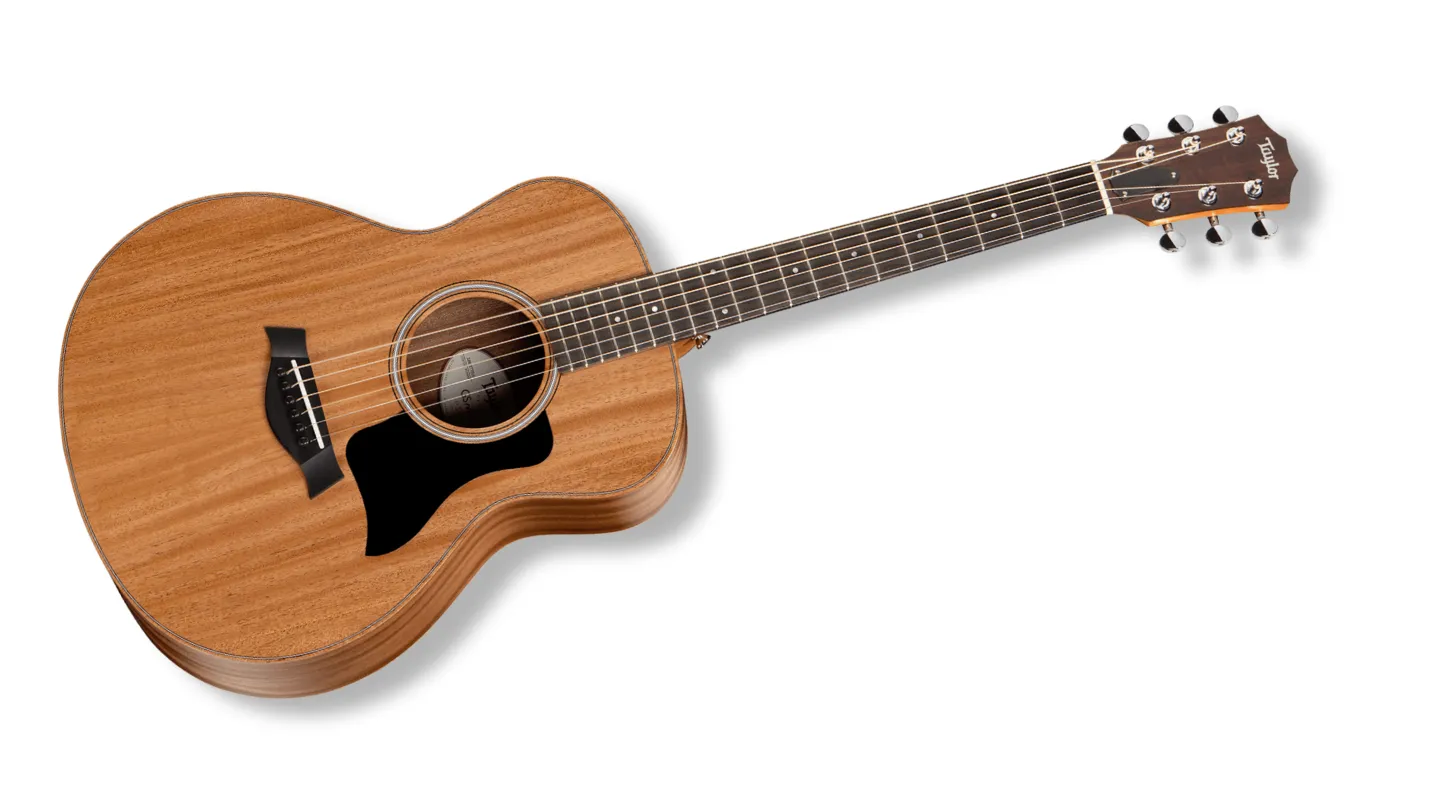
The Taylor GS Mini Mahogany is a compact acoustic guitar featuring a solid neo-tropical mahogany top paired with layered sapele back and sides. The GS Mini is a scaled-down Grand Symphony body shape with a total guitar length of 36.625″ (93 cm).
The GS Mini Mahogany is part of Taylor’s GS Mini series, known for its smaller-bodied guitars that retain a full sound. The GS Mini Mahogany, with its mahogany top, offers a warmer tone compared to the brighter sound of the spruce-topped GS Mini models. The Taylor GS Mini Mahogany is manufactured in Mexico.
Sound and Tone (4/5): The Taylor GS Mini Mahogany has a surprisingly full and warm sound for its small size.
The highs are clear and articulate, making individual notes easy to distinguish, even when playing intricate passages.
The midrange is balanced and full, providing the guitar with a strong fundamental character. The GS Mini’s mahogany top adds depth and fullness to the midrange frequencies.
The lows are warm and well-defined, adding depth to the overall tone without being boomy or overpowering. The guitar has a deep low end for such a small guitar.
The GS Mini is surprisingly loud for its size but the volume does not match a full-sized dreadnought. The volume produced is more than enough for sitting on the sofa, but when sitting around a campfire outside, the sound may get a little lost.
The Taylor GS Mini Mahogany earns a 4/5 rating for its sound and tone.
Playability and Comfort (4.5/5): To assess the playability and comfort of the Taylor GS Mini Mahogany, we evaluate the body size, weight, neck finish, scale length, and nut width of the guitar.
The GS Mini Mahogany’s smaller body size makes it very comfortable to hold and play, especially for guitarists with smaller stature.
The guitar weighs around 3.6 lbs (1.63 kg). This weight, combined with the guitar’s compact size, makes the GS Mini Mahogany feel balanced and easy to handle.
The GS Mini Mahogany’s neck has a satin finish. This smooth finish allows the player’s hand to move quickly and effortlessly along the neck, facilitating smooth transitions between chords and individual notes.
The guitar has a 23.5″ (596.9 mm) scale length. This shorter scale length makes fretting easier, particularly for beginners or players with smaller hands.
The nut width of the Taylor GS Mini Mahogany is 1 11/16″ (42.86 mm). This nut width is on the narrower side when it comes to nut widths. The narrower nut width makes playing certain chords and flatpicking patterns easier, as the strings are closer together.
The Taylor GS Mini Mahogany earns a 4.5/5 rating for its playability and comfort.
Versatility (3.5/5): To assess the versatility of the Taylor GS Mini Mahogany, we evaluate the suitability of the guitar for different genres and playing techniques.
The Taylor GS Mini Mahogany, with its warm tone and balanced sound, is well-suited for fingerstyle playing in genres such as folk and blues. However, the GS Mini’s sound is not ideal for genres that demand high volume levels or bright, cutting tones, such as heavy metal or hard rock.
The Taylor GS Mini Mahogany is well-suited for fingerstyle playing. The GS Mini’s warm and balanced tone complements the nuances of fingerpicking, making each note resonate clearly. The Taylor GS Mini Mahogany is also suitable for strumming. The smaller body size makes it comfortable to hold and play for extended periods, which is ideal for strumming rhythmic patterns. The guitar’s warm tone and good projection ensure that chords ring out clearly, even when strummed with force.
GS Mini’s shorter scale length and comfortable neck profile also make string bending easier, which is beneficial for blues music.
The Taylor GS Mini Mahogany earns a 3.5/5 rating for its versatility.
Construction and Design (4/5): To assess the construction and design of the Taylor GS Mini Mahogany, we evaluate the body dimensions, wood properties, bracing pattern, and aesthetics of the guitar.
The Taylor GS Mini Mahogany features a scaled-down Grand Symphony body shape, measuring 14 3/8″ (365.12 mm) in width, 4 7/16″ (112.73 mm) in depth, and 17 5/8″ (447.67 mm) in length. This scaled-down size makes the guitar more portable than the full sized Grand Symphony shape.
The Taylor GS Mini Mahogany has a solid neo-tropical mahogany top. Neo-tropical mahogany, often sourced from sustainably managed forests in Central and South America, shares many characteristics with its traditional counterpart, Honduran mahogany. Neo-tropical mahogany is prized for its balanced tonal response and relatively lightweight nature. Layered sapele is used for the back and sides of the guitar. Layered sapele on the back and sides means that Taylor uses very thin sheets of sapele wood glued onto poplar wood. This layered poplar construction increases the guitar’s resistance to humidity and temperature changes, and makes the poplar look like Sapele. The layered Sapele is less prone to warping or cracking than the solid wood Sapele and allows Taylor Guitars to create more affordable instruments.
The Taylor GS Mini Mahogany utilizes Taylor’s X-bracing pattern, a time-tested system for acoustic guitars. The X-bracing pattern, with its strategic placement of braces, helps to distribute the vibrations of the soundboard evenly. This bracing system is designed to enhance the guitar’s projection and sustain.
The Taylor GS Mini Mahogany features a simple yet elegant aesthetic, characterized by its warm mahogany finish, black binding, and dot inlays on the ebony fingerboard.
The Taylor GS Mini Mahogany earns a 4/5 rating for its construction and design.
Taylor GS Mini Mahogany Pros: Warm and articulate sound, comfortable to play, well-suited for fingerstyle playing, compact and portable, excellent build quality, solid mahogany top.
Taylor GS Mini Mahogany Cons: Lacks volume and projection of larger guitars, layered wood back and sides
Recommendation for Taylor GS Mini Mahogany
The Taylor GS Mini Mahogany is a comfortable and compact acoustic guitar with a warm, rich tone. The scaled-down Grand Symphony body shape makes it exceptionally portable without compromising on sound. This makes the GS Mini an excellent choice for both traveling musicians and those seeking a comfortable playing experience at home.
Choose the Taylor GS Mini Mahogany if you prioritize a warm, balanced tone and a compact and portable instrument.
Avoid the GS Mini Mahogany if you require a guitar with loud projection suitable for larger venues or outdoor performances.
| Taylor GS Mini Mahogany Specifications | |
| Top Material | Solid Mahogany |
| Back and Sides Material | Layered Sapele |
| Bracing | X bracing with relief rout |
| Neck Material | Tropical Mahogany |
| Scale Length | 23.5″ (596.9 mm) |
| Fingerboard Material | West African Crelicam Ebony |
| Saddle/Nut Material | Micarta “Wave” saddle; Nubone nut |
| Frets | 20 |
| Finish | Matte |
| Typical Price in the USA | Around $599 (prices may vary) |
| Where to Buy | Taylor authorized dealers, Guitar Center, Sweetwater |
9. Seagull S6 Original
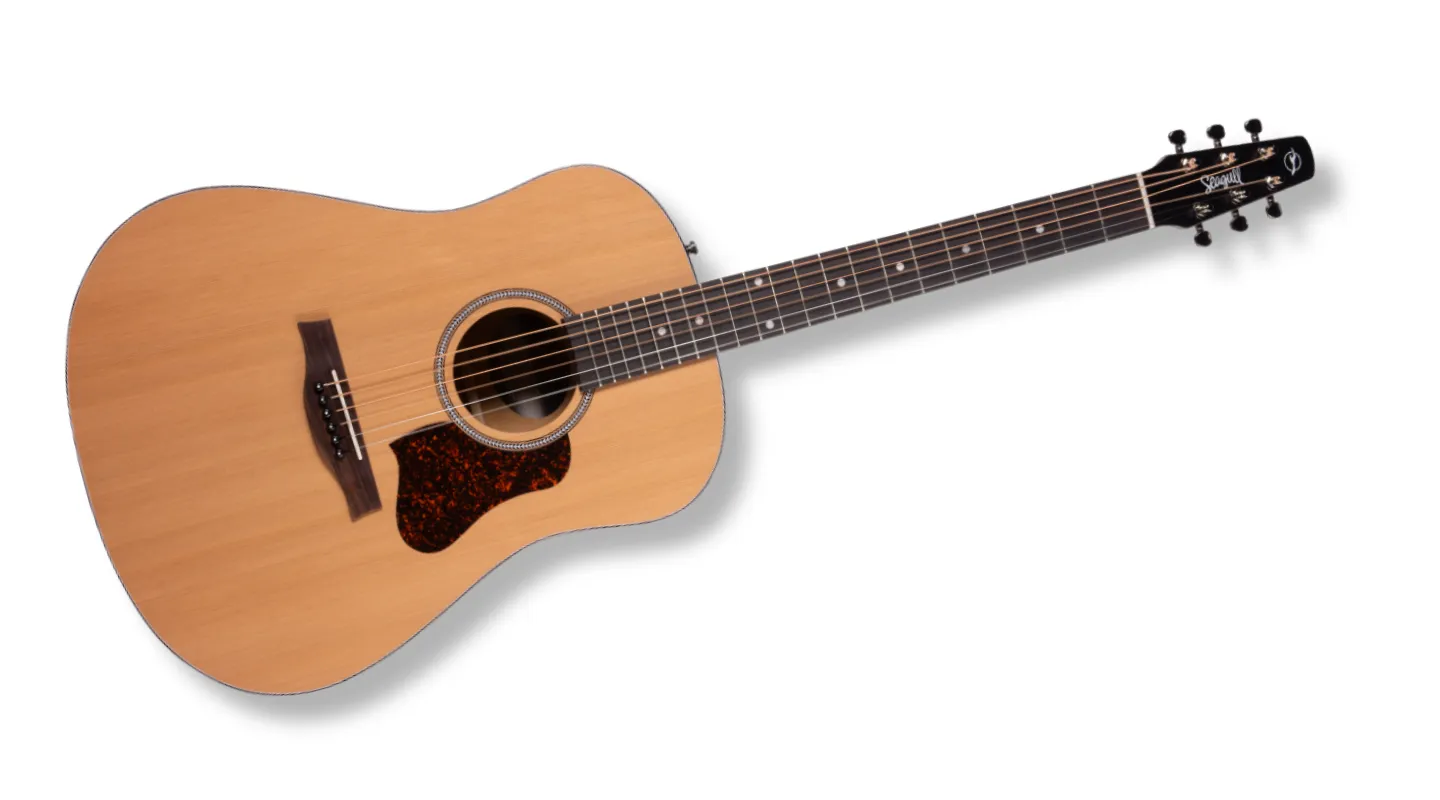
The Seagull S6 Original is a dreadnought acoustic guitar with a solid cedar top, laminate wild cherry back and sides, and a silver leaf maple neck.
The S6 Original is the flagship model of the Seagull S6 series. Seagull is an acoustic guitar company renowned for producing high-quality, handcrafted acoustic guitars in Canada for over 25 years. The models in the S6 series are variations of the S6 Original model. One such variation of the S6 Original model is the S6 Original Slim, which features a slimmer nut width than the S6 Original. The S6 Original, with its wider nut width and warm cedar tone, is an excellent choice for fingerstyle players. The S6 Original is crafted in Canada.
Sound and Tone (4/5): The Seagull S6 Original has a warm and balanced tone.
The S6 Original produces bright and clear highs, adding sparkle and definition to its overall tone. However, the high-end brightness is slightly muted and softer when compared to guitars with spruce tops.
The midrange is crisp and well-defined. The combination of cedar and wild cherry contributes to a balanced midrange that avoids sounding boxy or muddy.
The bass response of the Seagull S6 Original is tight and controlled. The modified dreadnought body shape helps to focus the low-end frequencies, preventing them from becoming boomy or overpowering.
The Seagull S6 Original earns a 4/5 rating for its sound and tone.
Playability and Comfort (4/5): To assess the playability and comfort of the Seagull S6 we evaluate the body size, weight, neck profile, neck finish, scale length, and nut width of the guitar.
The dreadnought body shape is bulky and can become uncomfortable during extended seated playing, especially for players with smaller frames.
The Seagull S6 typically weighs around 4.625 lbs (2.1 kg) but the specific weight of each model can vary based on the specific materials used. The 4.625 lbs (2.1 kg) weight is on the lighter side when it comes to dreadnoughts. The weight distribution is balanced and there is no noticeable neck dive.
Seagull does not specify the exact neck profile but the neck profile feels like a slim C-shape. The neck shape feels comfortable and familiar, particularly for players accustomed to electric guitar necks.
The S6 Original’s neck has a semi-gloss finish, offering a balance of smooth playability and grip. This type of finish feels less sticky than a high-gloss finish, particularly in warmer conditions.
The 25.5″ (647.7 mm) scale length of the Seagull S6 means the distance between the nut and the bridge results in higher string tension. The Seagull S6 has a nut width of 1.8″ (45.72 mm), which is considered wide compared to other acoustic guitars.
The Seagull S6 Original has a scale length of 25.5″ (647.7mm), which is common for steel string acoustic guitars and provides a familiar string tension.
The S6 Original has a nut width of 1.8″ (45.72mm). This nut width is slightly wider than the nut widths on most acoustic guitars which typically range from 1.6875″ (42.86mm) to 1.75″ (44.45mm). This wider spacing makes fingerpicking more comfortable, providing ample space for finger placement and reducing the chance of accidentally brushing adjacent strings. However, this wider spacing might take some getting used to for players accustomed to narrower nut widths, especially when forming barre chords.
The Seagull S6 Original earns a 4/5 rating for its playability and comfort.
Versatility (4/5): To assess the versatility of the Seagull S6 we evaluate the suitability of the guitar for different genres and playing techniques.
The Seagull S6 is well-suited for a variety of genres, including folk, rock, blues, and country. S6’s warm, balanced tone makes it an excellent choice for folk and singer-songwriter styles, where the natural acoustic qualities of the guitar can shine through.
The Seagull S6 can handle both delicate fingerstyle passages and aggressive strumming patterns. However, the S6’s wider string spacing, a result of its 1.8″ (45.72 mm) nut width, makes it especially great for fingerstyle playing.
The Seagull S6 earns a 4/5 rating for its versatility.
Construction and Design (4/5): To assess the construction and design of the Seagull S6, we evaluate the wood properties, body dimensions, body finish, headstock, and aesthetics of the guitar.
The Seagull S6 Original uses pressure-tested solid cedar for its top. Cedar is a lightweight softwood known for its stiffness and stability, making it a suitable choice for guitar tops as it can withstand the tension of the strings while vibrating freely. The back and sides are crafted from laminate wild cherry. Wild cherry, a hardwood, is valued in guitar construction for its attractive grain patterns and its ability to contribute to a resonant and balanced sound. Laminated woods are created by layering thin sheets of wood together, which enhances their strength, stability, and resistance to changes in humidity and temperature.
The lower bout of the Seagull S6 measures 15.87″ (403.1 mm). The upper bout measures 11.38″ (289.05 mm). The waist measures 10.54″ (267.72 mm). The guitar has a body length of 19.8″ (502.92 mm). The body depth is 4.9″ (124.46 mm). These dimensions are comparable to standard dreadnought body shape dimensions.
The Seagull S6 has a custom-polished semi-gloss body finish that enhances the guitar’s natural beauty while also providing protection. The finish is thin enough to allow the wood to resonate freely, contributing to the guitar’s rich sound.
The Seagull S6 features a tapered headstock that helps to improve tuning stability by reducing the angle at which the strings break over the nut. This results in less friction and more consistent string tension, which leads to better tuning retention.
The Seagull S6 has a classic dreadnought look, with a few modern touches. The natural finish showcases the beauty of the wood, while the simple rosette and pickguard add a touch of elegance.
The Seagull S6 earns a 4/5 rating for its construction and design.
Seagull S6 Pros: Warm and balanced tone, comfortable C-shaped neck, wide nut width for fingerstyle, good projection, durable construction, tapered headstock, made in Canada.
Seagull S6 Cons: Dreadnought body shape might be bulky for some players, laminate back and sides.
Recommendation for Taylor GS Mini Mahogany
The Seagull S6 is an excellent choice for guitarists of all levels who are looking for a high-quality, versatile dreadnought with a softer cedar wood sound.
Choose the Seagull S6 if you’re looking for a reliable guitar with a warm, balanced tone and a wider nut width for more comfortable fingerstyle playing.
Avoid the S6 if you prefer a guitar with a brighter, more articulate sound, or if you have small hands and find the wider neck to be uncomfortable.
| Seagull S6 Specifications | |
| Body Type | Dreadnought |
| Top Material | Solid Cedar |
| Back and Sides Material | Laminate Wild Cherry |
| Bracing | X Bracing |
| Neck Material | Silver Leaf Maple |
| Scale Length | 25.5″ (647.7 mm) |
| Fingerboard Material | Rosewood |
| Saddle/Nut Material | TUSQ (synthetic material designed to mimic bone) |
| Frets | 21 |
| Finish | Thin polished semi-gloss |
| Typical Price in the USA | Around $699 (prices may vary) |
| Where to Buy | Sweetwater, Guitar Center and Seagull authorized dealers |
10. Guild F-1512
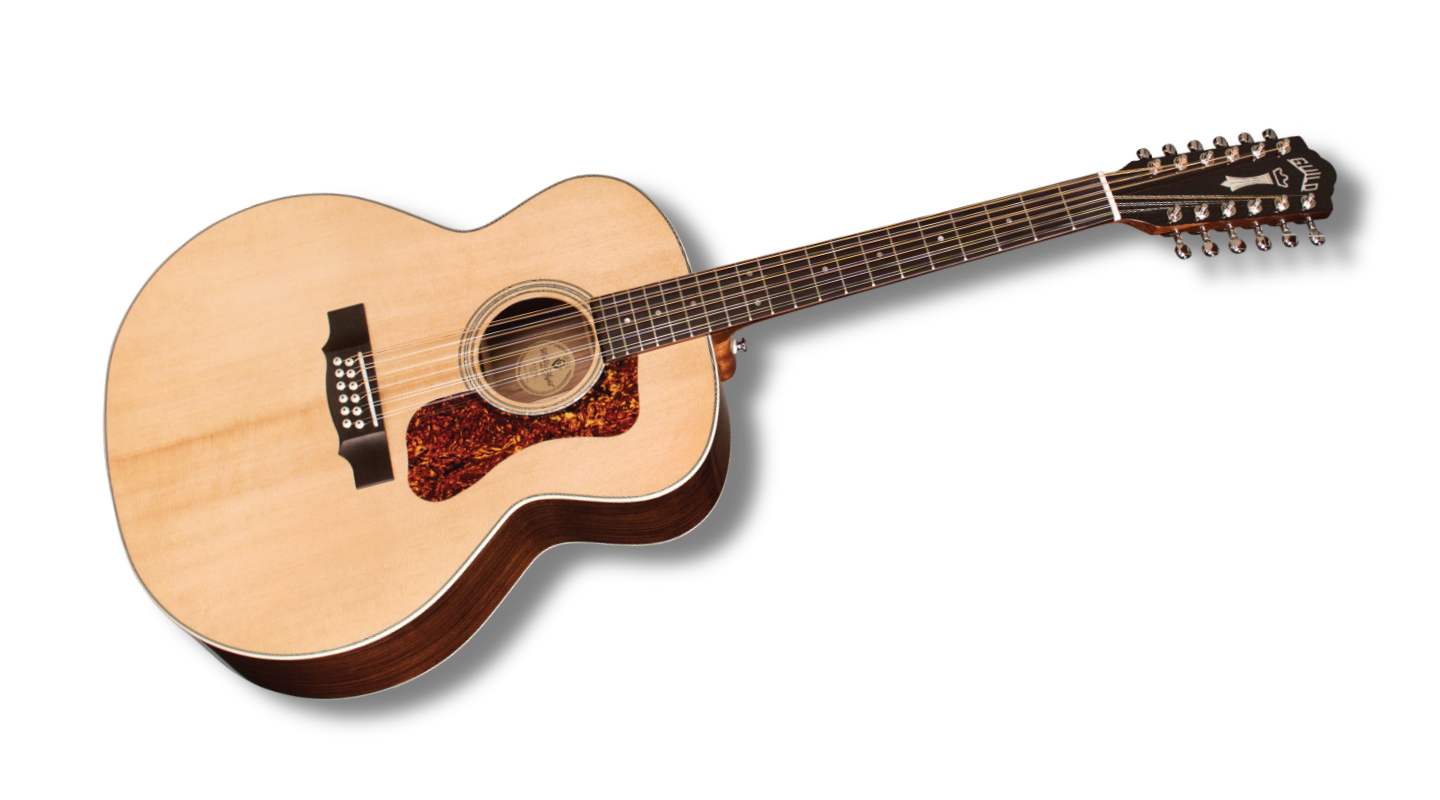
The Guild F-1512 is a 12-string jumbo acoustic guitar with a solid Sitka spruce top, solid Indian rosewood back and sides, and a mahogany neck. The Guild F-1512 is a part of Guild’s Westerly Collection. Guild’s Westerly Collection represents a return to the company’s roots, with guitars resembling the American Standard series and traditional Guild guitars. The F-1512 is a high-quality 12-string acoustic guitar for players who want to try or transition to a 12-string guitar for a richer, fuller, and louder sound.
Sound and Tone (4/5): To assess the sound and tone of the Guild F-1512, we focus on describing its treble, midrange, and bass frequencies.
The highs are characterized by their brightness and clarity, adding sparkle and detail to the overall tone. The solid Sitka spruce top contributes to the articulate high-end response, making individual notes easily distinguishable, even in complex chords.
The mids have a pleasing fullness and body, adding warmth and character to the guitar’s tone. The combination of solid Sitka spruce and solid Indian rosewood for the back and sides creates a balanced midrange that prevents the guitar from sounding overly bright or muddy.
The lows are warm and deep, providing a solid foundation for the overall sound. The jumbo body shape enhances the low-end frequencies, giving the F-1512 a powerful and resonant bass response that complements the bright highs.
The volume of the F-1512 can be heard clearly in ensembles or when playing for an audience. This makes it a great choice for players who need an instrument that can hold its own in a mix or fill a room with sound.
The Guild F-1512, with its jumbo body and 12-string configuration, produces a significantly louder and more projecting sound than a standard 6-string acoustic guitar. The additional six strings of the F-1512, while tuned in octaves and unison with the standard six, contribute to a richer and more harmonically complex sound that also further amplifies F-1512‘s overall volume.
The Guild F-1512 earns a 4/5 rating for its sound and tone.
Playability and Comfort (3/5): To assess the playability and comfort of the Guild F-1512 we evaluate the body size, weight, neck profile, scale length, and nut width of the guitar.
The F-1512’s jumbo body shape is even larger and bulkier than a dreadnought body shape. Therefore, guitarists with smaller frames and shorter arms might find the jumbo size cumbersome for extended playing.
The weight of the F-1512 is approximately 5.5 lbs (2.5 kg), which is manageable for a jumbo guitar. At 5.5 lbs (2.5 kg), the F-1512 is not lightweight, and the weight gets uncomfortable rather quickly, especially when playing standing up.
The F-1512 has a C-shaped neck profile. The C-shaped neck is a versatile profile that suits various hand sizes and playing styles.
The scale length of the F-1512 is 25 1/2″ (648 mm). The 25 1/2″ (648 mm) scale length offers a good balance between string tension and fret spacing, making the F1512 comfortable for both fingerstyle and flatpicking techniques.
The nut width of 1 7/8″ (48 mm) provides ample space between strings, reducing the likelihood of mis-fretting, which is a common issue with 12-strings.
The Guild F-1512 earns a 3/5 rating for its playability and comfort.
Versatility (3/5): The Guild F-1512 is well-suited for a variety of genres, including folk, rock, pop, and country. Its bright, articulate tone and powerful projection make it ideal for strumming and lead playing in these styles. The F-1512 may not be the best choice for genres that require extremely low tunings or percussive techniques, as its jumbo body and 12-string construction can make it challenging to control in those contexts.
The Guild F-1512 earns a 3/5 rating for its versatility.
Construction and Design (4/5): To assess the construction and design of the Guild F-1512 we evaluate the body dimensions, wood properties, bracing pattern, body finish and aesthetics of the guitar.
The F-1512 has a jumbo body shape with the following dimensions: lower bout width 16 5/8″ (422 mm), upper bout width 12″ (305 mm), body length 21″ (533 mm), upper bout depth 3 3/4″ (95 mm) and lower bout depth 4 3/4″ (119 mm).
The Guild F-1512 features a solid Sitka spruce top, known for its strength-to-weight ratio and ability to produce a balanced and articulate tone. The back and sides are crafted from solid Indian rosewood. Indian rosewood is often favored in guitar construction for its dimensional stability, density, hardness and beautiful grain patterns.
The Guild F-1512 features a scalloped Sitka spruce X-bracing pattern. This bracing system reinforces the guitar’s top while allowing it to vibrate freely. The braces themselves are carefully shaped and glued to maximize strength and resonance without adding unnecessary weight.
The Guild F-1512 features a gloss polyurethane body finish. This finish enhances the guitar’s natural beauty while providing a durable layer of protection against scratches and moisture. However, the gloss finish also makes the guitar more susceptible to showing fingerprints and smudges.
The Guild F-1512 has a natural finish design that showcases the natural wood grains of the solid Sitka spruce top and solid Indian rosewood back and sides. The mother-of-pearl rosette around the soundhole adds a touch of elegance, enhancing the guitar’s overall visual appeal. The ivory ABS binding neatly outlines the body, complementing the overall aesthetic.
The Guild F-1512 earns a 4/5 rating for its construction and design.
Guild F-1512 Pros: Balanced and full sound, comfortable C shaped neck, solid wood construction, good value for the price.
Guild F-1512 Cons: Jumbo body may not be comfortable for all players, glossy finish shows fingerprints easily.
Recommendation for Guild F-1512
The Guild F-1512 is a great option for guitarists who are looking for a well-made 12-string acoustic guitar with a full-bodied tone.
Choose the Guild F-1512 if you’re looking for a jumbo 12-string acoustic with a comfortable C shaped neck and wider nut width.
Avoid Guild F-1512 if you prefer a bassier, more dark 12-string sound, as the F-1512’s tone leans towards the brighter side.
| Guild F-1512 Specifications | |
| Body Type | Jumbo |
| Top Material | Solid Sitka Spruce |
| Back and Sides Material | Solid Indian Rosewood |
| Bracing | Scalloped Sitka Spruce |
| Neck Material | African Mahogany |
| Scale Length | 25 1/2″ (648mm) |
| Fingerboard Material | Rosewood |
| Saddle/Nut Material | Bone |
| Frets | 20 |
| Finish | Gloss Polyurethane |
| Typical price in the USA | Around $1,599 (prices may vary) |
| Where to Buy | Guild authorized dealers, Guitar Center, Sweetwater |
What to consider to choose the best acoustic guitar?
To choose the best acoustic guitar consider the sound, tone, comfort, playability, versatility, construction, and design of the guitar. These factors directly impact the guitar’s performance and overall quality. These factors are influenced by different features of the acoustic guitar that have a direct impact on the guitar’s performance in different categories. The most important features that affect the quality of the guitar include the body shape, tonewoods, brand, price, size, and the quality of guitar parts.
Body Shape: The body shape mainly affects the sound, tone comfort and playability of the guitar. For example, a Dreadnought, like the Yamaha FG800J, produces a loud, full sound due to its large body. A smaller Concert body, such as the Taylor GS Mini, offers a more balanced tone with less bass emphasis. However, the Dreadnought shape is also more bulky and less comfortable than a Concert shape.
Tonewoods: Tonewoods mainly influence sound, tone, construction and design of the guitar. For example, mahogany produces a warm, balanced tone with a pronounced mid-range. The mahogany’s hardwood strength and stability enhance durability, longevity, and construction quality of the guitar. Finally, mahogany’s reddish-brown hue adds visual appeal to the guitar’s design.
Brand: A brand’s reputation often reflects its craftsmanship, quality control, and overall value. A brand’s reputation, quality and standards and approach to guitar construction can influence all four categories – sound and tone, comfort and playability, versatility, and construction and design. Reputable brands often have strict quality standards and use premium materials, impacting the guitar’s overall performance and longevity.
Purpose of use: The intended use dramatically affects the guitar’s design and features. A guitar designed for fingerstyle playing, like the Yamaha FS800, may have a slightly wider nut width for comfortable finger spacing. A guitar built for strumming might have a narrower nut for easier chord transitions.
Price: Price often reflects the quality of materials, craftsmanship, and overall build quality. Higher-priced guitars utilize premium tonewoods, higher quality construction, and superior parts resulting in enhanced sound, playability, and longevity of the guitar.
Size: The guitar’s size, particularly the body size and scale length, impacts playability and comfort. Smaller-bodied guitars or those with shorter scale lengths are generally more comfortable for beginners or players with smaller hands.
Quality of Guitar Parts: The quality of the acoustic guitar parts, including tuning machines, bridge, nut, and saddle, directly impacts the guitar’s playability, tuning stability, and sound. High-quality tuning machines, like Grover tuners, ensure accurate and stable tuning, while a well-crafted bone nut and saddle can enhance the guitar’s resonance and sustain.
What are the best acoustic guitar brands and makers?
The best acoustic guitar brands and makers include Martin, Collings and Yamaha.
Martin: Martin guitars, established in 1833, are renowned for their quality, craftsmanship, and iconic models like the D-28 and D-45. Martins are favored by many professional musicians for their rich tone and historical significance.
Collings: Collings guitars are known for their exceptional build quality and attention to detail. Collings guitars are handcrafted using traditional methods and high-quality materials. Collings produces a range of acoustic guitar models, each prized for its resonance, clarity, and responsiveness.
Yamaha: Yamaha offers a wide range of acoustic guitars known for their affordability, reliability, and consistent quality. They are suitable for beginners and experienced players alike. Yamaha’s FG series, introduced in the 1960s, is one of the best-selling acoustic guitar lines worldwide.
What are the different acoustic guitar body types and body shapes?
The different acoustic guitar body types and body shapes include jumbo, dreadnought, grand auditorium, auditorium, grand concert, concert, and parlor.
The jumbo acoustic guitar produces a loud, resonant tone with strong bass, ideal for strumming and lead playing. The dreadnought shape offers a powerful, balanced tone suitable for various playing styles. The grand auditorium, slightly smaller than a dreadnought, delivers a balanced tone with a slightly pronounced mid-range, well-suited for fingerstyle and accompaniment. The auditorium body features a smaller waist than the dreadnought, providing a focused mid-range ideal for fingerstyle. The grand concert body offers a balanced tone with clear articulation, making it suitable for fingerpicking and recording. The concert body, smaller than the grand concert, produces a focused, articulate tone with less bass, perfect for fingerstyle. The parlor delivers a warm, intimate tone, suitable for fingerstyle blues and folk.
How much does a good acoustic guitars cost?
A good acoustic guitar costs at least $200. Acoustic guitars priced between $50-$200 frequently use laminated wood tops, which generally produce a less resonant and less complex sound compared to solid wood tops.
Guitars in the $200-$500 range often incorporate solid wood tops, which provide better resonance and a richer, more complex sound compared to laminates. Acoustic guitars priced above $200 also typically come with better quality hardware, leading to improved tuning stability and durability.