


The best mid-range acoustic guitar under $1000 prioritize solid wood construction which contributes to enhanced resonance, tonal complexity, and the potential for the guitar’s sound to improve over time, unlike cheaper guitars that often utilize laminate materials.
Manufacturers also place greater emphasis on quality control and construction details at this mid-tier price point of $500 to $999. Improved bracing patterns, such as scalloped X-bracing, enhance the top’s vibration, leading to greater projection and a more balanced tone. Good mid-range acoustics also often feature premium hardware, including smooth-operating tuners, bone nuts and saddles, dovetail neck joints, and comfortable neck profiles.
This article explores 12 standout purely acoustic guitar models under $1000 from popular brands like Seagull, Guild, Eastman, Yamaha, Martin, and Taylor. Each guitar model offers a distinct sound profile, playability characteristics and build qualities.
From the bright, punchy sound of the Guild D-140 with its solid Sitka spruce and mahogany construction, to the rich, vintage-inspired tones of the Yamaha FG3, with Yamaha’s Acoustic Resonance Enhancement (A.R.E.) treated top, to the powerful, balanced voice of the Eastman E1D, these guitars cater to a range of musical preferences.
The top 3 acoustics are shown in the showcase below, together with their most prominent features.
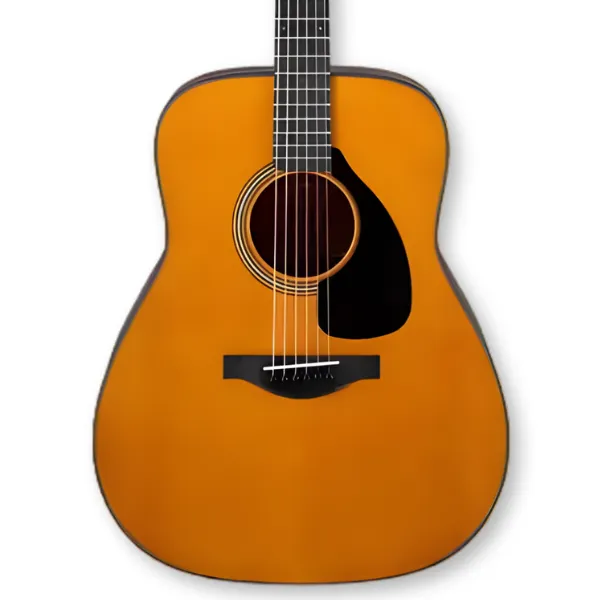
All-Solid Wood Body
Exceptional Sustain
A.R.E. Treated Top
Great Versatility

All-Solid Wood Body
Warm, Balanced Tone
Powerful Projection
Ideal for Country/Ballads
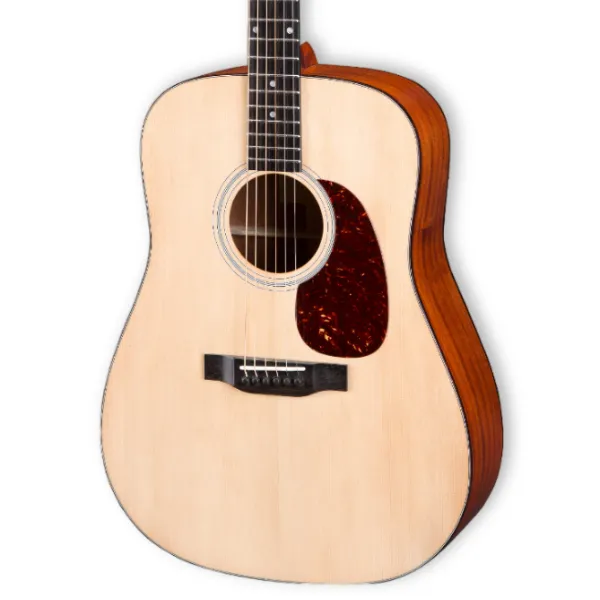
All-Solid Wood Body
Punchy Midrange
Balanced Tone
Perfect For Bluegrass
The article also provides insights into specific features, such as bracing patterns, scale length, and nut width, to help you understand how the features affect the quality of the acoustic guitar.
Discover the nuances of each model and find out which acoustic is the best for you. The 12 Best Mid-Range Acoustic Guitars for Under $1000 are ranked and listed below.
- Guild D-140
- Yamaha FG3
- Eastman E1D
- Alvarez MD60
- Recording King RO328
- Cort Gold D6
- Seagull S6
- Taylor Academy 10
- Taylor Academy 12
- Alvarez MPA66SHB
- GS Mini Mahogany
- Martin DJr-10
1. Guild D-140
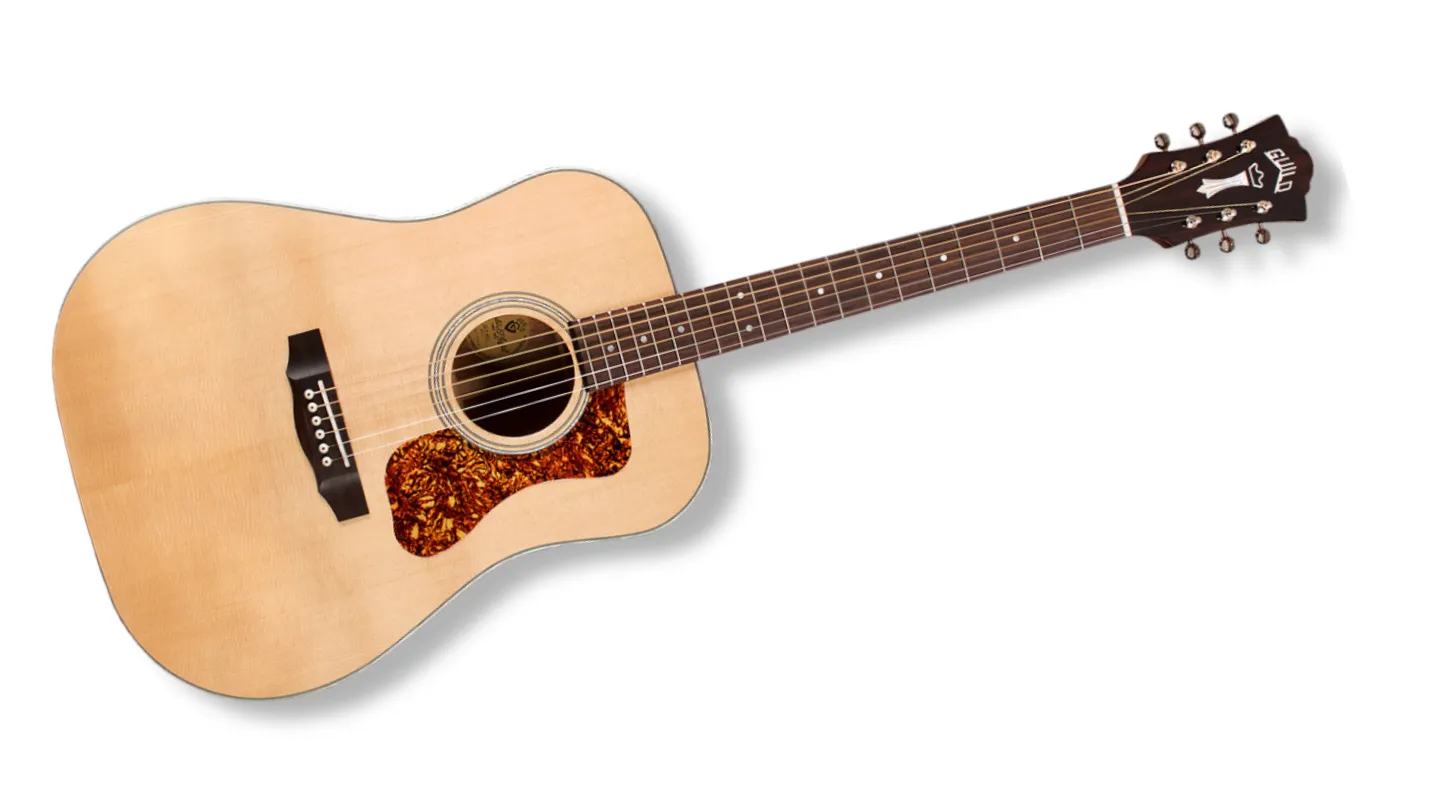
The Guild D140 is a dreadnought acoustic guitar featuring a solid Sitka spruce top paired with solid African mahogany back and sides.
The D140 is a part of Guild’s Westerly Collection series, which replaced the GAD (Guild Acoustic Designs) series in 2015. As a part of the Westerly Collection the D140 pays tribute to Guild’s rich history of creating high-quality guitars in Westerly, Rhode Island during the years 1967-2001.
The Guild D-140 is an ideal choice for intermediate players looking for a high-quality dreadnought acoustic under $1000.
Sound and Tone (5/5):
The D140 produces a full and rich acoustic tone, characterized by warm mahogany depth and a touch of spruce-driven sparkle in the high-end.
Solid wood construction enhances resonance, particularly in the midrange, making it ideal for strumming and rhythm work. Scalloped bracing further amplifies soundboard vibration, leading to extended sustain and resonance.
The D140 has a balanced and focused sound that develops greater warmth and richer overtone complexity as the spruce top matures. A powerful yet tight bass response complements exceptional clarity in the mids and highs, resulting in effortless projection and an airy, open resonance.
The Guild D-140 earns a 5/5 rating for its sound and tone.
Playability and Comfort (3/5):
The D140 features a C-shaped neck with a slightly rounded profile, offering a comfortable grip for most players.
The neck feels substantial compared to modern slim-taper necks, and the 1 3/4″ (44.45 mm) nut width ensures ample space for comfortable fingerpicking.
The gloss finish on the neck feels great initially but becomes a little sticky after a long playing session. While the factory setup is decent, some players experienced slightly sharp fret ends.
The D-140 is lightweight for a dreadnought, weighing only 4.2 lbs (1.91 kg) which makes it more comfortable during extended playing sessions. However, players with smaller frames should keep in mind that the dreadnought body is bulky and can become uncomfortable during extended seated playing.
The Guild D-140 earns a 3/5 rating for its playability and comfort.
Versatility (4/5):
The D140 is suitable for fast bluegrass runs or gentle folk melodies, but the D140’s warmth and balanced tone work surprisingly well for modern singer-songwriter styles too. However, the warmth and richness of the D-140’s tone really shines in country ballads, making it the best acoustic guitar for country on the list.
The Guild D140 excels in flatpicking and fingerpicking due to its projection and balanced tone. The D140 works great as a strumming guitar too and its power really shines in an ensemble setting, cutting through a mix without sounding harsh, making it perfect for jamming or small gigs.
However, players who primarily focus on very percussive or heavily strummed techniques might prefer a guitar with a brighter attack for maximum rhythmic clarity.
The Guild D-140 earns a 4/5 rating for its versatility.
Construction and Design (5/5):
The Guild D-140 boasts a classic dreadnought build with a full-sized body, measuring 4 3/4″ (120.65 mm) deep at the lower bout, 15 3/4″ (400.05 mm) wide at the lower bout, and 20″ (508 mm) in body length.
The nut and saddle are made from genuine bone, offering both a natural aesthetic and enhanced sustain.
The iconic Chesterfield headstock emblem, reminiscent of 1960s Guilds, adds a touch of vintage charm. The solid mahogany back and sides display rich, swirling, and linear grain patterns, while the solid Sitka spruce top shimmers with tightly spaced grain lines. Elegant cream binding complements the natural wood tones and defines the guitar’s classic silhouette.
The Guild D-140 earns a 5/5 rating for its construction and design.
Guild D-140 Pros: Full and rich acoustic tone, solid wood construction, balanced sound with exceptional clarity, lightweight design, versatile for various playing styles, classic dreadnought build, genuine bone nut, and saddle.
Guild D-140 Cons: Gloss finish on the neck becomes sticky during long playing sessions, the potential for slightly sharp fret ends on some models, bulky body may be uncomfortable for smaller players, not the best choice for very percussive playing styles.

Recommendation for Guild D-140
The Guild D-140 is a versatile and well-crafted dreadnought guitar that delivers a rich balanced tone, impressive projection, and decent playability. Its solid wood construction and classic design make it an excellent choice for multiple musical genres like country, bluegrass, and folk.
Choose the D-140 if you seek a high-quality dreadnought guitar with a warm, resonant tone, great projection, and versatile playability that sounds great in country ballads.
Avoid the D-140 if you prefer a guitar with a slimmer neck profile or find the dreadnought body shape too bulky for comfortable playing.
| Guild D-140 Specifications | |
| Body Type | Dreadnought |
| Top Material | Solid Sitka Spruce |
| Back and Sides Material | Solid African Mahogany |
| Bracing | Scalloped Sitka Spruce |
| Neck Material | African Mahogany |
| Scale Length | 25 1/2″ (647.7 mm) |
| Fingerboard Material | Rosewood |
| Saddle/Nut Material | Bone |
| Frets | 20 |
| Finish | Gloss Polyurethane |
| Typical price in the USA | Around 749$ (prices may vary) |
| Where to Buy | Sweetwater, Musician’s Friend, Guitar Center, Chicago Music Exchange |
2. Yamaha FG3
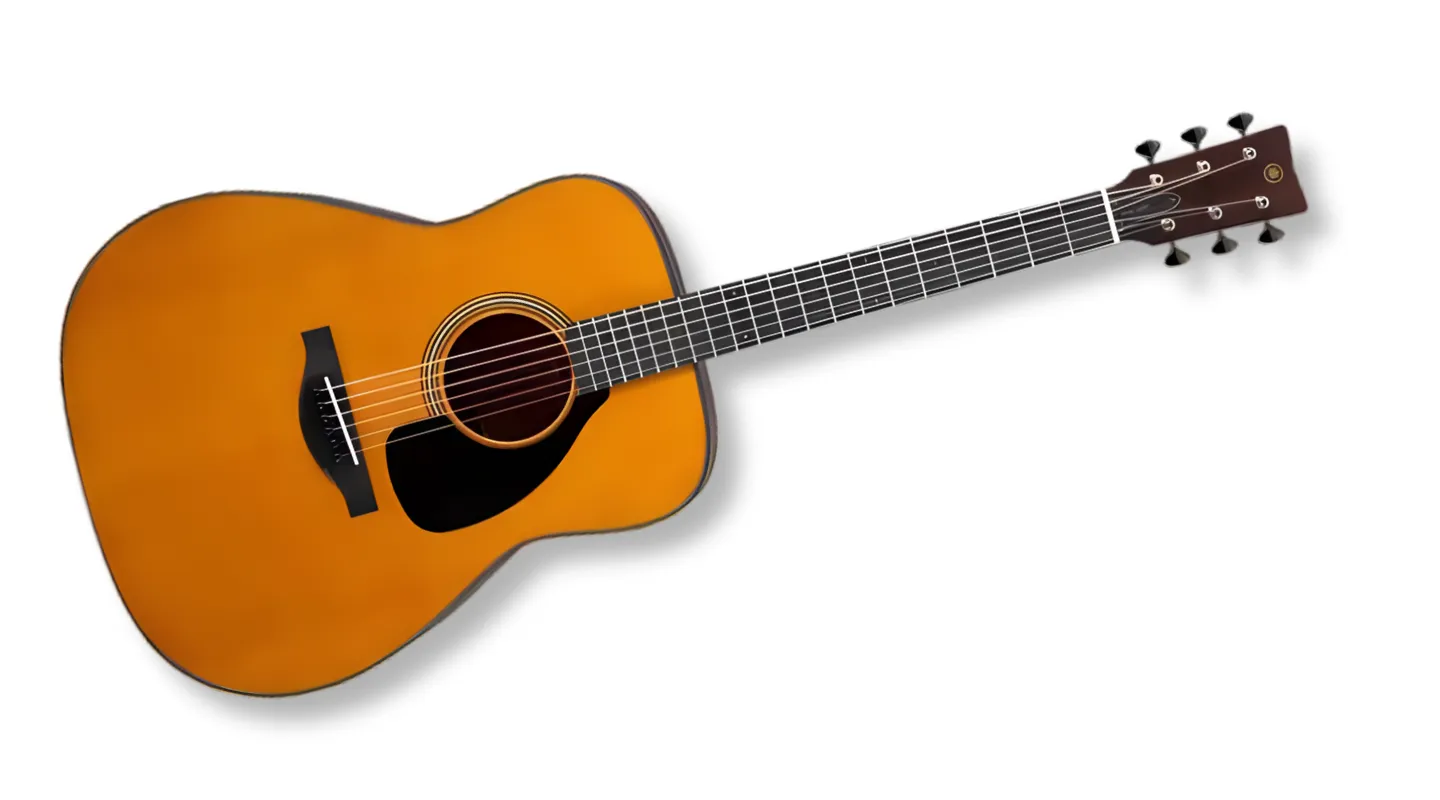
The Yamaha FG3 is a dreadnought acoustic guitar featuring a solid A.R.E. treated Sitka spruce top, solid mahogany back and sides, and scalloped bracing.
The FG3 is inspired by Yamaha’s iconic “Red Label” guitars of the 1960s, particularly the FG180 model from 1966. However, unlike the FG3’s predecessors that relied on natural aging, the FG3 utilizes Acoustic Resonance Enhancement (A.R.E.) treatment to achieve a mature, well-aged tone.
The Yamaha FG3 stands out as the best Yamaha acoustic guitar under $1000, offering exceptional value and performance for its price point which is just under $900 at around $879 (prices may vary).
Sound and Tone (5/5):
The FG3 boasts a remarkable level of sustain, especially noticeable in the mid and higher registers. Notes fade with a gentle shimmer, adding depth and complexity to the sound.
The lows are deep and resonant, the mids are strong and present, and the highs have a bright, articulate quality, resulting in a focused, bell-like chime. Even with forceful strumming, the Yamaha FG3 maintains clarity across all registers.
The sound remains clear and responsive, characterized by an underlying warmth that contributes to a full-bodied feel.
The Yamaha FG3 earns a 5/5 rating for its sound and tone.
Playability and Comfort (4/5):
The Yamaha FG3 offers exceptional playability and comfort. The FG3’s 25″ (635 mm) scale length provides familiar string tension and the slightly wider 1.75″ (44.45 mm) nut delivers ample space for intricate fingerpicking.
The action is set low enough for easy chording while maintaining sufficient height to prevent buzzing during aggressive playing. The 1.75″ (44.45 mm) nut width strikes a perfect balance, accommodating both fingerstyle techniques and open chords with ease.
The satin neck finish ensures a smooth feel, allowing effortless sliding up and down the neck.
While the classic dreadnought body might feel slightly less comfortable for smaller players during extended seated playing sessions, the FG3’s balanced weight distribution makes it comfortable to play standing up for longer periods.
The Yamaha FG3 earns a 4/5 rating for its playability and comfort.
Versatility (4/5):
The Yamaha FG3 excels in bluegrass but its tonal balance and responsiveness make it suitable for folk, country, and singer-songwriter genres like indie folk and alt-country. The FG3’s volume and projection also make it suitable for blues and even some classic rock styles requiring a powerful acoustic sound.
The FG3 is great for strumming because of its strong bass response. However, the FG3 also accommodates fingerstyle playing, because of its balanced midrange, clear treble frequencies, and good projection.
The Yamaha FG3 earns a 5/5 rating for its versatility.
Construction and Design (4/5):
The FG3 maintains a manageable weight of 4.11 lb (1.86 kg) due to its well-balanced solid wood construction, despite its size.
The solid Sitka spruce top of the FG3 showcases a tight, even grain pattern, indicative of a carefully selected piece of tonewood. The subtle blend of straight grain and silking on the Sitka spruce top adds visual interest without being ostentatious.
The meticulous binding and smooth, semi-gloss finish highlight Yamaha’s commitment to quality. The FG3’s classic dreadnought shape, simple rosette, and understated finish contribute to its timeless aesthetic. However, the nut and saddle are both made from urea (synthetic material) which suggests cost-cutting measures.
The Yamaha FG3 earns a 4/5 rating for its construction and design.
Yamaha FG3 Pros: Rich, vintage-inspired tone, exceptional sustain, powerful and focused bass, smooth playability, versatile across various musical genres, balanced weight.
Yamaha FG3 Cons: Dreadnought body may be uncomfortable for smaller players during extended seated playing sessions. The nut and saddle could have been made from bone.
Recommendation for Yamaha FG3
The Yamaha FG3 with a solid wood body offers a compelling combination of rich, vintage-inspired tone and versatile performance across various musical styles.
Choose the Yamaha FG3 if you seek a high-quality dreadnought acoustic guitar with a mature, well-aged tone and the versatility to handle various musical genres.
Avoid the Yamaha FG3 if you find dreadnought body shape uncomfortable and want a smaller-bodied guitar.
| Yamaha FG3 Specifications | |
| Body Type | Dreadnought |
| Top Material | Solid Sitka Spruce |
| Back and Sides Material | Solid Mahogany |
| Bracing | Scalloped |
| Neck Material | African Mahogany |
| Scale Length | 25″ (635 mm) |
| Fingerboard Material | Ebony |
| Saddle/Nut Material | Urea |
| Frets | 20 |
| Finish | Semi-gloss |
| Typical Price in the USA | Around $879 (prices may vary) |
| Where to Buy | Authorized Yamaha dealers like Sweetwater, Guitar Center, or similar music retailers. |
3. Eastman E1D
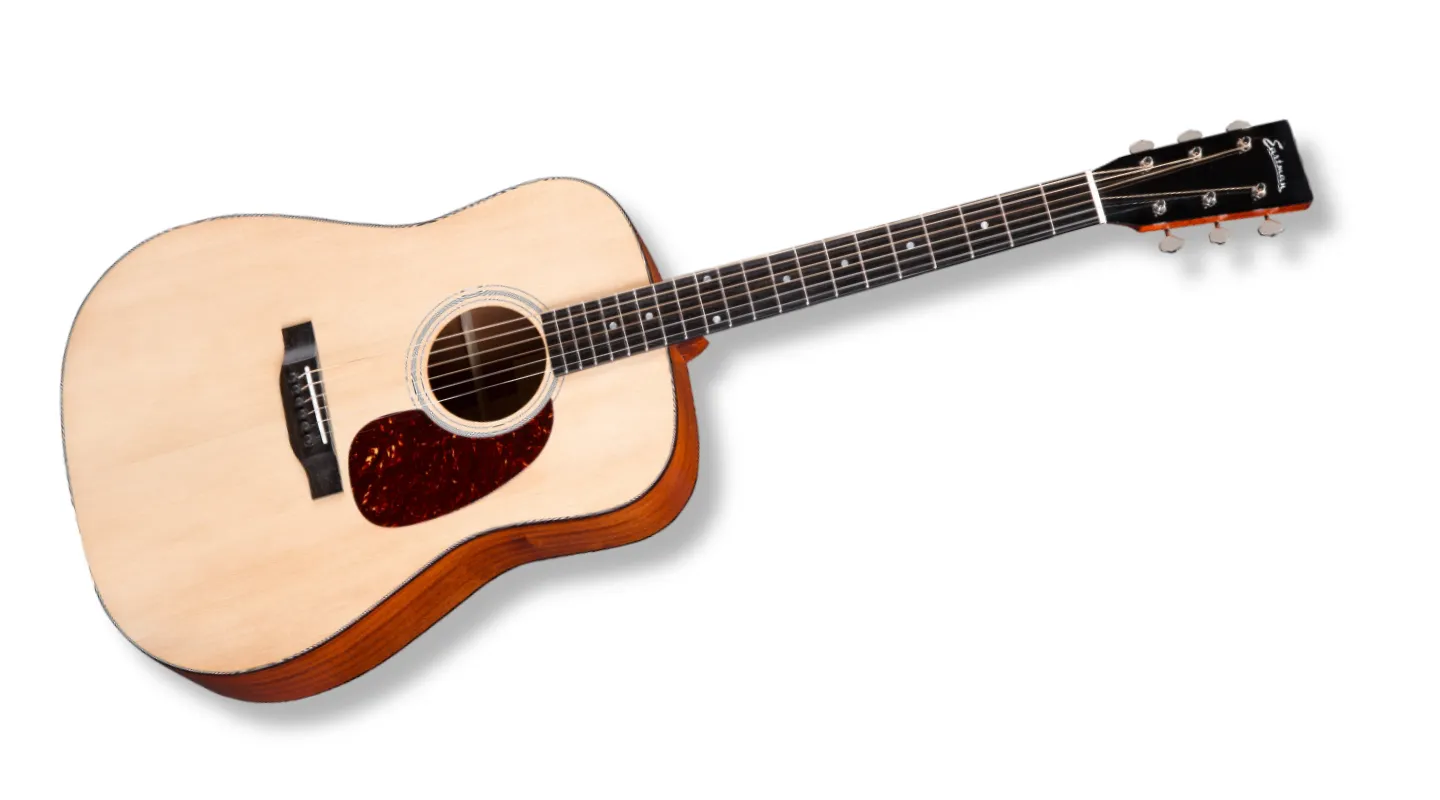
The Eastman E1D is a dreadnought acoustic guitar featuring a solid Sitka spruce top and solid sapele back and sides, scalloped X-bracing, C-shaped mahogany neck, and an ebony fingerboard.
The E1D belongs to Eastman’s Traditional Series. The Traditional Series draws inspiration from the iconic dreadnoughts of the 1930s. The dreadnoughts in the 1930s were renowned for their powerful projection and balanced tone. Eastman offers a modern interpretation of this classic dreadnought sound with the E1D model.
The Eastman E1D is the best value acoustic guitar under $1000 because of its exceptional tone, playability, and build quality at an accessible price point which is just under $600 at approximately $599 (prices may vary).
Sound and Tone (5/5):
The Eastman E1D offers a strong, balanced tone with powerful projection and a punchy midrange. The E1D’s midrange is warm and focused, with a punchy, articulate timbre.
The E1D’s attack is bright and clear. The E1D’s hint of upper-midrange sparkle is similar to the crispiness of a classic Martin D18. However, the Eastman E1D’s tone offers a slightly more mellow character with a less pronounced deep low-end when compared to some classics like the Martin D18.
The E1D offers a complex sound with a sense of depth and dimension, shimmering overtones, and a subtle harmonic richness.
The Eastman E1D earns a 5/5 rating for its sound and tone.
Playability and Comfort (5/5):
The E1D offers a familiar string tension that’s well-suited to most players, with its standard 25.4″ (645.16 mm) scale length.
The E1D’s neck profile is a comfortable C-shape, and the 1 3/4″ (44.45 mm) nut width offers ample fingerboard space for fingerpicking. The wider string spacing is ideal for players with larger hands.
The E1D’s hand-rubbed satin neck finish offers a smooth, fast feel, reducing the “stickiness” that could hinder some players.
The action of the E1D is low enough for comfortable chording. However, some players report high action right out of the box, so a professional setup might be necessary for some models.
Despite the E1D’s dreadnought size, the E1D’s body contours make it surprisingly comfortable to hold. However, smaller players may prefer Eastman’s 00 or OM models for a more compact feel.
The Eastman E1D receives a 5/5 rating for its Playability and Comfort.
Versatility (4/5):
The Eastman E1D is an excellent choice for bluegrass or unamplified performances due to its substantial projection and volume. The E1D is also well-suited to country and Americana music thanks to the E1D’s warmth and balanced tone.
The E1D is a fantastic choice for singer-songwriter genres too because its balanced and warm tone supports vocals without overshadowing them, whether strumming or fingerpicking.
The Eastman E1D truly shines for singer-songwriters, roots music, and genres demanding a balanced, responsive instrument.
The Eastman E1D earns a 4/5 rating for its versatility
Construction and Design (4/5):
The Eastman E1D has a 16″ (406.4 mm) body width and a body depth of 4-11/16″ (118.87 mm).
The E1D embraces a no-frills aesthetic with simple dot markers instead of elaborate inlays. Eastman uses a thin Truetone finish on the E1D, leaving the wood pores open. This contributes to the E1D’s resonant, lively voice.
The open-gear PingWell V93N tuners have a vintage charm reminiscent of pre-war guitars. The V93N tuners are also lightweight, which helps with the guitar’s overall balance and prevents possible neck dive issues.
The saddle and nut are made from bone, and the guitar comes equipped with D’Addario XS Coated Phosphor Bronze Light (.012 – .053) strings.
The Eastman E1D earns a 4/5 rating for its construction and design.
Eastman E1D Pros: balanced and powerful tone, warm and articulate sound, comfortable neck profile, quality build and materials, versatile performance, aesthetic appeal
Eastman E1D Cons: potential high action (professional setup may be needed), dreadnought size may not suit smaller players
Recommendation for Eastman E1D
The Eastman E1D stands out as a versatile and well-crafted dreadnought guitar offering exceptional value for its price.
Choose Eastman E1D if you seek a balanced, responsive instrument with a warm, powerful tone suitable for various playing styles.
Avoid Eastman E1D if you prefer a guitar with a more pronounced deep low-end or if you prefer acoustic guitars with a smaller body size.
| Eastman E1D Specifications | |
| Body Type | Dreadnought |
| Top Material | Solid Sitka Spruce |
| Back and Sides Material | Solid Sapele |
| Bracing | Scalloped X Bracing |
| Neck Material | Mahogany |
| Scale Length | 25.4″ (645.16 mm) |
| Fingerboard Material | Ebony |
| Saddle/Nut Material | Bone |
| Frets | 20 |
| Finish | Truetone Satin |
| Typical Price in the USA | Approximately $599 (prices may vary) |
| Where to Buy | Authorized Eastman dealers, Sweetwater, Guitar Center |
4. Alvarez MD60
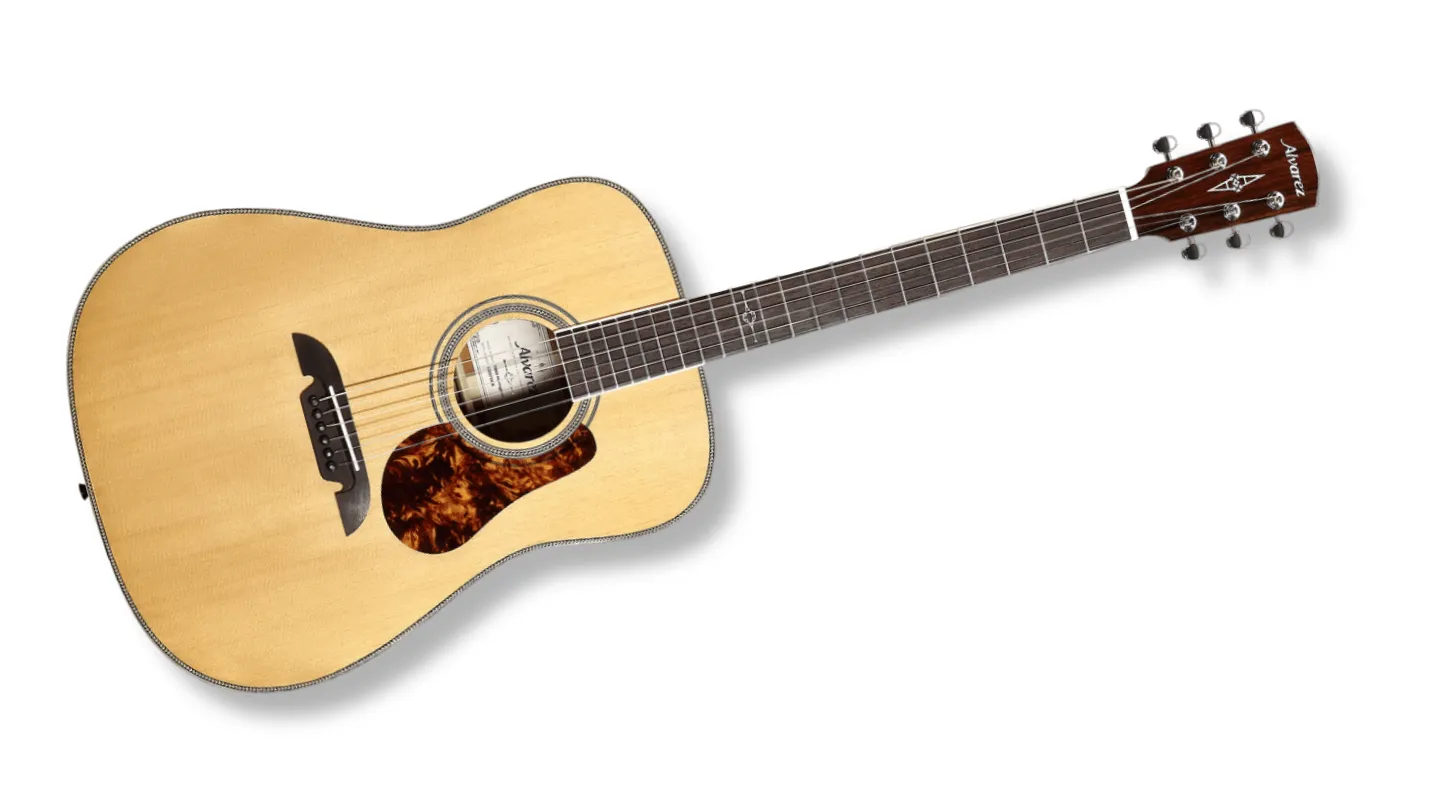
The Alvarez MD60 is a classic dreadnought acoustic guitar that features a solid AAA Sitka spruce top and solid African mahogany back and sides.
The MD60’s main selling point is Alvarez’s Advanced Tonal Response (ATR™) technology that enhances the tone and durability of the MD60. The previous version of the MD60, the Alvarez MD60BG, did not have the ATR™ technology. The ATR™ technology is a major upgrade because it provides matured sound and increased durability.
The Masterwork series, which the MD60 is a part of, pays tribute to traditional Bluegrass guitar aesthetics.
The Alvarez MD60 provides impressive value at around $799 (prices may vary).
Sound and Tone (5/5):
The solid Sitka spruce top gives the Alvarez MD60 a rich tone with excellent projection and balanced warmth.
The mahogany back and sides of the Alvarez MD60 provide focused warmth in the midrange and a subtle, rounded bass response.
The MD60’s all-solid construction and FS6 bracing make it incredibly responsive, where even minor playing changes affect the tone.
The Alvarez MD60 has a powerful bass response, articulate mids, and clear, shimmering trebles. The bass response of the Alvarez MD60 is round and full rather than focused and punchy. If you’re used to a modern, scooped midrange, the MD60 may feel a bit more mellow.
Overall, the Alvarez MD60 leans towards a balanced and classic dreadnought tone, with a touch of modern clarity. The Alvarez MD60 is not overly bright or overly dark.
The Alvarez MD60 earns a 5/5 rating for its sound and tone.
Playability and Comfort (4/5):
The MD60 features a comfortable neck that transitions smoothly from a slight V shape at the lower frets to a rounded C profile further up.
The neck has a wider feel and boasts a smooth satin finish that provides a good grip and does not feel slippery.
The wider neck and nut width of 1.75″ (44.45 mm) create comfortable string spacing for fingerstyle players or those with larger hands, allowing for easier fingerpicking without feeling cramped.
The 12″ (304.8 mm) radius fingerboard offers a slightly curved feel, perfect for chords, while the edges are smooth with no fret sprout.
The dreadnought shape is not very comfortable for smaller-framed players, especially for extended seated playing, because of its bulky dreadnought body shape.
Some players have noted that the action was too high out of the box so some models might require truss rod adjustment or a professional setup.
The Alvarez MD60 earns a 4/5 rating for its playability and comfort.
Versatility (5/5):
The Alvarez MD60 is a great acoustic guitar for strumming, fingerpicking, and flatpicking due to its wide dynamic range. The Alvarez MD60 sounds delicate and nuanced when fingerpicked, yet it handles powerful strumming without losing clarity or becoming harsh.
The Alvarez MD60 provides the power and clarity to cut through the mix even when playing or performing with other musicians.
The MD60 is a good fit for driving country rhythms, singer-songwriter accompaniments, or even bluesy slide guitar. The MD60 is very versatile and responds well to different playing techniques and genres. However, the Alvarez MD60 is not a good fit for genres that require a super-focused, modern scooped sound or for players who primarily play complex jazz chord voicings.
The Alvarez MD60 earns a 5/5 rating for its versatility.
Construction and Design (5/5):
The Alvarez MD60 features a solid Sitka spruce top that is made from AAA-rated wood. The AAA rating indicates a higher grade of spruce with superior visual qualities such as tighter grain, more consistent coloring, and fewer blemishes when compared to AA or A-rated spruces.
The Alvarez MD60 also utilizes Alvarez’s Advanced Tonal Response (ATR™) technology to enhance the stability of the wood when exposed to adverse dry or humid climates. The ATR™ technology also accelerates the wood aging effect of the MD60 to deliver a more mature and sophisticated tone.
The Alvarez MD60 features classic herringbone binding (stylized ABS on some models), adding a touch of vintage elegance to the guitar’s body. The multi-ringed rosette complements the traditional tortoiseshell pickguard, while the open-gear tuners with a nickel finish lend a timeless look to the headstock. These tuners also function smoothly and hold tuning very well.
Alvarez utilizes a traditional dovetail neck joint on the MD60, ensuring sturdiness and contributing to the guitar’s resonance.
The Alvarez MD60 earns a 5/5 rating for its construction and design.
Alvarez MD60 Pros: AAA rated Sitka spruce top, Alvarez’s Advanced Tonal Response (ATR™) technology, balanced tone with modern brightness, comfortable neck profile, wide dynamic range, versatile for various playing styles.
Alvarez MD60 Cons: Action may be too high out of the box on some models, may feel less comfortable for smaller-framed players.
Recommendation for Alvarez MD60
The Alvarez MD60 stands out as a premium dreadnought guitar featuring a classic design, exceptional build quality, and a balanced, versatile tone. Its solid wood construction, comfortable neck profile, and meticulous attention to detail make it a joy to play.
Choose the Alvarez MD60 if you seek a high-quality dreadnought guitar with a classic aesthetic, versatile tone, and exceptional playability.
Avoid the Alvarez MD60 if you prefer a guitar with a modern, scooped midrange sound or prefer smaller-bodied acoustic guitars.
| Alvarez MD60 Specifications | |
| Body Type | Dreadnought |
| Top Material | Solid AAA Sitka Spruce |
| Back and Sides Material | Solid African Mahogany |
| Bracing | FS6 System (forward-shifted, scalloped X) |
| Neck Material | African Mahogany |
| Scale Length | 25 1/2 inches (648 mm) |
| Fingerboard Material | East Indian Rosewood |
| Saddle/Nut Material | Bone |
| Frets | 21 |
| Finish | Natural/Gloss |
| Typical Price in the USA | Around $799 (prices may vary) |
| Where to Buy | Alvarez authorized dealers, Sweetwater, Guitar Center |
5. Recording King RO328
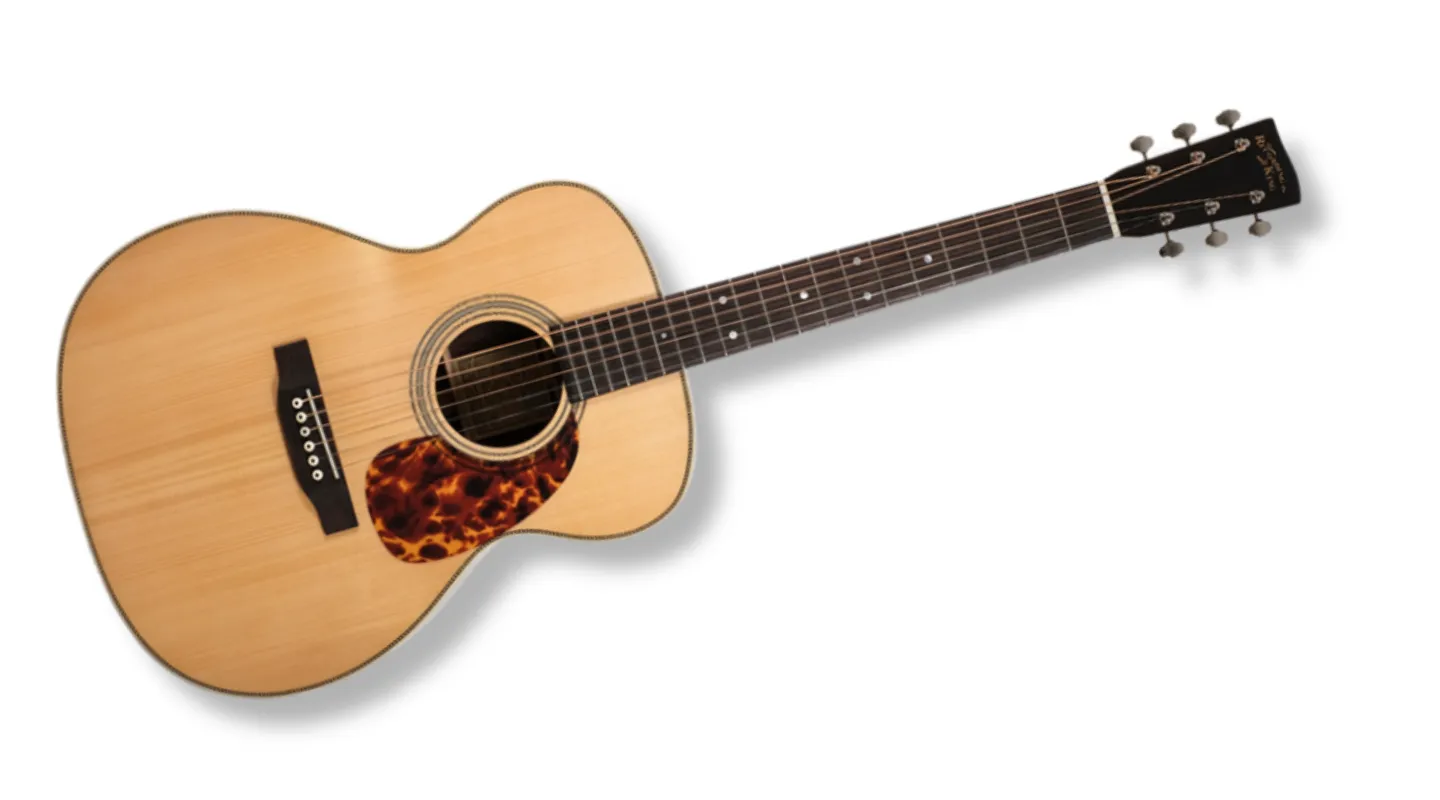
The Recording King RO328 is a Triple O (000) acoustic guitar featuring a solid Adirondack Spruce top with X-bracing and solid Rosewood back and sides.
The Recording King RO328 is part of the Tonewood Reserve series. The Tonewood Reserve series has evolved to offer significant improvements in sound quality and playability compared to previous iterations by using hand-selected tonewoods like Adirondack spruce and rosewood.
The Recording King RO328 costs just a little under 800$ at around 799$ (prices may vary).
Sound and Tone (5/5):
The Recording King RO328’s Adirondack top produces impressive clarity, allowing each note to ring with bell-like precision. Even complex chords retain individual note definition on the RO328.
The RO328’s bass response possesses surprising depth and authority for its compact size, rivaling larger guitars like the Martin D35, but with a tighter, more focused punch.
The Recording King RO328 has a remarkably wide dynamic range. The sound of the RO328 feels powerful when played forcefully yet responds beautifully to a delicate touch with nuanced softness.
The RO328’s sustain is amazing as well, allowing notes in the higher registers to hang in the air for a very long time. Even bass notes on the RO328 resonate with surprising persistence for a smaller-bodied guitar.
The Recording King RO328 is a joy for players who prefer a warm, articulate tone with plenty of sustain. However, guitarists seeking a raw, percussive sound might prefer a brighter, less resonant guitar than the RO328.
The Recording King RO328 earns a 5/5 rating for its sound and tone.
Playability and Comfort (4/5):
The RO328’s compact 000 body is comfortable for playing in both seated and standing positions. The RO328’s slimmer body depth makes it an excellent option for smaller-framed players.
The Recording King RO328 features a 1.75″ (44.45 mm) nut that provides comfortable string spacing. The wider string spacing is perfect for intricate fingerpicking patterns, offering plenty of room to maneuver.
The RO328’s neck finish is mostly satin with a slight glossiness, which may initially cause some stickiness during fast transitions.
The fret ends on the Recording King RO328’s fretboard felt slightly rough and could benefit from additional polishing for smoother playability.
The Recording King RO328 earns a 4/5 rating for its playability and comfort.
Versatility (4/5):
The Recording King RO328’s 1.75″ (44.45 mm) nut width provides a good compromise for both fingerstyle and strumming techniques.
The Recording King RO328’s balanced sound with clear trebles makes it perfect for fingerpicking. However, the Recording King RO328’s midrange punch also makes it suitable for light strumming.
The RO328 excels in folk, singer-songwriter styles, and rootsy genres. The RO328 is an excellent choice for smaller jam sessions or practice.
The Recording King RO328’s clear midrange and articulate projection make it an ideal instrument for supporting vocals.
The Recording King RO328 earns a 4/5 rating for its versatility.
Construction and Design (5/5):
The Recording King RO328 features a nut and saddle crafted from genuine bone. Bone nuts and saddles provide superior tone transfer and enhanced sustain compared to synthetic materials like plastic.
The RO328 comes equipped with D’Addario phosphor bronze strings in a medium gauge (.013-.056). This string choice offers a beautiful balance of warmth and clarity, complementing the RO328’s rich, responsive voice.
The Recording King RO328’s neck joins the body at the 14th fret, providing easy access to the upper register of the fretboard.
Ivoroid binding protects the edges of the body and contributes to the RO328’s vintage aesthetic. The Recording King RO328 also features a full gloss finish that highlights the beauty of the tonewoods and adds a touch of vintage-style sheen.
The Recording King RO328 earns a 5/5 rating for its construction and design.
Recording King RO328 Pros: Warm and balanced tone, excellent clarity and projection, surprising power for its size, vintage-inspired looks, comfortable for smaller players, suitable for fingerstyle and strumming, ideal for supporting vocals.
Recording King RO328 Cons: fret ends could benefit from polishing, glossy neck finish may cause stickiness.
Recommendation for Recording King RO328
The Recording King RO328 is a guitar that offers great sound quality and versatility while maintaining its vintage-inspired charm.
Choose the Recording King RO328 if you seek a versatile instrument that delivers warm, balanced tones with excellent clarity and projection.
Avoid the Recording King RO328 if you prefer a brighter, more percussive sound.
| Recording King RO328 Specifications | |
| Body Type | 000 |
| Top Material | Solid Adirondack Spruce |
| Back and Sides Material | Solid East Indian Rosewood |
| Bracing | X Bracing |
| Neck Material | Mahogany (1 piece) |
| Scale Length | 24.9″ (632.46 mm) |
| Fingerboard Material | Rosewood |
| Saddle/Nut Material | Bone |
| Frets | 20 |
| Finish | Gloss |
| Typical Price in the USA | Around $799 (prices may vary) |
| Where to Buy | Guitar Center, Sweetwater and other authorized retailers |
6. Cort Gold D6
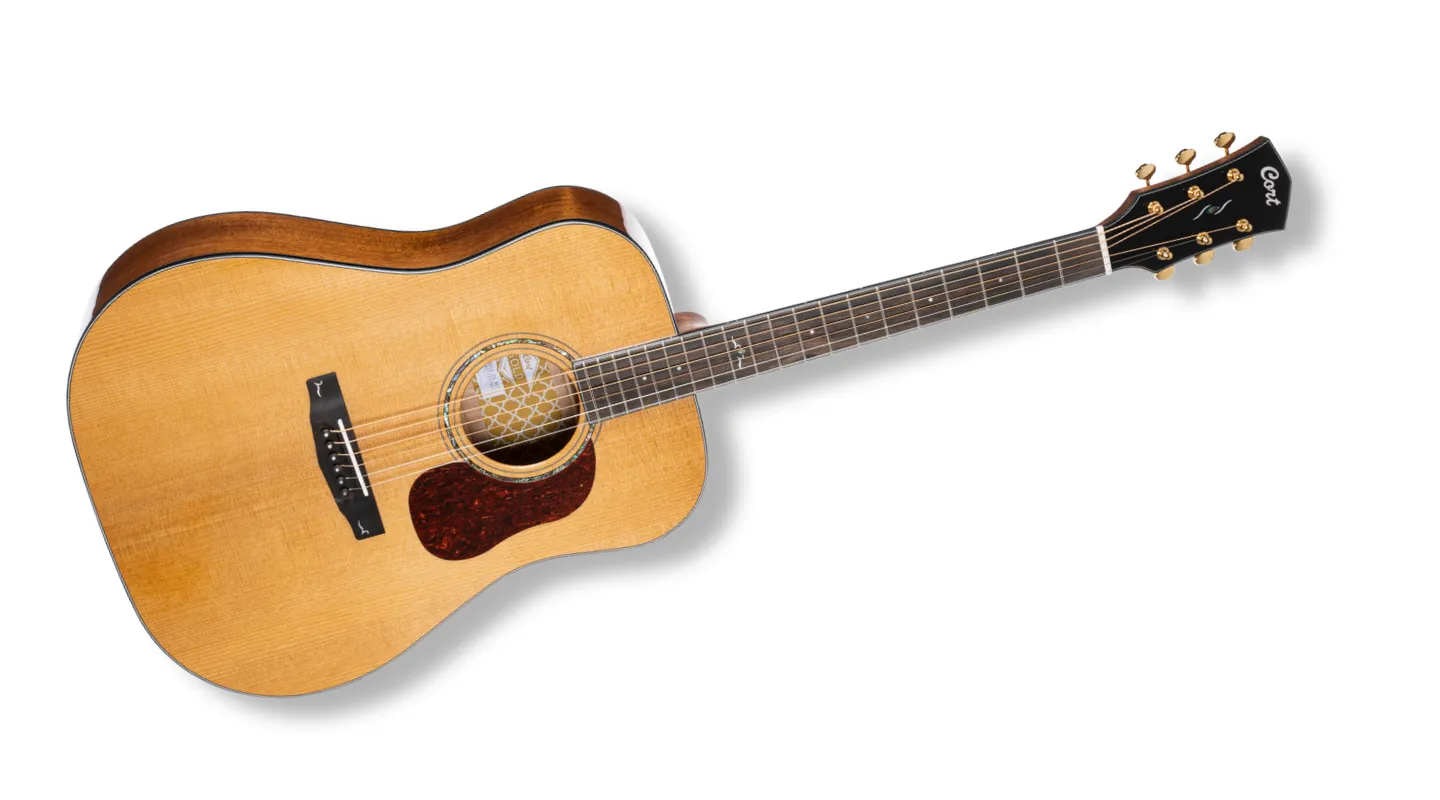
The Cort Gold D6 is a dreadnought acoustic guitar featuring a solid Sitka spruce top and solid mahogany back and sides.
The D6 is part of Cort’s Gold series. The Cort Gold series is an acoustic guitar lineup, characterized by the Aged to Vintage treatment process for an open, vintage tone. Cort’s “Aged to Vintage” (ATV) treatment process matures the solid wood so that the guitar produces a big and open tone reminiscent of a matured vintage acoustic guitar.
Cort Gold D6 costs around 750$ (prices may vary).
Sound and Tone (5/5):
The Gold D6’s tone has a warm, woody, and mellow character.
The torrefied top imparts a touch of sweetness to the tone, reminiscent of a well-aged vintage instrument.
The low end is focused and well-defined, especially in the low-mid frequencies, providing a full-bodied sound without compromising clarity.
The Gold D6 offers a pleasing clarity in its sound, which ensures individual notes within complex chords remain distinct.
The attack of the notes has a clear, bell-like quality, while the sustain maintains a warm, rounded character.
The Cort Gold D6 rings out with a gradual, smooth sustain, particularly noticeable in the mid-range and upper registers.
The Cort Gold D6 earns a 5/5 rating for its sound and tone.
Playability and Comfort (3/5):
The Cort Gold D6 has a comfortable, rounded C-shape neck that is neither too thin nor too thick.
The satin neck finish allows the hand to glide effortlessly, avoiding the sticky feeling that gloss finishes sometimes have, making D6 comfortable for fast playing styles like fast bluegrass flatpicking or tapping.
The frets on the fretboard have hand-rolled fret edges that contribute to incredibly smooth slides and transitions across the fretboard, eliminating any fret sprout.
The dreadnought shape might feel a bit bulky for players with smaller builds, making the Gold D6 less comfortable for extended playing sessions.
The Cort Gold D6 earns a 3/5 rating for its playability and comfort.
Versatility (3/5):
The Cort Gold D6 is perfect for strummers and rhythm players because of its powerful dreadnought sound that cuts through the mix. The Cort Gold D6 also handles fingerpicking surprisingly well, with clear individual notes, and the cutaway allows for easy access to higher lead lines. However, the Gold D6 is not well suited for nuanced, complex fingerstyle playing.
The Cort Gold D6 works well for singer-songwriter accompaniment because of its clarity and midrange emphasis. The Cort Gold D6’s warmth and sustain provide a nice foundation for blues but players who enjoy bluesy bends and slide techniques might find the string action a touch too high.
The Cort Gold D6 earns a 3/5 rating for its versatility.
Construction and Design (4/5):
The Cort Gold D6 features an intricate abalone inlay rosette, adding a touch of classic elegance. The multiple-ply body binding provides a vintage touch while contrasting nicely with the modern gold tuners.
The Cort Gold D6’s Grover Gold open-gear tuners operate smoothly and hold tuning exceptionally well.
The triple-ply back binding features contrasting black and white purfling for a touch of refinement. The Macassar Ebony bridge and ebony bridge pins contribute to a clear and focused tone.
The high-gloss UV-enhanced finish is thin, allowing the wood’s natural beauty to shine through.
The Cort Gold D6’s Dovetail neck joint ensures stability and enhances tone, while also contributing a sleek, modern look to the Cort Gold D6’s profile.
The 14-fret neck join allows effortless access to the upper register of the guitar while maintaining the iconic dreadnought look.
The Cort Gold D6 earns a 4/5 rating for its construction and design.
Cort Gold D6 Pros: Vintage-inspired tone, solid wood construction, ATV-treated top, comfortable neck, good for strumming and rhythm playing, cutaway for easy access to higher frets.
Cort Gold D6 Cons: Not ideal for delicate fingerstyle playing, bulky body may be uncomfortable for smaller players, thin finish is prone to wear and scratches, weight of 12.89 pounds (5.84 kg).
Recommendation for Cort Gold D6
The Cort Gold D6 is an exceptional dreadnought guitar that offers a mature vintage-inspired tone. Gold D6’s solid wood construction, ATV-treated top, and comfortable neck make the Cort Gold D6 a great choice for strummers and fast players who enjoy mature tone.
Choose the Gold D6 if you’re looking for a reliable dreadnought with a warm, mature, rich tone.
Avoid the Gold D6 if you prefer a small light instrument or plan to play a lot of delicate fingerstyle tunes.
| Cort Gold D6 Specifications | |
| Body Type | Dreadnought |
| Top Material | Torrefied Solid Sitka Spruce |
| Back and Sides Material | Solid Mahogany |
| Bracing | Hand Scalloped X-Bracing |
| Neck Material | Walnut Reinforced Mahogany |
| Scale Length | 25.3″ (643mm) |
| Fingerboard Material | Macassar Ebony |
| Saddle/Nut Material | Bone |
| Frets | 20 |
| Finish | Sonically Enhanced UV Finish |
| Typical Price in the USA | Around $750 (prices may vary) |
| Where to Buy | Guitar Center, Sweetwater and Cort authorized dealers |
7. Seagull S6
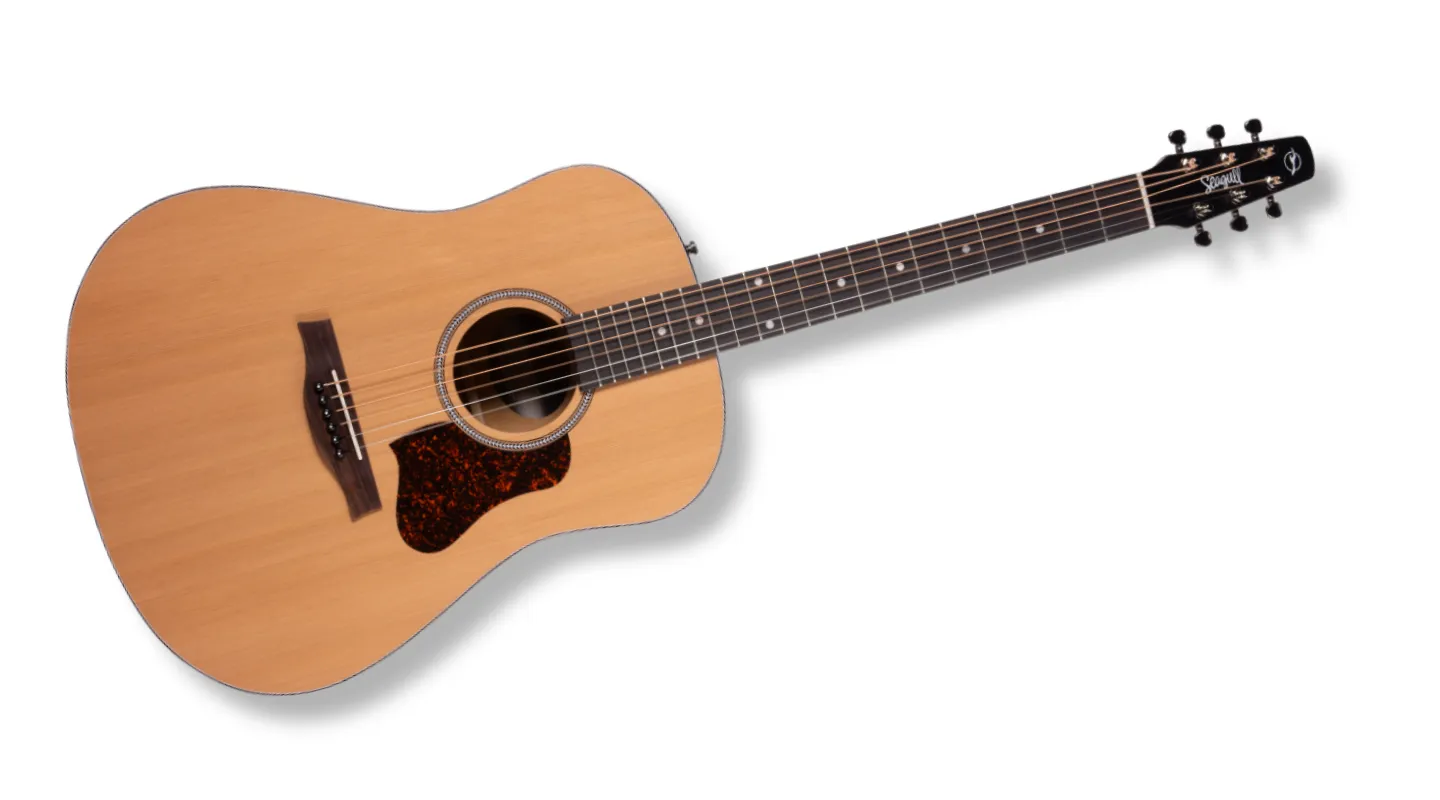
The Seagull S6 is a dreadnought acoustic guitar, with a solid cedar top, laminate wild cherry back and sides, and unique tapered headstock.
As the flagship model of the “S6 Original Series,” the Seagull S6 is designed and manufactured in Canada and is a testament to over 25 years of Seagull’s craftsmanship and innovation.
The Seagull S6 costs around 699$ (prices may vary) and it is an amazing acoustic guitar for under $700, offering excellent value for its price with decent sound and versatility.
Sound and Tone (4/5):
The Seagull S6 produces a rich, woody, warm, and clear tone. Seagull S6’s solid cedar top offers fantastic responsiveness and a mellow warmth, while the laminate wild cherry back and sides add clarity and a bright ring to the trebles.
The Seagull S6 has a well-defined midrange with a clear, present attack, and a focused low end.
The guitar’s sustain is surprisingly impressive, particularly in the mid and upper registers. However, the S6 is not as loud as other acoustic guitars with scalloped bracing like Eastman E1D or Guild D-140, in the under $1000 price range.
Over time, we anticipate the S6’s solid cedar top to mature, gaining even more warmth and a touch of sweetness.
The Seagull S6 earns a 4/5 rating for its sound and tone.
Playability and Comfort (4/5):
The S6 provides comfortable light-gauge strings (.012-.053) that make fretting the strings slightly easier with the S6’s 25.5″ (647.7 mm) scale length.
The wider 1.8″ (45.72 mm) nut creates ample space between strings, which is particularly beneficial for fingerstyle playing and players with larger fingers. However, the wider string spacing slightly slows down rapid alternate-picking playing.
The satin finish on the neck feels incredibly smooth, allowing for effortless hand movement. Some players have reported unusually high action issues on the factory setup, however slightly tightening the truss rod of the S6 quickly fixed the issue. The Seagull S6 earns a 4/5 rating for its playability and comfort.
Versatility (4/5):
The Seagull S6 is well-suited for open chords and strumming patterns, due to its clarity and articulation.
The S6 excels in bluegrass, with its bright midrange cutting through the mix, while its warm cedar top adds a mellow sweetness that makes it versatile for fingerstyle ballads as well.
The S6 is highly adaptable, accommodating a range of styles from folk and singer-songwriter tunes to light blues, pop, and even certain styles of R&B. For heavier R&B styles with driving rhythms, a brighter and punchier guitar like the Guild D-140 is preferable. However, for soulful ballads or a smooth, jazzy R&B feel, the S6 delivers exceptionally well.
The Seagull S6 earns a 4/5 rating for its versatility.
Construction and Design (4/5):
The Seagull S6 embraces a minimalist aesthetic with clean lines and natural wood tones. The uniquely tapered headstock, high-quality open-gear tuners, and straight-string pull design contribute to S6’s distinctive look and tuning stability.
The wild cherry back and sides exhibit a beautiful, flowing grain pattern that adds visual interest to the guitar. However, the thin semi-gloss finish, while contributing to its responsiveness, is also more susceptible to scratches, when compared to thicker polyurethane finishes.
The S6 also features Tusq (synthetic imitation of ivory) nut and compensated saddle that further enhance the intonation and sustain of the acoustic guitar.
The Seagull S6 earns a 4/5 rating for its construction and design.
Seagull S6 Pros: Warm and clear tone, solid cedar top, versatile for various playing styles, unique tapered headstock, high-quality tuners.
Seagull S6 Cons: Not as loud as some competitors, wider neck may not suit all players, thin finish prone to scratches.
Recommendation for Seagull S6
The Seagull S6 is a worthy investment for its rich tone, impressive playability, and versatility.
Choose the S6 if you want a guitar that offers a warm, woody tone and fantastic responsiveness.
Avoid the S6 if you prefer a brighter, punchier sound or if you find the dreadnought body uncomfortable for extended playing.
| Seagull S6 Specifications | |
| Body Type | Dreadnought |
| Top Material | Solid Cedar |
| Back and Sides Material | Laminate Wild Cherry |
| Bracing | X Bracing |
| Neck Material | Silver Leaf Maple |
| Scale Length | 25.5″ (647.7 mm) |
| Fingerboard Material | Rosewood |
| Saddle/Nut Material | TUSQ (synthetic material designed to mimic bone) |
| Frets | 21 |
| Finish | Thin polished semi-gloss |
| Typical Price in the USA | Around $699 (prices may vary) |
| Where to Buy | Sweetwater, Guitar Center and Seagull authorized dealers |
8. Taylor Academy 10
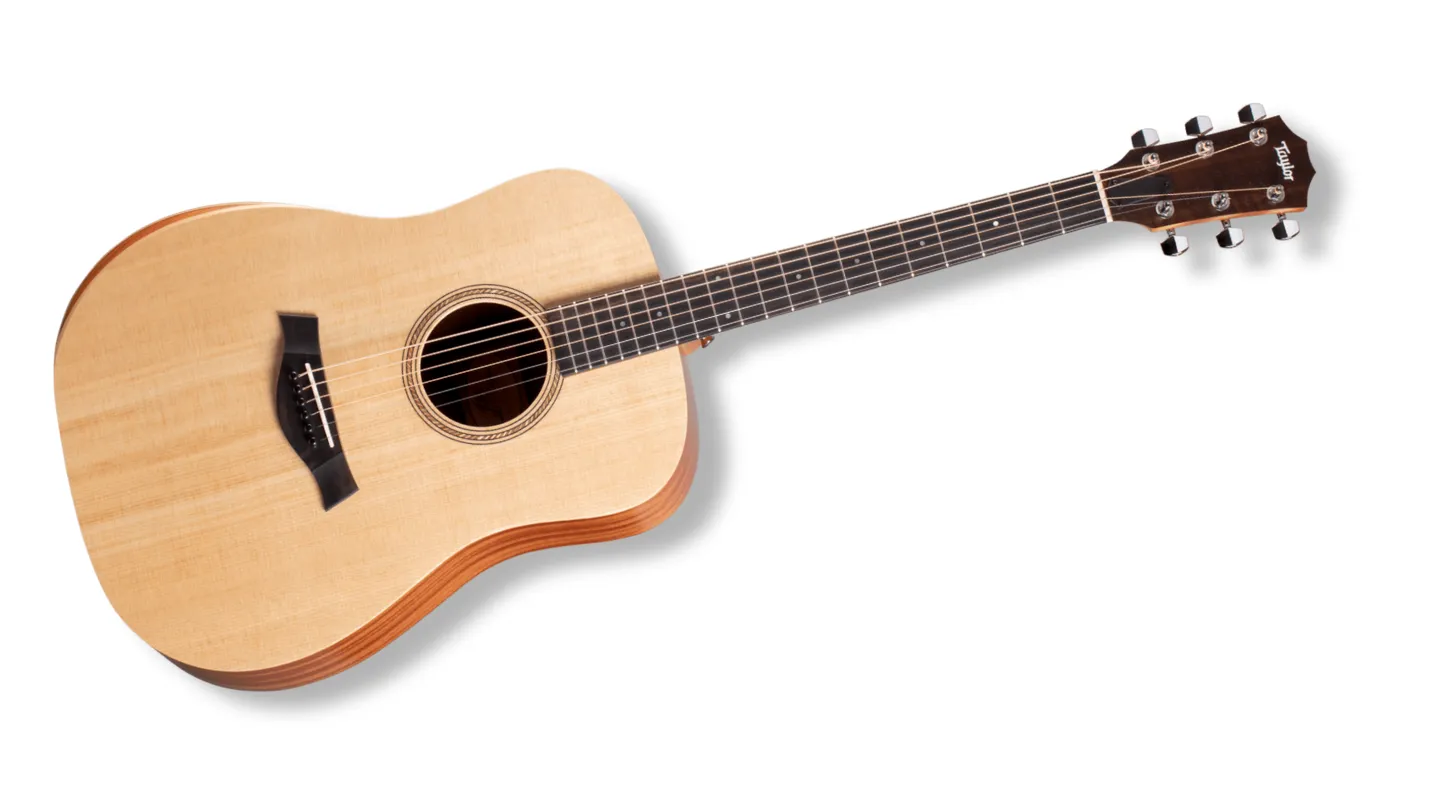
The Taylor Academy 10 is a dreadnought acoustic guitar featuring a solid Sitka spruce top, layered walnut back and sides, and tapered X-bracing.
Academy 10 is a part of Taylor’s Academy series. The Academy series provides entry-level options for players of all skill levels at an accessible price point. Taylor’s luthier Andy Powers created the Academy series to showcase Taylor’s commitment to quality and playability across their entire range.
The Taylor Academy 10 stands out as the best Taylor acoustic guitar for beginners under $1000 due to its blend of great playability and affordability. The Academy 10 costs around 699$ (prices may vary) and comes with a gig bag.
Sound and Tone (4/5):
The Taylor Academy 10 offers surprising depth for its size. The Academy 10’s tonal balance is excellent, with clear, articulate trebles that add a lovely “sparkle.”
Warm mids blend with present, clear highs from the spruce top, ensuring no single frequency range dominates the overall sound.
The Academy 10 delivers bright, resonant trebles that cut through the mix beautifully, making it a fantastic choice for fingerpicking and lead lines.
The balanced clear tone is a great entry point for beginners who have not yet developed any taste for a specific tonal profile. However, for an experienced player, the tonal profile might sound a bit “basic.”
The Taylor Academy 10 earns a 4/5 rating for its sound and tone.
Comfort and Playability (5/5):
The Taylor Academy 10 features a comfortably low action and the guitar is strung with a D’Addario XS Coated Phosphor Bronze Light (.012 – .053) light-gauge strings, making it easy to form chords.
The slim neck profile and the built-in armrest further enhance playing comfort, allowing for extended playing sessions without fatigue.
The Academy 10 has a slightly shorter 24 7/8″ (631.78 mm) scale length, which makes fretting chords slightly easier, especially when combined with the light gauge strings. The satin finish on the Academy 10’s neck allows for effortless movement up and down the fretboard, preventing a “sticky” feel.
Players with smaller frames might find the larger size of the dreadnought body slightly less comfortable for extended playing sessions.
The Taylor Academy 10 earns a 5/5 rating for its playability and comfort.
Versatility (4/5):
The Taylor Academy 10 is versatile and particularly great for strumming due to its dreadnought body shape which provides good projection and volume. However, the Taylor Academy 10’s midrange emphasis also provides clarity for fingerpicking patterns, making it suitable for exploring genres like folk, pop, and country.
The Taylor Academy 10’s midrange emphasis limits its tonal complexity for intricate fingerstyle pieces. Players focused on extremely soft or aggressive playing styles may find Taylor Academy 10’s dynamic range limiting.
The Taylor Academy 10 earns a 4/5 rating for its versatility.
Construction and Design (4/5):
The Taylor Academy 10 dreadnought body measures 16″ (406.4 mm) in width, 4 5/8″ (117.475 mm) in depth, and 20″ (508 mm) in length. The Taylor Academy 10’s lightweight construction and lack of binding contribute to its player-friendly feel, making it a suitable choice for beginners.
The unique beveled armrest enhances comfort for long playing sessions, a thoughtful design feature on the Taylor Academy 10. The Taylor Academy 10 is equipped with quality sealed-gear tuners, ensuring smooth action and reliable tuning stability. A Micarta ‘Wave’ saddle and NuBone nut contribute to consistent intonation and tuning stability. However, keep in mind that the micarta and NuBone are still just synthetic imitations of materials like bone and ivory.
The Academy 10 features a classic aesthetic with a solid Sitka spruce top that has a light, natural hue with slight variations in the grain pattern.
The Taylor Academy 10 earns a 4/5 rating for its construction and design.
Taylor Academy 10 Pros: Solid Sitka spruce top, balanced tone with clear trebles, comfortable playing experience, easy fretting, beveled armrest for comfort.
Taylor Academy 10 Cons: Dreadnought body may be bulky for some, does not suit extreme playing styles, not very tonally complex.
Recommendation for Taylor Academy 10
The Taylor Academy 10 excels as a beginner-friendly acoustic guitar. It offers a comfortable playing experience and a balanced tone.
Choose the Taylor Academy 10 if you’re a beginner seeking a high-quality instrument that will inspire you to learn and grow as a guitarist.
Avoid the Taylor Academy 10 if you’re a seasoned player looking for a guitar with the tonal complexity and projection required for advanced playing techniques or professional performances.
| Taylor Academy 10 Specifications | |
| Body Type | Full Size Taylor Dreadnought |
| Top Material | Solid Sitka Spruce |
| Back and Sides Material | Layered Walnut |
| Bracing | X Bracing |
| Neck Material | Hard Rock Maple |
| Scale Length | 24-7/8″ (631.78 mm) |
| Fingerboard Material | Eucalyptus |
| Saddle/Nut Material | Micarta Saddle; NuBone Nut |
| Frets | 20 |
| Finish | Satin Varnish |
| Typical Price in the USA | Around $699.00 (prices may vary) |
| Where to Buy | Guitar Center, Sweetwater, Taylor authorized dealers |
9. Taylor Academy 12
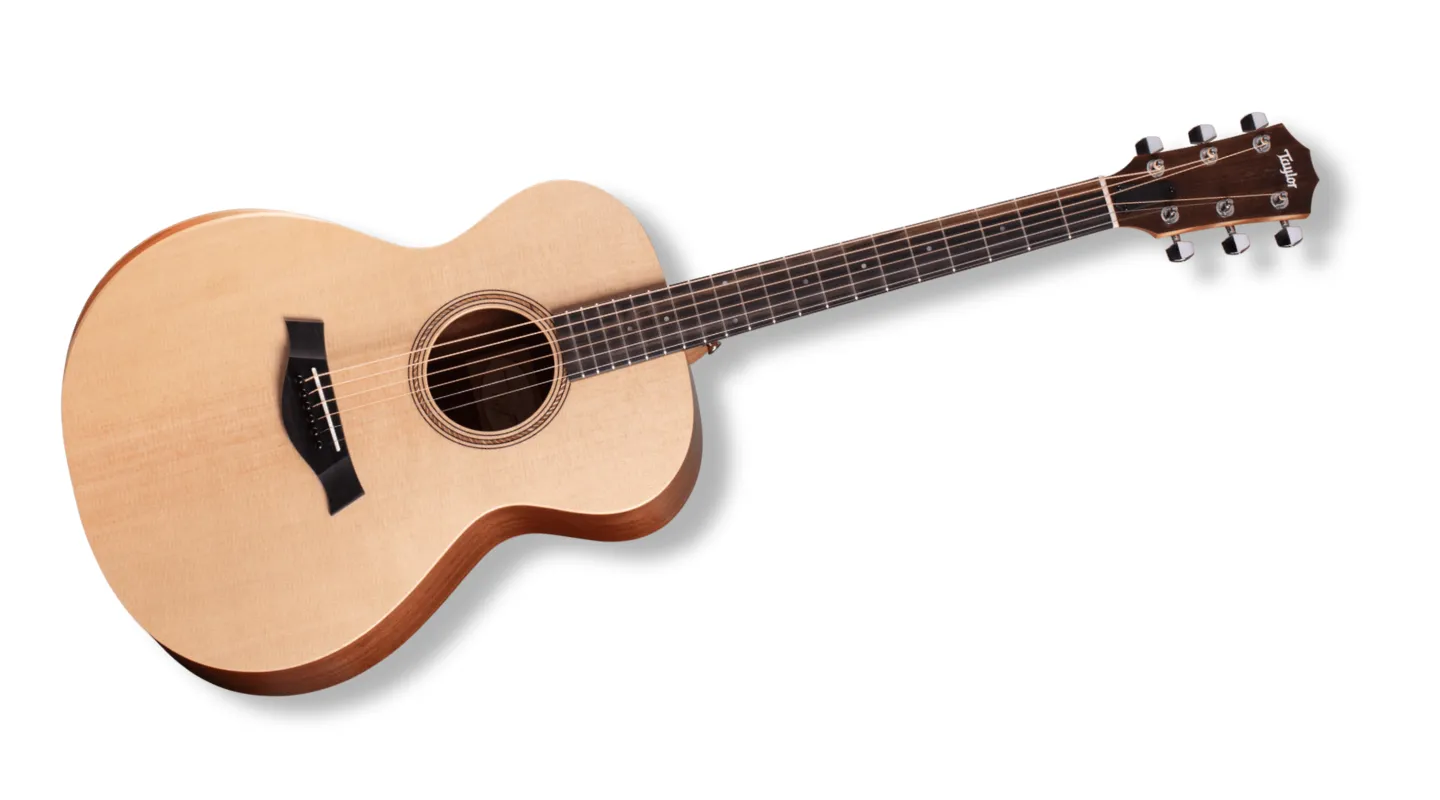
The Taylor Academy 12 is a Grand Concert acoustic guitar with a solid Sitka spruce top and layered walnut back and sides.
The Academy 12 is a part of the Taylor Academy Series. Taylor’s Academy Series presents a range of guitars designed with beginners in mind, emphasizing comfort and ease of playing. For that reason, the Academy 12 also features an ergonomic armrest, a shorter 24 7/8″ (631.75 mm) scale length, and a 1 11/16″ (42.86 mm) nut width, that contribute to enhanced playability and a more comfortable playing experience.
With a price tag of around $699 (prices may vary), the Academy 12 is an ideal choice for beginners and players seeking a comfortable acoustic guitar. The Academy 12 also comes with a gig bag.
Sound and Tone (4/5):
The Taylor Academy 12’s tone is rich and clear. Single-note runs are well-defined with crisp trebles, showcasing Academy 12’s responsiveness and articulation.
The solid Sitka spruce top contributes to bright and resonant trebles, which complement the woody, warm mids, creating a balanced sound signature. This balance is particularly flattering for vocal accompaniment, as it leaves ample space in the midrange for vocals to shine through.
The Academy 12’s projection and volume are noteworthy, especially considering its medium-sized body shape. The Academy 12 is loud enough to hold its own against larger-bodied guitars in terms of pure volume. However, the low end is less pronounced when compared to larger-bodied guitars, like a dreadnought.
The Taylor Academy 12 earns a 4/5 rating for its sound and tone.
Playability and Comfort (5/5):
The Taylor Academy 12’s built-in armrest significantly enhances comfort because the edge of the guitar’s body does not dig into the arm.
The neck of the Taylor Academy 12 features Taylor’s signature sleek profile, a shorter 24-7/8″ (631.775 mm) scale length, and a 1-11/16″ (42.86 mm) nut width.
These design elements contribute to a comfortable playing experience, allowing for effortless fretting and smooth transitions across the fretboard. The shorter scale length of the Taylor Academy 12 also facilitates easier bending and chord formations, making it ideal for beginners.
The Taylor Academy 12 earns a 5/5 rating for its playability and comfort.
Versatility (4/5):
The Taylor Academy 12 suits folk and singer-songwriter styles like indie folk, acoustic pop, or Americana because of its balanced tone and responsiveness. The Academy 12 is a great choice for fingerpicking enthusiasts because of its articulation and clarity. But light to medium strumming remains equally enjoyable because of Academy 12’s dynamic range.
The Taylor Academy 12 shines in fingerstyle jazz with its clear and articulate sound, however, it lacks the booming low-end favored in jazz rhythm playing. The Taylor Academy 12’s sound great in modern country and slide guitar styles however its bright tonal characteristics are not well-suited for traditional country music.
The Taylor Academy 12’s warmth and clarity also provide a suitable foundation for R&B ballads. However, for players exploring effects or seeking a broader range of R&B sounds, the electro-acoustic Academy 12e with its onboard electronics would be more beneficial.
The Taylor Academy 12’s compact size and included gig bag enhance portability, making it perfect for travel, outdoor jams, or impromptu gigs.
The Taylor Academy 12 earns a 4/5 rating for its versatility.
Construction and Design (5/5):
The Taylor Academy 12 has a simple and functional construction. The Grand Concert body of the Taylor Academy 12, with dimensions of 19.5″ (495.3 mm) long, 15″ (381 mm) wide, and 4 3/8″ (111.125 mm) deep, offers a compact and comfortable playing experience.
The neck of the Taylor Academy 12 joins the body at the 14th fret, contributing to the guitar’s balanced feel. The chrome-plated tuners on the Taylor Academy 12 hold their tune well. The Taylor Academy 12 comes strung with Elixir Phosphor Bronze Light strings, known for their longevity and warm, bright tone that complements the guitar’s overall tone.
The Taylor Academy 12 earns a 5/5 rating for its construction and design.
Taylor Academy 12 Pros: Comfortable body size, built-in armrest, shorter scale length for easier fretting, narrow nut width, bright and clear tone, good projection and volume, includes gig bag.
Taylor Academy 12 Cons: Less pronounced low-end compared to larger guitars, not ideal for traditional country music.
Recommendation for Taylor Academy 12:
The Taylor Academy 12 is an exceptional choice for both beginners and experienced players seeking a comfortable, versatile, and well-crafted acoustic guitar. Its balanced tone, impressive playability, and accessible price point of around 699$ (prices may vary) make it a standout option among other acoustic guitars for under 1000$.
Choose the Taylor Academy 12 if you prioritize comfort, playability, and a balanced tone for a variety of musical styles.
Avoid the Taylor Academy 12 if you want a guitar with a dominant low-end or plan to play jazz rhythm guitar.
| Taylor Academy 12 Specifications | |
| Body Type | Taylor Academy Grand Concert |
| Top Material | Solid Sitka Spruce |
| Back and Sides Material | Layered Walnut |
| Bracing | Academy Series Bracing |
| Neck Material | Hard Rock Maple |
| Scale Length | 24-7/8″ (631.78 mm) |
| Fingerboard Material | Eucalyptus |
| Saddle/Nut Material | Micarta “Wave” Saddle; NuBone Nut |
| Frets | 20 |
| Finish | Satin Varnish |
| Typical Price in the USA | Around $699.00 (prices may vary) |
| Where to Buy | Guitar Center or Taylor Guitars website |
10. Alvarez MPA66SHB
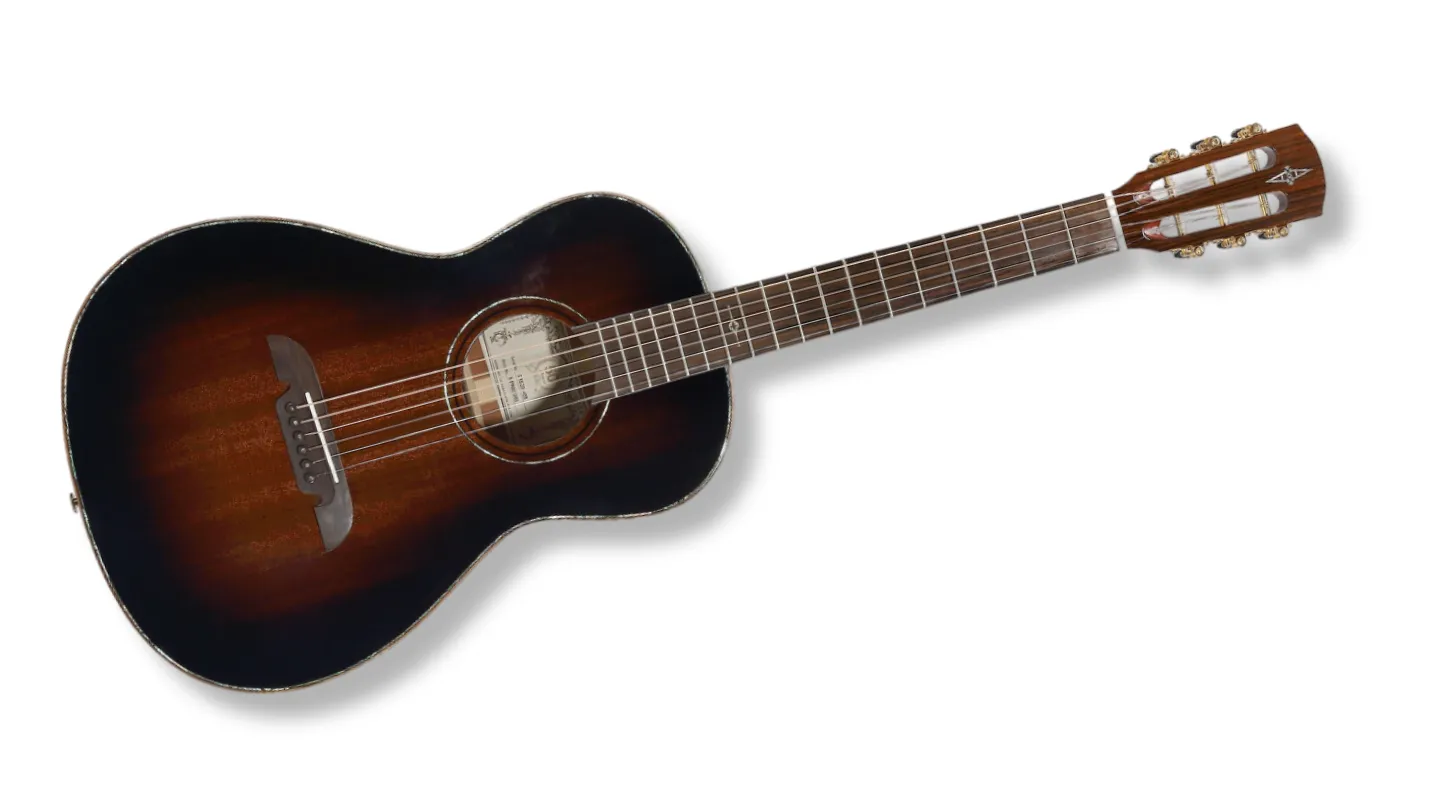
The Alvarez MPA66SHB is a parlor-style acoustic guitar featuring all-solid dark hardwood construction with solid African mahogany, back, and sides.
The Alvarez MPA66SHB is a part of the Alvarez Masterworks series. The Alvarez Masterworks series emphasizes all-solid wood construction for exceptional tone and responsiveness.
The unique feature of the MPA66SHB is its innovative FS6 forward-shifted bracing system with scalloped Tone Bars. This design positions the X-brace axis closer to the soundhole, expanding the soundboard area to maximize energy and vibration, contributing to the guitar’s rich and resonant sound.
The Alvarez MPA66SHB costs approximately 749$ (prices may vary) and it is the best parlor acoustic guitar under 1000$.
Sound and Tone (5/5):
The MPA66SHB produces a distinct tone characterized by tight focus, pronounced midrange, and balanced treble and bass frequencies. The resonant mahogany body delivers plenty of sustain and a powerful, sweet, and mellow sound with punchy crisp overtones.
The MPA66SHB offers impressive volume and tonal range for its compact size but it is not as booming as larger guitars like the Santa Cruz 1929 00 or the Huss and Dalton 00-SP.
The Alvarez MPA66SHB earns a 5/5 rating for its sound and tone.
Playability and Comfort (3/5):
The MPA66SHB offers a shorter 24″ (610mm) scale length that facilitates easy fretting of complex chords and bends. The MPA66SHB’s thin neck profile transitions from a soft V shape near the nut, for comfortable chording, to a C shape near the heel, for comfortable soloing. The 1 3/4″ nut width provides ample string spacing, making it particularly comfortable for fingerpicking styles.
The compact parlor body makes the MPA66SHB an excellent choice for players who find larger guitars cumbersome. However, some players have noted the need for setup adjustments upon arrival, as the action on the factory setup was too high and the truss rod was over-tightened.
The Alvarez MPA66SHB earns a 3/5 rating for its playability and comfort.
Versatility (5/5):
The Alvarez MPA66SHB is a versatile parlor that sounds great in blues, jazz, roots, folk, singer-songwriter genres, and even mellow classical pieces.
The guitar responds well to both delicate fingerstyle passages and light strumming, making it suitable for various playing techniques. While it excels in fingerstyle and lighter playing styles, the MPA66SHB is not the best choice for heavy strumming or genres requiring a more robust low-end response.
The MPA66SHB is ideal for recording acoustic tracks because of the African mahogany’s natural balance and midrange clarity.
The Alvarez MPA66SHB earns a 5/5 rating for its versatility.
Construction and Design (4/5):
The Alvarez MPA66SHB features dark hardwood construction made of African mahogany. Dark hardwood features tonewoods like ebony, koa, or mahogany that have brown, reddish-brown, or near-black color range. The dark wood grain is beautifully showcased, giving the guitar a premium appearance.
The MPA66SHB measures 38.78″ (985 mm) in overall length with a body width of 14.13″ (359 mm), a body depth of 3.62″ (92 mm) at the heel, and 3.78″ (96 mm) at the base.
The solid mahogany construction, combined with a dovetail neck joint, contributes to a sturdy and resonant feel. The use of a real bone nut and saddle enhances both the tone and sustain of the MPA66SHB.
While the overall build quality is impressive, the die-cast gold tuners with ebony buttons feel unresponsive and do not turn as smoothly as we would expect in this price range.
The Alvarez MPA66SHB earns a 4/5 rating for its construction and design.
Alvarez MPA66SHB Pros: All-solid wood construction, warm and resonant sound, pronounced midrange, comfortable neck profile, shorter scale length for easy fretting, versatile across various playing styles, beautiful aesthetics with high gloss finish and detailed inlays.
Alvarez MPA66SHB Cons: Tuning stability issues, potential need for setup adjustments, unresponsive tuners, not ideal for heavy strumming or genres requiring a strong low-end.
Recommendation for Alvarez MPA66SHB
The Alvarez MPA66SHB offers a compelling package for guitarists seeking a parlor-sized instrument with all-solid dark wood mahogany construction under $1000.
Choose the Alvarez MPA66SHB if you value a resonant and articulate sound with a focus on the midrange, suitable for fingerstyle playing and a variety of musical styles.
Avoid the Alvarez MPA66SHB if you require a guitar for heavy strumming or prefer a brighter tonal profile with a more pronounced low end.
| Alvarez MPA66SHB Specifications | |
| Body Type | Parlor |
| Top Material | Solid African Mahogany |
| Back and Sides Material | Solid African Mahogany |
| Bracing | FS6 System (Forward Shifted, X bracing) |
| Neck Material | One piece Mahogany |
| Scale Length | 24 inches (610mm) |
| Fingerboard Material | Indian Laurel/Rosewood |
| Saddle/Nut Material | Real Bone |
| Frets | 18 |
| Finish | Shadowburst/Gloss |
| Typical Price in the USA | Around $749 (prices may vary) |
| Where to Buy | Guitar Center and Alvarez authorized dealers and distributors |
11. GS Mini Mahogany
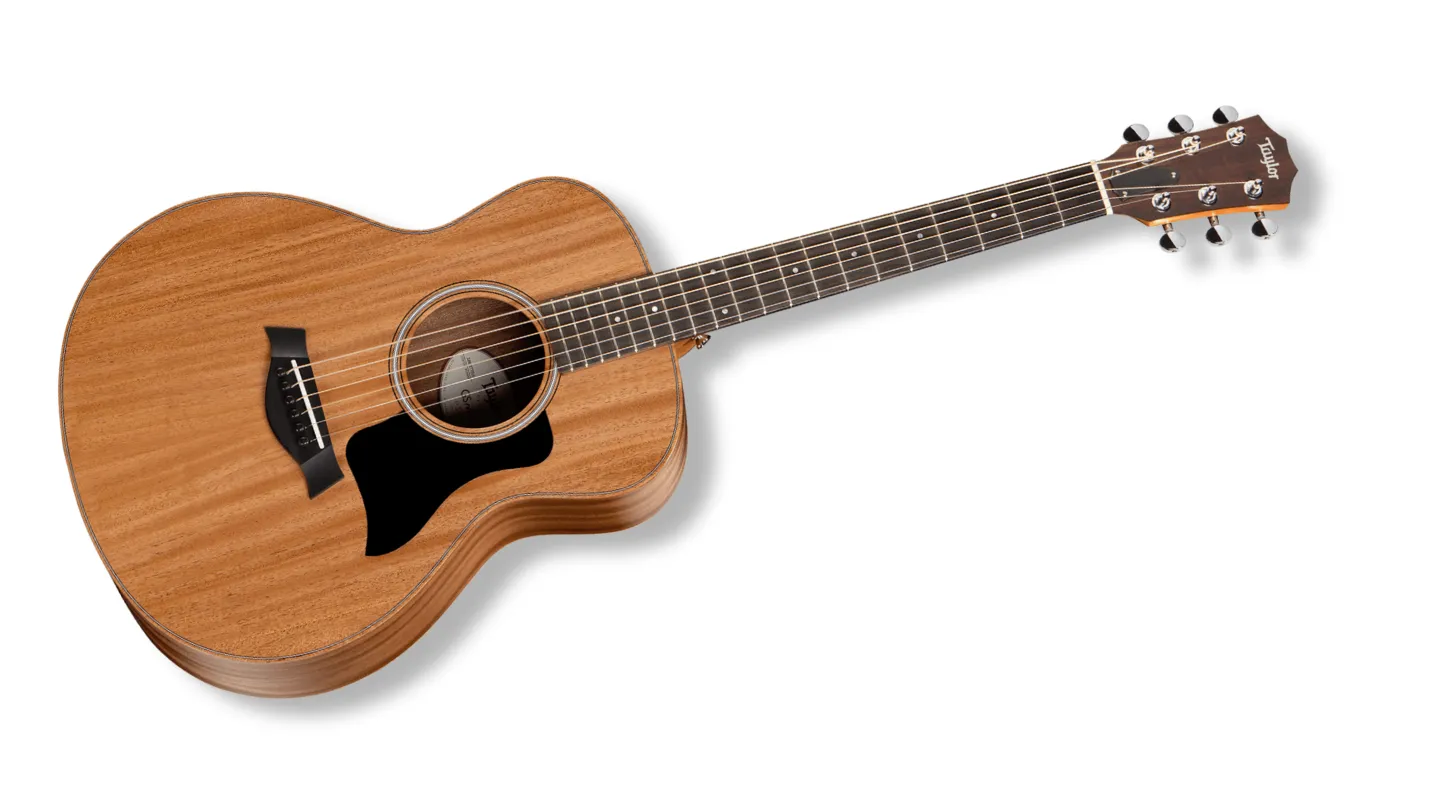
The Taylor GS Mini Mahogany is a scaled-down Grand Symphony acoustic guitar with a solid Neo-Tropical Mahogany top paired with layered Sapele back and sides.
The GS Mini Mahogany is a part of Taylor’s popular GS Mini series. The GS Mini series features variations of the GS Mini model with different tonewoods, including spruce, rosewood, and koa models. The GS Mini Mahogany is a variation of the GS Mini model that features mahogany tonewood.
The GS Mini Mahogany stands out as the best Taylor guitar for the money, offering exceptional value at around $599 (prices may vary).
Sound and Tone (4/5):
The GS Mini Mahogany’s solid mahogany top produces a deep and full tone with a focus on the midrange. The GS Mini Mahogany’s mids are vibrant and responsive with great definition. The low-end is tight, has a satisfying punch and stands out.
The GS Mini Mahogany has a natural percussiveness, delivering a boxy feel with a drum-like quality. The GS Mini Mahogany’s clarity remains impressive, although it lacks the volume of a full-sized acoustic guitar.
The Taylor GS Mini Mahogany earns a 4/5 rating for its sound and tone.
Playability and Comfort (4.5/5):
The GS Mini Mahogany features a shorter 23.5″ (596.9 mm) scale length, which makes it easier to fret the strings.
The GS Mini Mahogany has a C-shaped neck with a matte finish that makes the playing experience fluid and easy. The nut width measures 1.6875″ (42.86 mm), which is a standard width that is not too wide or too narrow. The nut width also provides string spacing that is comfortable for players with smaller hands.
The GS Mini Mahogany’s compact body makes it comfortable for players with smaller frames. The GS Mini Mahogany is also great for long seated practice sessions or standing-up playing because of its light weight of 3lbs 11oz (1.79 kg).
The Taylor GS Mini Mahogany earns a 4.5/5 rating for its playability and comfort.
Versatility (3.5/5):
The GS Mini Mahogany’s warm mahogany top and focused midrange sound is great for folk, indie rock, Americana, and blues because of the GS Mini’s warm mahogany top and focused midrange sound. The GS Mini Mahogany can also handle lighter pop, country, or even certain jazz arrangements where a smooth, warm character is desired. However, the GS Mini Mahogany is not a good fit for genres requiring a very bright, snappy attack.
The GS Mini Mahogany handles light strumming very well. However, the GS Mini Mahogany is not a good fit for players who prefer a very aggressive attack because the smaller body limits the guitar’s overall volume.
The GS Mini Mahogany is better suited for smaller intimate gigs that require a full, balanced tone at a comfortable volume.
The GS Mini Mahogany earns a 3.5/5 rating for its versatility.
Construction and Design (4/5):
The Taylor GS Mini Mahogany features a scaled-down Grand Symphony body shape with a body width of 14 3/8″ (365.12 mm), a body depth of 4 7/16″ (112.725 mm), and a body length of 17 5/8″ (447.675 mm).
The GS Mini Mahogany’s neck joins the body at the 14th fret, providing easier access to high notes for solos. The GS Mini Mahogany comes strung with D’Addario XS Coated Phosphor Bronze strings in a medium gauge (.013-.056). The coating on the strings delivers a warm, balanced tone with fantastic longevity.
The die-cast chrome tuners on the GS Mini Mahogany feel solid and hold their tuning well. The GS Mini Mahogany features a Tusq nut (a synthetic imitation of ivory) and Micarta saddle (a durable resin-based material) that provide good sustain, and durability that rivals traditional bone.
The GS Mini Mahogany earns a 4/5 rating for its construction and design.
GS Mini Mahogany Pros: Compact and travel-friendly size, solid mahogany top, warm and balanced tone, comfortable playability, short scale length for easy fretting, good value for the price.
GS Mini Mahogany Cons: Limited volume compared to full-sized guitars, not ideal for aggressive strumming or bright, snappy tones, slightly compressed dynamic range.
Recommendation for GS Mini Mahogany
The Taylor GS Mini Mahogany is the best small-body acoustic guitar under $1000 on this list. The GS Mini Mahogany offers a perfect blend of portability, playability, and tone.
Choose the GS Mini Mahogany if you seek a travel-friendly guitar with a warm, balanced sound that is great for light strumming and singer songwriter genres.
Avoid the GS Mini Mahogany if you require a loud instrument for aggressive strumming or want to play genres demanding a bright, snappy attack like punk or funk.
| GS Mini Mahogany Specifications | |
| Body Type | GS Mini |
| Top Material | Solid Mahogany |
| Back and Sides Material | Layered Sapele |
| Bracing | GS Mini with relief rout |
| Neck Material | Tropical Mahogany |
| Scale Length | 23.5″ (596.9 mm) |
| Fingerboard Material | Genuine West African Ebony |
| Saddle/Nut Material | Micarta “Wave” saddle; Nubone nut |
| Frets | 20 |
| Finish | Matte |
| Typical Price in the USA | Around $599.00 (prices may vary) |
| Where to Buy | Guitar Center and other Alvarez-authorized retailers |
12. Martin DJr-10
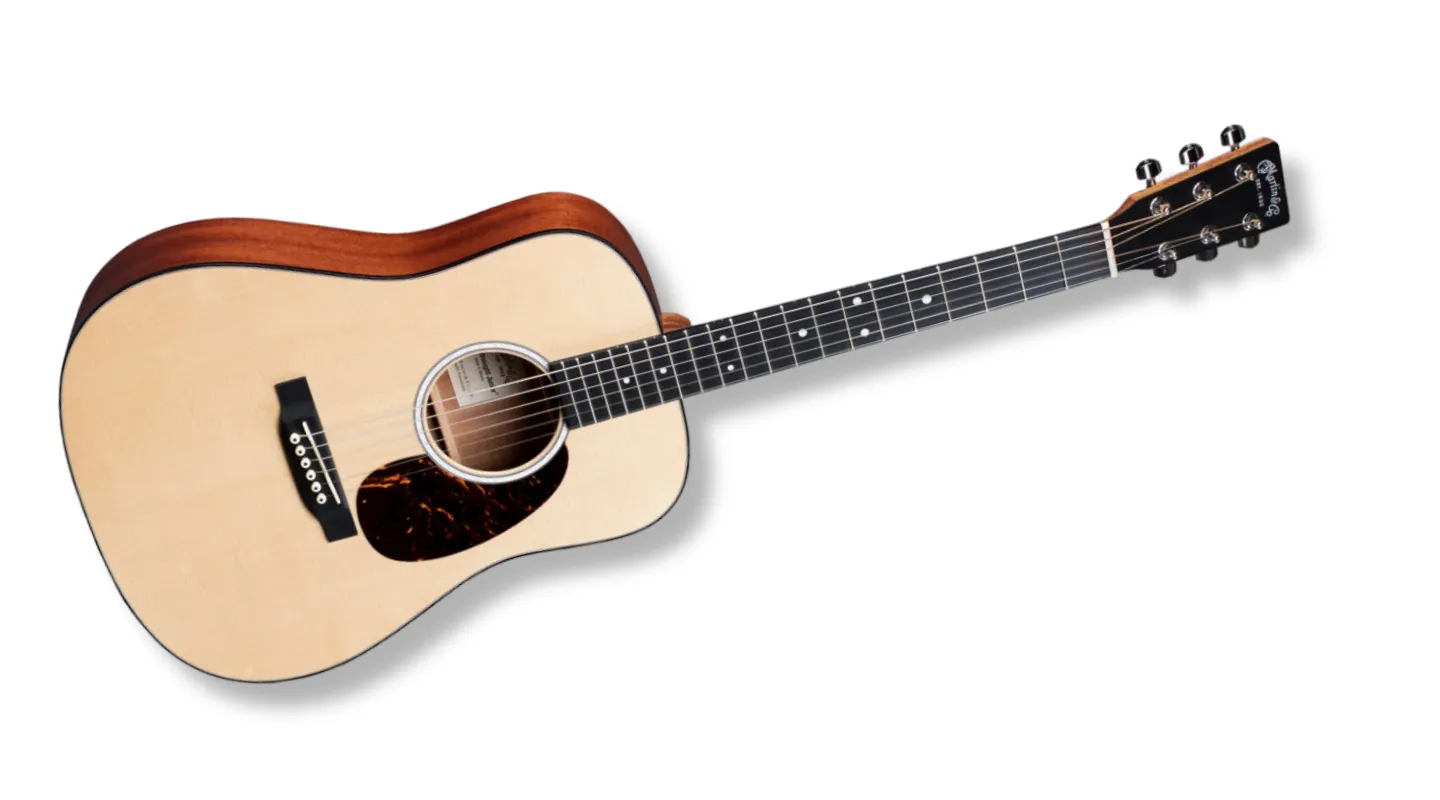
The Martin DJr-10 is a 15/16-sized dreadnought acoustic guitar featuring a solid Sitka spruce top paired with solid sapele back and sides and Martin’s scalloped X-bracing.
The DJr-10 is a part of the Martin Junior series. The Martin Junior series bridges the gap between Martin’s compact “Little Martin” models and their full-sized acoustic guitars, striking a balance between portability and volume.
The DJr-10, priced around $599 (prices may vary), stands out as the best Martin acoustic guitar under $1000 and is also available in a left-handed configuration.
Sound and Tone (4/5):
The DJr-10 is surprisingly loud for its compact size. The DJr-10 projects well and cuts through the mix when played alongside other instruments. Even with a heavy pick attack, the DJr-10 maintains clarity and avoids becoming harsh or overly compressed.
The DJr-10 offers a crisp articulation and a warm treble response. The bass frequencies of the DJr-10 are focused and controlled, avoiding excessive boominess often found in smaller-bodied guitars.
The DJr-10 does not possess the sheer volume and complexity of a full-sized dreadnought, but it delivers surprising warmth and depth for its size.
The Martin DJr-10 earns a 4/5 rating for its sound and tone.
Playability and Comfort (4/5):
The Modified Low Oval neck profile of the DJr-10 provides a comfortable feel, offering a good balance between substance and playability. A satin finish on the neck of the DJr-10 allows for smooth movement along the fretboard.
The shorter 24″ (609.6 mm) scale length of the DJr-10 makes fretting and string bending easier because of the lower tension of the strings. The 1 3/4″ (44.45 mm) nut width of the DJr-10 provides ample spacing between strings, accommodating fingerpicking techniques and complex chord shapes.
The DJr-10’s smaller size enhances comfort during extended playing sessions when compared to regular sized dreadnoughts. This makes the DJr-10 well-suited for beginners and players with smaller frames.
Some players have noted that the factory setup of the DJr-10 comes with an action that is slightly too high, which might require adjustment for optimal playability.
The Martin DJr-10 earns a 4/5 rating for its playability and comfort.
Versatility (3/5):
The DJr-10 excels in fingerstyle playing due to the good note separation and clarity provided by its spruce top. The DJr-10 also handles light to medium strumming, catering to the needs of singer-songwriters. However, for players who primarily employ aggressive strumming techniques, the DJr-10 might not offer the necessary headroom.
The warm midrange and responsiveness of the DJr-10 make it a surprisingly good fit for blues and roots music, evoking a vintage, intimate character.
The Martin DJr-10 earns a 3/5 rating for its versatility.
Construction and Design (4/5):
The DJr-10 features a simple yet elegant aesthetic. The stained neck binding complements the sapele body, creating a cohesive and visually appealing design. Vintage-style nickel open-gear tuners add a touch of classic charm. A natural satin finish showcases the beauty of the wood grain while providing a smooth and tactile feel.
The nut is made from White Corian (synthetic material imitating bone) and the saddle is made from Compensated White Tusq (synthetic material mimicking ivory).
The Martin DJr-10 earns a 4/5 rating for its construction and design.
Martin DJr-10 Pros: Compact size, loud for its size, comfortable neck profile, good note separation.
Martin DJr-10 Cons: Not ideal for aggressive strumming, lacks the full volume of a dreadnought, may require action adjustment.
Recommendation for Martin DJr-10
The Martin DJr-10 is a compact acoustic guitar that successfully balances portability with performance. The DJr-10’s surprising volume for its size and comfortable playability make it a very decent acoustic Martin guitar under $1000.
Choose the DJr-10 if you are looking for a travel-friendly acoustic guitar that delivers impressive sound and playability without compromising on tone or comfort.
Avoid the DJr-10 if your playing style relies heavily on aggressive strumming or if you require the full-bodied sound of a larger dreadnought guitar.
| Martin DJr-10 Specifications | |
| Body Type | Dreadnought Junior (15/16th dreadnought) |
| Top Material | Solid Sitka Spruce |
| Back and Sides Material | Solid Sapele |
| Bracing | Scalloped X-Bracing |
| Neck Material | Select Hardwood |
| Scale Length | 24” (609.6 mm) |
| Fingerboard Material | FSC Certified Richlite |
| Saddle/Nut Material | White Corian / Compensated White Tusq |
| Frets | 20 |
| Finish | Satin |
| Typical Price in the USA | Around $599.00 (prices may vary) |
| Where to Buy | Guitar Center, Sweetwater, Authorized Martin Dealers (both online and in-store) |
What features to look for in a mid-tier acoustic guitar under 1000?
The features to look for in a mid-tier acoustic guitar under $1000 include an all-solid wood construction, a bone nut and saddle, a dovetail neck joint, scalloped bracing, a well-shaped neck profile, and smooth fret edges.
All-solid wood construction, where the top, back, and sides are crafted from solid wood rather than laminate, is a hallmark of this price range. Solid wood offers superior resonance, tonal complexity, and the potential for the guitar’s sound to mature and improve over time. In contrast, laminate guitars, typically found in low-cost instruments, utilize thin layers of wood veneer glued together, resulting in a more affordable but less resonant instrument.
However, guitars with laminate back and sides can still be an excellent choice with amazing sound, as the top wood has the most significant impact on the overall tone. Laminate construction also offers greater durability and resistance to changes in humidity and temperature when compared to solid wood. Luthiers at Taylor Guitars recommend keeping the humidity level between 45-55%, to maintain a solid wood guitar and avoid cracks in the wood. The picture below briefly compares solid wood and laminate acoustic guitars.

The rest of the features play an important role as well. The bone nut and saddle improve vibration transfer, resulting in better sustain and clarity. A dovetail neck joint provides a secure and stable connection between the neck and body, contributing to the guitar’s structural integrity and sustain. Scalloped bracing optimizes the vibration of the top, enhancing the guitar’s responsiveness and tonal balance. Features like a well-shaped neck profile and smooth fret edges improve playability and make playing the guitar more comfortable.
Additional features to look out for in the under 1000$ price range include premium tonewoods for the top, back, and sides. For the top look for tonewoods like AAA Sitka spruce or Adirondack spruce. For the back and sides look for tonewoods lie mahogany, rosewood, or maple.
How much does a good mid-range acoustic guitar cost?
A good mid-range acoustic guitar costs between $500-$1000, depending on the brand, specific model, and features. Within this range, you’ll find greater refinement in tone, materials, and craftsmanship compared to cheaper acoustic guitars below 500$.
What is the best cheap acoustic guitars for under $500?
The best cheap acoustic guitar for under $500 is the Yamaha FG830. The Yamaha FG830 stands out for its exceptional value, offering a solid Sitka spruce top paired with laminated rosewood back and sides. This combination delivers a balanced and versatile tone suitable for various playing styles. Alternative options in this price range include the Yamaha FG800J, another excellent value option from Yamaha with a solid Sitka spruce top and comfortable playability, and the Martin LX1 Little Martin, known for its compact size and surprisingly full sound, despite its scaled down size.
What is the best acoustic guitar under $2000?
The best acoustic guitar under $2000 is the Martin D-15M. Crafted entirely from mahogany, the D-15M offers a warm, balanced tone with a strong midrange presence, making it well-suited for folk, blues, and Americana styles. Alternative options in this price range include the Martin 000-16SM, featuring an Adirondack spruce top treated with Martin’s Vintage Tone System (VTS) and the Yamaha FG5, with a solid Sitka spruce top and solid mahogany back and sides.
What is the best acoustic guitar?
The best acoustic guitar is the Martin D-28. Martin D-28 has a balanced tone and powerful projection. The D-28 represents a benchmark in acoustic guitar craftsmanship, favored by professionals across various genres. However, the best acoustic guitar can vary based on the specific player that plays the guitar. Ultimately the best acoustic guitar is a guitar that resonates with the player on a personal level, offering both an amazing sound and a comfortable playing experience.
What are the best acoustic electric guitars under $1000?
The best acoustic-electric guitars under $1000 offer a combination of quality acoustic tone and reliable electronics for amplified performance.
These guitars typically feature a solid wood top and may include solid wood back and sides, depending on the specific model. High-quality electronics, including pickups and preamps, are crucial for capturing the guitar’s natural sound and translating it accurately to an amplifier or PA system.
Examples of excellent acoustic-electric guitars in this price range include the Yamaha A3R, known for its versatility and balanced tone, and the Taylor 114ce, with its bright and articulate sound.
Unlike purely acoustic guitars, acoustic-electric guitars incorporate electronics, allowing them to be connected to amplifiers or PA systems for amplified performances or recording.